How Does Direct Cell Reprogramming Enable Regeneration?
Direct lineage conversion bypasses the pluripotent state, converting somatic cells directly into desired lineages. This approach minimizes tumorigenic risks associated with induced pluripotent stem cells while accelerating therapeutic timelines.
Pioneering work has demonstrated in vivo reprogramming within living tissues, enabling resident fibroblasts to transdifferentiate into functional cardiomyocytes after cardiac injury. Such strategies redefine regenerative paradigms. Transient overexpression of master transcription factors now achieves stable cell‑type conversion without permanent genetic modification.
Recent advances leverage chemical cocktails that replace viral delivery, offering scalable manufacturing and reduced immunogenicity. Small‑molecule screening platforms have identified combinations capable of converting human astrocytes into functional neurons, opening avenues for treating neurodegenerative conditions.
A critical bottleneck lies in achieving functional maturity of reprogrammed cells. While lineage markers confirm identity, electrophysiological and metabolic profiles often remain immature. Epigenetic remodeling during conversion requires precise temporal control, and current protocols yield heterogeneous populations requiring stringent purification.
| Reprogramming Modality | Advantage | Current Limitation |
|---|---|---|
| Transcription‑factor overexpression | High efficiency, well‑established | Viral vectors, potential off‑target effects |
| Chemical reprogramming | Non‑viral, scalable, transient | Lower efficiency, lengthy protocols |
| mRNA / protein delivery | Minimal genomic risk | Cost, stability challenges |
To overcome functional maturation deficits, researchers now combine spatiotemporal signaling cues with engineered microenvironments. Biophysical stimuli like substrate stiffness and dynamic mechanical loading enhance sarcomere organization in reprogrammed cardiomyocytes, and integrating these parameters into scalable bioreactors marks the next frontier for clinical-grade production. Emerging single-cell multi-omics approaches reveal previously hidden intermediate states during reprogramming, while lineage-tracing models paired with CRISPR screens identify genetic barriers, enabling refined protocols that reduce off-target populations and improve functional outcomes.
Immunological compatibility remains a critical challenge. Autologous strategies avoid rejection but are costly and slow to manufacture, whereas allogeneic “off-the-shelf” products require sophisticated immune-evasion engineering. Hypoimmunogenic platforms that combine HLA knockout with CD47 overexpression are now entering early clinical evaluation, potentially bridging this translational gap and supporting broader therapeutic deployment.
The Rise of Intelligent Biomaterials
Static scaffolds are giving way to dynamic biomaterials that actively instruct cellular behavior through programmed biochemical and mechanical cues. These systems incorporate stimuli‑responsive elements that release growth factors on demand or alter rigidity in response to microenvironmental signals.
A particularly promising class involves supramolecular hydrogels with tunable viscoelasticity and modular peptide ligands. By decoupling stiffness from ligand density, these materials allow independent control over mechanotransduction and integrin signaling, enabling precise dissection of matrix‑directed cell fate decisions.
-
Shape‑memory polymers
Recover predefined geometries at body temperature, enabling minimally invasive deployment -
Conductive hydrogels
Transmit electrical signals to synchronize cardiomyocyte or neural network activity -
Enzyme‑responsive matrices
Degrade precisely at sites of active tissue remodeling, matching regeneration kinetics
Integration of real‑time biosensing transforms these materials into closed‑loop therapeutic platforms. Hydrogels embedded with fluorescent nanosensors can report local pH, oxygen tension, or protease activity, allowing clinicians to monitor graft integration non‑invasively. Such feedback capabilities represent a paradigm shift from passive implants to active tissue‑engineering systems.
How is Precision Genome Editing Evolving?
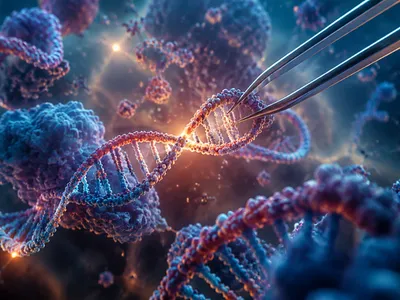
Precision nucleases have advanced beyond double-strand break repair, enabling single-base substitutions without inducing genomic instability. This evolution enhances therapeutic safety profiles. Base editing technology converts one DNA base to another in a programmable manner, correcting point mutations without donor templates. Transient delivery of adenine or cytosine base editors has shown durable phenotypic rescue in preclinical models of genetic disorders.
The advent of prime editing further expands genome engineering capabilities, allowing targeted insertions, deletions, and all base transitions with minimal off-target effects. By combining a Cas9 nickase with an engineered reverse transcriptase and a prime editing guide RNA, researchers can encode precise edits efficiently.
Delivery remains a key frontier: systems must target specific cell populations in vivo with high efficiency and low immunogenicity. Engineered lipid nanoparticles and virus-like particles carrying ribonucleoprotein complexes overcome viral vector limitations, while advances in spatial transcriptomics highlight how cellular context shapes editing outcomes, necessitating integration of single-cell resolution into therapeutic pipelines.
Can We Engineer Organ Complexity?
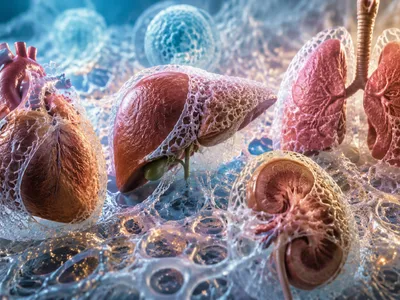
Replicating the intricate architecture of solid organs demands hierarchical vascular networks and parenchymal organization across multiple length scales. Organ‑on‑a‑chip platforms now recapitulate functional units but fail to achieve macroscopic size.
Strategies combining sacrificial printing with self‑assembly aim to generate perfusable channels that mimic native branching patterns. Concurrently, advances in developmental biology have identified morphogen gradients critical for guiding progenitor cell zonation within engineered constructs.
Achieving long‑term graft survival hinges on immune‑privileged niches and synchronized host integration. Pre‑vascularization techniques employing endothelial cells with pericyte co‑culture accelerate anastomosis after implantation, reducing ischemic damage. Moreover, organ‑specific extracellular matrix scaffolds retain bioactive cues that direct spatial cell positioning, providing critical anatomy insights for modern medicine.
| Approach | Strengths | Current Bottleneck |
|---|---|---|
| Whole‑organ decellularization | Preserved vasculature, native ECM composition | Complete recellularization, sterility assurance |
| 3D bioprinting with vascular inks | Architectural precision, rapid fabrication | Resolution limits, cellular density gradients |
| Developmental assembly | Self‑organization, functional microenvironments | Scalability, reproducibility across batches |
The convergence of these strategies suggests that near‑term clinical translation will focus on vascularized organ buds rather than whole organs. These miniature constructs leverage endogenous regenerative mechanisms, maturing in situ after implantation while mitigating early failure risks.
Scaling Cell Therapies for Clinical Use
Regulatory frameworks designed for small molecules or biologics struggle to accommodate the complexity of living cell and tissue products. Harmonized international standards for potency assays and lot‑release testing remain conspicuously absent, creating fragmented pathways that delay patient access.
Manufacturing scalability presents equally formidable challenges, as autologous therapies require bespoke supply chains while allogeneic alternatives demand robust donor screening and immune‑compatibility engineering. Process analytical technologies that enable real‑time quality monitoring are gradually being adopted, yet the transition from academic benchtop protocols to closed‑automated systems requires substantial capital investment and workforce retraining.
- Reimbursement
Value‑based models must capture long‑term efficacy - Durability data
Post‑marketing surveillance for sustained benefit - Patient access
Equitable distribution across healthcare systems