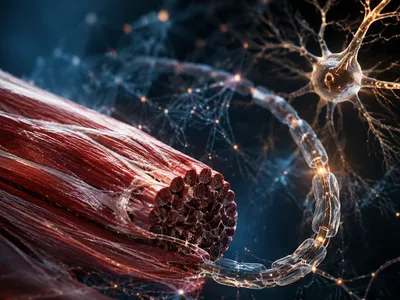
Neural Circuits of Emotion
The limbic system functions as an integrated network, with the amygdala, hippocampus, and hypothalamus coordinating emotional arousal and memory consolidation. Rapid threat detection depends on subcortical pathways that bypass conscious processing, enabling immediate defensive responses before cognitive appraisal.
Reciprocal connections between the anterior cingulate cortex and insula map visceral states onto emotional experiences, forming an interoceptive–emotional loop that continuously guides behavior. Chronic stress can disrupt these pathways, leading to hypervigilance or emotional blunting and highlighting the system’s sensitivity to environmental pressures.
How Myelination Shapes Response Speed?
Myelination is not a static developmental process. It is a dynamic biological mechanism that adjusts axonal conduction properties throughout life.
A range of factors modulate myelin dynamics. The following elements critically determine conduction velocity and circuit efficiency:
- Neuronal activity drives oligodendrocyte maturation and myelin remodeling.
- Experience-dependent learning accelerates myelin formation in relevant circuits.
- Aging reduces myelin repair capacity, slowing cognitive processing speed.
These factors collectively determine the velocity and synchrony of neural signals. They directly influence reaction times and cognitive flexibility.
Rapid, precisely timed action potentials depend on the thickness and internodal length of myelin sheaths, which are continuously modified by ongoing neural activity. This plasticity, known as adaptive myelination, allows the brain to optimize circuit efficiency for frequently used pathways, effectively hardwiring practiced behaviors into faster response loops. Disruptions in this dynamic process, such as in demyelinating disorders, lead to profound behavioral deficits ranging from motor slowing to executive dysfunction.
The Prefrontal Conductor
The prefrontal cortex serves as the brain’s executive hub, integrating sensory inputs and emotional signals to orchestrate goal-directed behavior. This region exerts top‑down modulation over limbic structures, enabling deliberate actions that override impulsive reactions.
Distinct subregions within the prefrontal cortex specialize in different executive functions. The dorsolateral area manages working memory and cognitive flexibility, while the ventromedial sector assigns emotional value to decision-making options.
Through reciprocal white matter tracts, the prefrontal conductor continuously calibrates the balance between cognitive control and emotional reactivity. When this network operates efficiently, individuals can maintain focus on long‑term goals despite immediate temptations. Conversely, compromised prefrontal integrity—whether from injury, chronic stress, or developmental factors—predicts a cascade of behavioral dysregulations, including impulsivity, poor judgment, and rigid thought patterns that resist adaptive change.
Rewiring Through Lived Experience
Neuroplasticity transforms momentary experiences into enduring changes in neural architecture. The brain continuously remodels its synaptic connections in response to environmental demands, learning, and even emotional events.
This adaptive capacity is not uniform across the lifespan. Critical periods offer heightened plasticity, yet adult brains retain the ability to reorganize through mechanisms such as dendritic spine turnover and synaptic pruning.
Experience‑dependent plasticity underpins the refinement of neural circuits that support new skills, emotional regulation, and recovery from injury. Specific forms of experience drive distinct structural and functional changes, as summarized below:
- 🧠 Skill acquisition – Repeated practice strengthens task‑specific cortical maps and increases myelin along relevant pathways.
- 🌳 Environmental enrichment – Complex, stimulating surroundings promote dendritic branching and synaptogenesis in the hippocampus and prefrontal cortex.
- ⚡ Adverse experiences – Chronic stress or trauma can induce maladaptive plasticity, reinforcing fear circuits and weakening prefrontal control.
- 🛠️ Behavioral interventions – Targeted therapies, such as cognitive training, leverage plasticity to rewire dysfunctional patterns.
Understanding how lived experience sculpts neural pathways opens avenues for interventions that deliberately shape plasticity. By harnessing synaptic consolidation principles, clinicians can design environments and therapies that steer circuit reorganization toward healthier behavioral outcomes.
When Circuits Misalign in Disorders
Psychiatric and neurological conditions often stem from disrupted connectivity within large‑scale neural networks rather than isolated lesions. Circuit‑level pathologies manifest as characteristic symptom clusters; for instance, obsessive‑compulsive disorder involves hyperconnectivity between the orbitofrontal cortex and striatum, creating repetitive thought–action loops that resist voluntary inhibition.
| Disorder | Primary Circuit Disruption | Resulting Behavioral Features |
|---|---|---|
| Major Depressive Disorder | Reduced prefrontal–limbic coupling with elevated default mode network activity | Persistent rumination, anhedonia, and impaired cognitive control |
| Schizophrenia | Dysfunctional frontotemporal connectivity and aberrant dopaminergic signaling | Disorganized thought, hallucinations, and executive function deficits |
| Post‑Traumatic Stress Disorder | Hyperactive amygdala with deficient ventromedial prefrontal regulation | Exaggerated threat responses, flashbacks, and hypervigilance |
Translating these circuit‑based insights into clinical practice requires biomarkers that capture network dysfunction. Resting‑state functional connectivity and diffusion tensor imaging now identify individualized circuit profiles that predict treatment response. Interventions such as transcranial magnetic stimulation target these misaligned nodes, aiming to restore oscillatory synchrony across distributed networks. A paradigm shift is underway: rather than treating symptom categories, precision psychiatry increasingly seeks to recalibrate the underlying circuit architecture that drives maladaptive behavior. This approach holds promise for conditions previously considered refractory, yet it demands rigorous longitudinal studies to establish durable clinical efficacy.