The Digital Onslaught
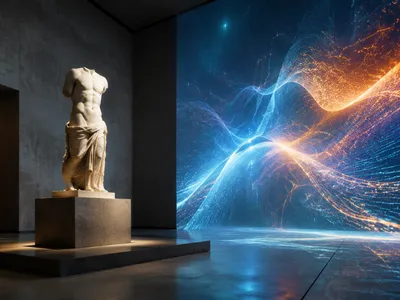
The pervasive influence of digital technology represents the most visible challenge to traditional art forms today. This shift is not merely a change in tools but a fundamental reconfiguration of the artistic landscape, altering creation, distribution, and perception.
Digital platforms prioritize speed, shareability, and interactivity, values often at odds with the slow, material-intensive processes of painting or sculpture. The very aura of a unique artifact, historically central to art's value, is diluted in the endless reproducibility of the digital sphere. This environment fundamentally questions the authenticity and scarcity that underpinned traditional art markets for centuries.
The economic model for artists has also been disrupted, as attention becomes a currency more immediate than patronage or gallery representation. This creates a paradox where visibility is greater than ever, yet sustainable financial support for non-digital practice is increasingly difficult to secure. The market's gravitational pull toward digital-native art is a significant pressure point.
Consequently, a generational and cultural divide is emerging. Younger audiences, nurtured on screen-based media, may find traditional galleries less accessible or engaging than immersive digital experiences. This is not a dismissal of skill but a different cognitive and aesthetic orientation, where the tactile materiality of oil paint or marble is less familiar than the fluid dynamics of digital interfaces. The shift from contemplative observation to interactive participation marks a profound change in the viewer's relationship to the artwork itself.
A New Nexus for Value and Access
Yet, to frame this solely as a loss misunderstands the complex new ecosystems forming around traditional art. Digital technology has forged unprecedented pathways for access, education, and community, potentially revitalizing interest in historical techniques and forms.
Online archives and virtual museum tours have democratized access to canonical works previously confined to major cosmopolitan institutions. A student anywhere can now study brushstrokes in ultra-high definition, a form of access that fuels both appreciation and technical study. Social media platforms have become vital spaces for artists to showcase process, build followings, and circumvent traditional gatekeepers, creating a direct line from studio to global audience.
This digital layer also fosters niche communities of practice. Online forums and video tutorials facilitate the transmission of spcialized knowledge, such as Renaissance painting methods or Japanese woodblock printing, to a geographically dispersed populace. The digital sphere, paradoxically, can be a powerful conservator and disseminator of traditional knowledge.
The financial model is also adapting. While challenging, new patronage systems like micro-commissions and crowdfunding for physical artworks have emerged. Furthermore, the dizzying valuations of digital art, particularly NFTs, have forced a broader conversation about intrinsic value, some of which has spilled over to re-examine the material unique-ness of traditional works.
The following table contrasts core aspects of the traditional and emerging digital art ecosystems, highlighting shifts in how value is created and sustained.
| Aspect | Traditional Art Ecosystem | Digital-Influenced Ecosystem |
|---|---|---|
| Primary Venue | Galleries, Museums, Auction Houses | Online Platforms, Social Media, Metaverse Spaces |
| Value Driver | Provenance, Material Uniqueness, Expert Appraisal | Digital Scarcity (e.g., NFTs), Community Validation, Online Engagement |
| Audience Reach | Geographically and socially limited by physical location | Potentially global and immediate, though subject to algorithmic curation |
| Artist-Patron Relationship | Mediated by institutions or private commissions | Often direct via platforms, crowdfunding, and community building |
This new nexus does not replace the old but overlays it, creating a dual existence for traditional art. Its objects remain physically rooted while their influence, documentation, and financial echoes circulate in a parallel digital universe. The critical question becomes how these two realms can interact productively rather than exist in opposition.
Can Tradition Survive the Algorithm?
The curation of art has moved from the gallery wall to the algorithmic feed, a shift with profound implications for traditional practice. These platforms are not neutral spaces but active participants in shaping taste, using engagement metrics as a proxy for cultural value.
This system inherently favors content that generates immediate interaction, such as digital art, process videos, or memetic imagery. The slow, complex narrative of a traditional artwork often loses in this competition for fleeting attention. The algorithm's logic of perpetual novelty can marginalize art forms rooted in historical continuity and deep craft.
Discoverability becomes contingent on an artist's ability to game the system through keywords, trends, and consistent posting schedules. This commercializes creative practice in a new way, privileging marketing savvy alongside or even above technical skill. The studio time required for mastery in traditional mediums is time not spent optimizing one's online presence, creating a significant tension.
However, resistance and adaptation are occurring. Some institutions and artists are strategically using these tools to frame traditional work within contemporary digital dialogues. They create context that bridges the gap, explaining techniques and concepts in ways designed to captivate an online audience. The challenge becomes one of translation, making the physical and historical relevant to the virtual and instantaneous.
This adaptation suggests survival is not about rejection but about developing a bilingual fluency, where the deep language of traditional art learns to speak through the compressed syntax of the digital realm without sacrificing its core vocabulary of material, skill, and time.
The Unquantifiable Human Essence
Against the metric-driven digital world, traditional art asserts the irreplaceable value of direct human making. The haptic intelligence developed through years of handling materials—the resistance of clay, the viscosity of paint, the grain of wood—constitutes a knowledge system that cannot be fully digitized.
This embodied practice generates unique aesthetic qualities, such as the accidental brushstroke or the trace of a hand tool, which are celebrated as records of the artist's presence. These indexical traces offer an authenticity of connection that purely digital creation often seeks to emulate but cannot originate in the same way.
The physical art object also operates as a stable cultural anchor. In an era of digital flux and potential data loss, a painting or sculpture persists as a tangible witness to its time. Its conservation and study create longitudinal human endeavors that contrast with the planned obsolescence of digital formats.
Cognitive science offers insights into why this materiality matters. Viewing physical art engages different neural pathways related to spatial awareness and embodied simulation compared to viewing images on a screen. The ritual of encountering an object in a dedicated space fosters a depth of attention that is both psychologically and culturally significant.
The societal role of traditional art spaces is evolving. Galleries and museums are increasingly framing themselves as sites for slow looking and digital detox, emphasizing the unique experiential quality they offer. They provide a counter-narrative to the fragmentation of oonline attention, championing focused contemplation.
The enduring strengths of traditional art can be organized into several key pillars that underscore its continued relevance beyond quantitative measures.
- Material Mastery: The deep, tacit knowledge acquired through prolonged engagement with physical substances and tools.
- Temporal Investment: The work as a record of invested human time, standing against instantaneity.
- Cultural Memory: The object as a durable vessel for historical technique, symbolism, and collective memory.
- Unmediated Encounter: The phenomenology of direct, spatial engagement with an artifact, free from interface.
To quantify the shifting perception of value between traditional and digital contexts, consider the following comparative analysis of their foundational attributes.
| Value Dimension | Traditional Art Emphasis | Digital/Algorithmic Emphasis |
|---|---|---|
| Authenticity | Proven through material uniqueness and artist's manual trace | Proven through cryptographic verification (e.g., blockchain) |
| Skill | Measured in technical mastery of physical mediums over time | Measured in code proficiency, software expertise, and data manipulation |
| Cultural Capital | Accrued through institutional recognition and art historical placement | Accrued through online influence, community size, and virality metrics |
| Preservation | Physical conservation against decay and environmental factors | Digital archiving, format migration, and platform dependency |
This framework highlights that traditional art's relevance may increasingly be defined by its steadfast commitment to qualities the digital world finds difficult to replicate or quantify. Its power lies in its concrete objecthood and the profound human connection it facilitates, serving as a crucial counterbalance in an increasingly virtual culture.