Reimagining Reality Through Abstraction
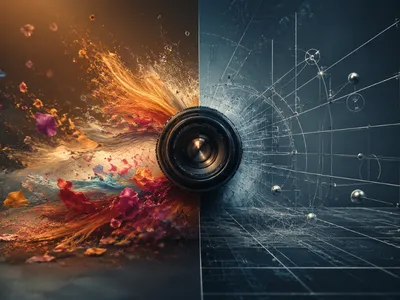
Abstract photography breaks away from the expectation of representing recognizable subjects, instead fragmenting and reshaping visual elements to produce images that resemble visual poetry rather than documentation. This approach shifts focus from what is depicted to how it is perceived.
By challenging the idea that photographs must directly reference reality, the genre redirects attention toward formal elements like line, texture, and color relationships. This shift transforms the photographer’s role into that of a composer, constructing images where ambiguity is intentional and meaning emerges through visual structure rather than narrative clarity, reflecting how photography shapes perception as a distinct mode of thinking.
Visual literacy in this context depends on recognizing how perceptual gaps encourage interpretation. Viewers actively complete the image through their own perspectives, turning the photograph into an open-ended and participatory experience.
The Camera's Creative Potential
In abstract photography, the camera becomes a generative tool rather than a mere recorder. Implementing experimental photography techniques like intentional camera movement, multiple exposures, and shallow depth of field allow artists to manipulate light and form, transforming familiar subjects into dynamic, often unrecognizable abstractions.
Photographers balance technical mastery with openness to chance, using mechanical limitations as creative assets. Understanding aperture, shutter speed, and focal length provides control, yet embracing unpredictable outcomes often produces the most compelling work, highlighting the camera as both a precise instrument and an active collaborator in the creative process, further blurring the lines when exploring is photography an art or a science.
A foundational skill set for aspiring abstract photographers includes these core techniques:
- 🎥 Intentional camera movement (ICM) – sweeping or rotating the camera during exposure to create gestural streaks of light and color.
- 🔍 Shallow depth of field – using wide apertures to isolate textures and blur backgrounds into tonal fields.
- 🖼️ Multiple exposures – layering separate frames in-camera to build complex visual harmonies.
- 🧬 Macro abstraction – focusing extremely close to transform everyday surfaces into unfamiliar topographies.
Each technique reframes the camera as a tool for invention rather than mere transcription. Mastery of these approaches enables photographers to transition from capturing what they see to orchestrating what they envision, marking a fundamental shift in creative agency.
Light, Shadow, and Motion
Light in abstract practice functions not as illumination but as the primary material. Utilizing unique photography lighting setups for creative shoots and manipulating its direction, quality, and color transforms ordinary scenes into studies of form and rhythm.
Shadow operates with equal weight, carving negative spaces that become compositional anchors. The interplay between these two forces generates visual tension that drives the abstract image.
When motion enters this equation, static relationships dissolve into fluid sequences. A moving light source traced across a dark frame produces calligraphic gestures, while a stationary camera capturing moving subjects yields layered temporal records. These dynamics require photographers to think in durations rather than instants, shifting from capturing decisive moments to constructing visual events that unfold across the exposure.
The following categories illustrate how fundamental variables interact to shape abstract photographic language. Each axis represents a creative decision point where technical parameters become expressive choices rather than mere corrections. Understanding these relationships allows practitioners to systematically explore the expressive range of their equipment while developing an intuitive sense for when to embrace controlled precision and when to invite spontaneous variation.
| Parameter | Expressive Range | Abstract Outcome |
|---|---|---|
| Light Quality | Hard vs. diffused | High contrast vs. tonal gradation |
| Shadow Role | Silhouette vs. texture reveal | Graphic shape vs. surface depth |
| Motion Type | Camera movement vs. subject movement | Gestural blur vs. layered time |
Working intentionally with these variables cultivates a responsive workflow where technical adjustments directly serve visual intent. Intentional light shaping and controlled motion blur become foundational skills for transforming observed scenes into abstract expressions. Mastery emerges from iterative experimentation with these combined elements.
Orchestrating Visual Elements in Abstraction
Traditional compositional guidelines like the rule of thirds often fall away in abstract work. The absence of a recognizable subject frees the photographer to prioritize balance, rhythm, and visual weight without representational constraints.
Framing decisions shift toward edge relationships and the tension between positive and negative space. A fragment of a larger whole gains autonomy when its boundaries become deliberate rather than incidental.
Abstract composition relies heavily on the orchestration of visual hierarchies through color, value, and texture. Without a focal point supplied by subject matter, the artist must construct points of entry and pathways for the eye using purely formal means. This often involves creating subtle gradations that guide attention or employing abrupt contrasts that disrupt expectations, both of which demand heightened sensitivity to how elements interact across the entire frame. Practitioners develop this sensitivity through sustained practice in evaluating images not for what they depict but for how their structural components relate.
Key compositional strategies that replace conventional guidelines include:
- Edge tension – placing strong elements near the frame perimeter to create outward pull and internal compression.
- Tonal anchoring – using dark or saturated zones to stabilize compositions that lack clear subject reference.
- Rhythmic repetition – sequencing similar shapes or intervals to generate visual coherence across fragmented imagery.
- Asymmetric balance – countering large areas of texture with smaller areas of high contrast to achieve equilibrium.
Cultivating an Abstract Vision
Developing a lasting abstract practice goes beyond technical skill, requiring a perceptual shift to recognize abstraction in everyday visual environments. Artists learn to focus on relationships—light and shadow, texture and void, color and complement—transforming ordinary scenes into rich fields of abstract potential.
Disciplined observation, such as maintaining visual journals or thematic projects, accelerates this perceptual growth, creating a mental library of strategies for active image-making. Sustained engagement and iterative experimentation with themes or techniques help photographers move beyond predictable outcomes and achieve genuine creative breakthroughs.