Tiny Workers, Global Impact
The intricate relationship between flowering plants and their animal visitors constitutes an ecosystem service of immense, often underappreciated, value. This mutualism, refined over millions of years, underpins the reproductive cycles of a substantial portion of the world's flora. The subsequent production of fruits, seeds, and nuts forms the bedrock of terrestrial biodiversity and, critically, human sustenance.
Economically, the contribution of these creatures is staggering, with estimates valuing the annual global crop pollination at hundreds of billions of dollars. This valuation, however, captures only the direct market impact, failing to account for the cascading effects through livestock feed and wild plant communities. Without this biological service, the structure of global agriculture would be fundamentally different and far less productive.
The primary agents of this service are remarkably diverse, extending far beyond the familiar honeybee. Thousands of wild bee species, including solitary bees and bumblebees, are often more efficient at depositing pollen on a per-visit basis. Furthermore, flies, butterflies, moths, beetles, birds like hummingbirds, and even bats act as vital pollen vectors in various ecosystems and agricultural settings. This functional diversity ensures a resilience that a single species, no matter how abundant, cannot provide. The decline of any one pollinator group can create a gap that others may fill, but only if the habitat complexity supports their presence.
The stability of wild plant communities is directly tied to this pollinator diversity. Many plant species have co-evolved with specific pollinators, forming specialized relationships that cannot be easily replaced. The loss of a pollinator can therefore trigger a cascade of negative effects, reducing plant reproduction and the food sources available for other wildlife. This intricate web of life highlights that pollinators are not just agricultural assets but keystone components of healthy ecosystems.
Recent landscape ecology studies emphasize that the proximity of natural habitats to agricultural fields dramatically increases both the abundance and diversity of pollinators. Farmlands interspersed with hedgerows and wildflower strips consistently show higher pollination success in adjacent crops. This landscape-level management is therefore a critical consideration for maintaining the vital connection between natural ecosystems and agricultural productivity, ensuring the continued flow of this essential service.
Crops Dependant on Animal Pollinators
The reliance of global agriculture on animal pollinators is not uniform across all crop types. While staple grains like wheat and rice are wind-pollinated, a vast array of nutritious and economically valuable crops require biotic pollination. These crops are often the source of essential vitamins, minerals, and antioxidants in human diets.
This dependency is categorized by how much a crop's yield or quality benefits from animal visitors. Some crops are entirely dependent, failing to set any fruit without pollination, while others see significant increases in fruit size, quality, and seed set. Pollinator-mediated interactions also influence crop uniformity and shelf life, adding another layer of economic consequence beyond simple yield quantity.
| Crop Category | Examples | Pollinator Dependency | Primary Benefits |
|---|---|---|---|
| Fruits | Apple, Blueberry, Cherry, Mango | High/Very High | Fruit set, size, and shape |
| Vegetables | Pumpkin, Tomato, Cucumber, Squash | Moderate/High | Fruit set, seed production, quality |
| Nuts & Oils | Almond, Sunflower, Canola | High | Nut set, oil content, yield |
| Stimulants & Spices | Coffee, Vanilla, Cardamom | High | Bean/seed set, quality |
The data illustrates that high-value crops, particularly many fruits and nuts, sit at the top of the dependency scale. For instance, the global almond industry is almost entirely reliant on honeybee pollination during a brief, intense flowering period. This creates a critical point of vulnerability, where any disruption to pollinator availability directly translates into massive economic losses. The pollination deficit observed in many intensively managed farms points to a growing imbalance between crop demand and the supply of wild or managed pollinators.
Beyond the well-documented examples, a deeper look reveals that many crops benefit from animal visitors in subtle but important ways. Pollination can enhance the sugar content of melons, improve the shelf life of strawberries, and create the symmetrical shape desired in the apple market. These qualitative improvements, often overlooked in yield-only assessments, significantly influence market prices and reduce food waste, underscoring that the value of pollinators permeates the entire supply chain.
The concept of pollinator-dependent crops extends to those used for animal feed as well. Alfalfa and other clovers, crucial for livestock forage, rely heavily on pollinators for seed production. This indirect link means that declines in pollinator populations can affect meat and dairy production, further integrating these insects into the broader fabric of food security. Therefore, the stability of our food systems is profoundly connected to the health of these small, yet powerful, ecological agents. Their role is not a niche concern but a mainstream component of global agricultural output.
The Nutritional Consequences of Decline
The potential decline of pollinator populations introduces a significant threat to human nutrition that extends beyond simple caloric intake. Research in nutritional ecology increasingly demonstrates that pollinator-dependent crops are disproportionately rich in micronutrients essential for human health. The loss of these foods from diets could have profound public health implications globally.
Micronutrient deficiency, often termed hidden hunger, affects billions of people worldwide, and pollinators play a direct role in mitigating this crisis. Fruits, vegetables, and nuts, which are highly pollinator-dependent, provide the majority of dietary Vitamin A, C, and folate. A reduction in the availability and affordability of these foods would likely exacerbate existing health disparities, particularly in developing nations. This represents a critical dimension of food insecurity often overshadowed by concerns about staple crop production.
The relationship between pollinator health and dietary diversity is particularly striking. Communities with access to well-pollinated, diverse produce enjoy a broader spectrum of nutrients, which supports immune function and reduces the risk of non-communicable diseases. Modeling studies suggest that complete pollinator loss could lead to a significant increase in global mortality from diseases linked to inadequate fruit and vegetable consumption, such as heart disease and stroke. This shifts the conversation from agricultural economics to one of global public health policy.
Beyond vitamins, pollinators influence the availability of compounds with medicinal and nutritional value. Many pollinator-dependent crops are rich in antioxidants and phytochemicals that combat oxidative stress and inflammation. The quality of these crops, including the composition of fatty acids in nuts and oilseeds, is also enhanced by effective pollination. Therefore, the nutritional profile of our food is intrinsically linked to the ecological processes that shape its production.
- Vitamin A (essential for vision and immune function) High Dependency
- Vitamin C (crucial for tissue repair and enzymatic function) High Dependency
- Folate (critical for cell division and preventing birth defects) Moderate/High
- Lycopene & Antioxidants (reduce chronic disease risk) Variable
The most vulnerable populations, including those in low-income countries and food deserts, would feel the nutritional impact most acutely. These communities often rely on locally grown, pollinator-dependent produce as their primary source of micronutrients. The economic consequence of pollinator decline would likely price these nutritious foods out of reach for many, forcing a greater reliance on calorie-rich but nutrient-poor staple crops. This dynamic creates a vicious cycle of malnutrition that intersects with poverty and ecological degradation.
How Habitat Loss Disrupts Pollination
The primary driver of pollinator decline in agricultural landscapes is the widespread loss and fragmentation of natural habitats. As intensive agriculture expands, the semi-natural grasslands, forest edges, and hedgerows that provide essential nesting sites and diverse forage are systematically removed. This simplification of the landscape directly undermines the ecological infrastructure required for healthy pollinator communities.
Habitat fragmentation creates isolated patches of resources that are too small or too far apart to support viable pollinator populations. Many wild bees are ground-nesters requiring specific soil conditions, while others nest in hollow stems or dead wood, features absent in cleanly-managed monocultures. The distance between these fragmented nesting sites and the floral resources needed for pollen and nectar resources can exceed the foraging range of smaller-bodied species. This spatial disconnect disrupts the mutual dependency between plants and their pollinators, creating an ecological ripple effect across the landscape.
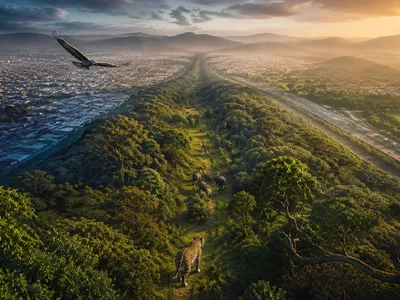
The impact of habitat loss is not merely about the total area of natural vegetation but its configuration in the landscape. Corridors and connecting patches of flowering plants are critical for allowing pollinators to move between resource patches aand for maintaining gene flow among populations. When these connections are severed, isolated populations become more susceptible to local extinction from stochastic events or disease. Landscape connectivity has emerged as a central concept in conservation biology, emphasizing that the spatial arrangement of habitats is as important as their absolute size for sustaining pollinator communities and the services they provide.
Agricultural intensification often accompanies habitat loss, introducing additional stressors like pesticide exposure. Neonicotinoids and other agrochemicals can have sublethal effects on pollinators, impairing their foraging behavior, navigation abilities, and reproductive success. These chemicals become particularly harmful when combined with nutritional stress caused by the lack of diverse floral resources in simplified landscapes. A bee forced to forage long distances on a monotonous diet of a single crop is far more vulnerable to pesticide exposure than one in a diverse, resource-rich environment.
| Stressor | Ecological Mechanism | Primary Consequence for Pollinators |
|---|---|---|
| Habitat Clearance | Removal of nesting sites and non-crop floral resources | Reduced species richness and population abundance |
| Field Enlargement | Increased distance from nesting to foraging resources | Energy exhaustion, lower foraging efficiency |
| Pesticide Drift | Contamination of remaining habitat patches and water sources | Sublethal neurotoxicity, impaired reproduction |
| Loss of Floral Continuity | Removal of plants flowering in succession across seasons | Nutritional stress and colony failure |
This cumulative pressure from habitat loss, fragmentation, and chemical inputs creates a synergistic effect that accelerates pollinator decline far more rapidly than any single factor alone. The resulting pollination deficit in both wild plants and crops signals a fundamental breakdown in ecosystem function, one that cannot be easily reversed without addressing the underlying landscape-level drivers.