How Do Urban Ecosystem Services Work?
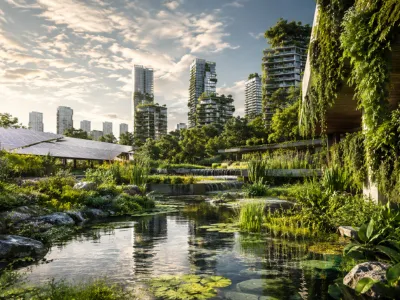
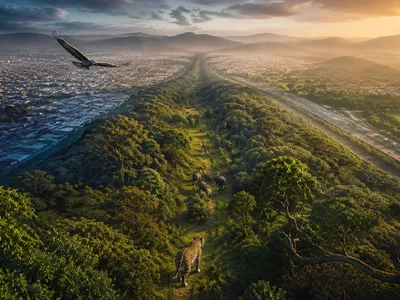
The contemporary city is far more than an inert collection of buildings and infrastructure; it functions as a complex, adaptive socio-ecological system.
This perspective shifts the focus from viewing nature as separate from the city to understanding the integrated web of relationships between human and non-human components.
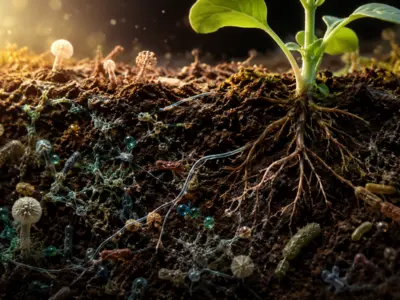
An urban ecosystem encompasses all biotic communities, from microbial organisms to large fauna, existing within the city's boundaries and interacting with the engineered physical environment, which includes buildings, roads, and utility networks. These interactions are governed by a unique set of ecological processes, such as nutrient cycling, energy flow, and species succession, all of which are profoundly altered by human activities and decision-making. The recognition of this interconnectedness is fundamental to developing sustainable urban management strategies that move beyond simple greening efforts.
A critical framework for analyzing this system is the urban ecosystem services model, which categorizes the benefits provided by natural elements into provisioning, regulating, supporting, and cultural services. These services are not merely amenities but are essential infrastructure for urban resilience and human well-being, directly influencing air quality, climate moderation, and psychological health. The functionality of these services depends heavily on the structural connectivity and ecological quality of green and blue spaces within the urban matrix, rather than just their mere presence.
The following table outlines core components and their functions within the urban ecosystem framework, illustrating the move from a traditional to an integrated view.
| Traditional Component | Integrated Ecosystem View | Primary Ecological Function |
|---|---|---|
| Parks and Gardens | Multifunctional Green Infrastructure | Habitat provision, recreation, stormwater absorption |
| Street Trees | Linear Biological Corridors | Microclimate regulation, air filtration, pedestrian comfort |
| Vacant Lots | Successional Habitat Patches | Biodiversity support, soil regeneration, informal community use |
| Storm Drains | Urban Hydroecological Networks | Water conveyance, potential habitat, hydrological cycle integration |
How Do Green Spaces Cool Cities?
The urban heat island effect is a well-documented phenomenon where city regions experience significantly higher temperatures than their rural surroundings, primarily due to the thermal properties of construction materials and waste heat from human activities.
Vegetated spaces counteract this through a powerful combination of biophysical processes, chief among them being evapotranspiration.
This process, where plants release water vapor through their leaves, consumes substantial amounts of solar energy that would otherwise be converted into sensible heat, effectively cooling the surrounding air. The shading provided by tree canopies directly reduces solar radiation absorption by surfaces like asphalt and concrete, which have high thermal mass and albedo, preventing them from storing and re-radiating heat long into the night. Furthermore, vegetation modifies urban wind patterns and surface roughness, facilitating better air movement and heat dissipation from built structures, thereby creating a more moderated local microclimate.
The cooling capacity is not uniform but varies dramatically based on vegetation type, structure, and spatial configuration. A large, contiguous forest park exerts a stronger cooling influence than scattered street trees, with the effect extending downwind in what is termed a cool-air plume. The effectiveness of green infrastructure for thermal regulation depends on species selection, irrigation availability, and soil volume, making ecological design as important as spatial planning. Research quantifies that well-vegetated districts can be sevral degrees Celsius cooler during peak heat events, directly reducing energy demand for air conditioning and mitigating heat-related public health risks.
Key biophysical mechanisms through which vegetation mitigates urban heat are listed below, highlighting the multifaceted role of plants.
- ⭐ Evapotranspiration: The phase change of liquid water to vapor within plant leaves uses ambient heat energy, providing a direct cooling effect.
- ⭐ Shading and Interception: Foliage prevents shortwave solar radiation from reaching and heating impervious surfaces like roads and building walls.
- ⭐ Albedo Enhancement: Vegetation, especially with light-colored leaves, reflects more incoming solar radiation than dark asphalt or roofing materials.
- ⭐ Thermal Insulation: Green roofs and walls add a layer of soil and plants that insulate buildings, reducing heat gain in summer and loss in winter.
- ⭐ Convection Enhancement: The three-dimensional structure of vegetation increases surface roughness, promoting turbulent air flow and heat removal.
Strategic placement of green spaces is therefore a form of climate adaptation infrastructure. The cooling benefit must be integrated with hydrological planning, as evapotranspiration requires water, pointing to the necessity of water-sensitive urban design that captures and utilizes stormwater for irrigation.
Biodiversity in the Concrete Jungle
Urban biodiversity encompasses the variety of life forms that persist, adapt, and even thrive within metropolitan landscapes, challenging the notion of cities as ecological deserts.
This diversity exists at multiple scales, from genetic variation within populations to the mosaic of habitats formed by parks, gardens, waterways, and built structures.
The composition of urban species pools is shaped by a dual process of biotic homogenization, where widespread generalist species dominate, and the potential for ecological novelty. Unique anthropogenic habitats like brownfields, walls, and green roofs can support rare specialist species and foster novel assemblages not found in natural ecosystems. These spaces function as crucial stepping-stone habitats, enabling wildlife movement across an otherwise impermeable matrix. The conservation value of urban areas is increasingly recognized, particularly for supporting pollinators, birds, and invertebrate communities that provide essential ecosystem functions. Managing for biodiversity thus requires moving beyond ornamental planting toward fostering complex, native-dominated plant communities that support diverse trophic levels.
The integration of habitat features into urban design is known as ecological engineering. This approach deliberately creates conditions for non-human species, such as installing nest boxes, creating pond systems for amphibians, or using textured building materials that support colonizing plants and insects.
The following table contrasts traditional landscaping with biodiversity-sensitive design approaches, highlighting shifts in practice and intended outcomes.
| Conventional Practice | Biodiversity-Sensitive Design | Key Benefit for Wildlife |
|---|---|---|
| Monoculture Lawn Grass | Native Meadow Planting | Provides nectar, pollen, and larval host plants for insects |
| Ornamental Non-Native Shrubs | Layered Native Shrub Thicket | Offers dense cover, nesting sites, and berry food sources for birds |
| Channelized Concrete Waterways | Soft-Engineered Banks with Riparian Vegetation | Creates aquatic-terrestrial ecotones for amphibians and invertebrates |
| Regular Intensive Pruning | Structural Habitat Retention (Deadwood, Seed Heads) | Supports overwintering insects and provides foraging substrate |