The Haptic Illusion
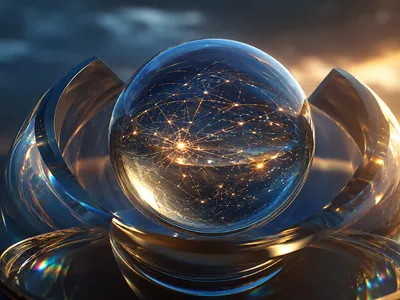
In digital art, texture operates primarily as a haptic illusion, a visual construct engineered to evoke the somatic memory of touch. This phenomenon leverages cross-modal sensory perception, where the visual cortex interprets graphical data to simulate tactile experience.
The efficacy of this illusion hinges on sophisticated rendering techniques. Artists meticulously replicate surface qualities like roughness, porosity, and warmth, engaging the viewer's embodied cognition. The brain, conditioned by physical world interactions, completes the perceptual loop.
This simulated tactility creates a powerful bridge between the immaterial digital object and the corporeal human experience. It challenges the traditional dichotomy between the visual and the tactile, proposing a synthesized sensory mode. The viewer perceives texture not as a flat image but as a potential invitation to touch.
Digital environments lack inherent texture, making its introduction a deliberate authorial act. The following table outlines primary methods for creating the haptic illusion in screen-based art, distinguishing between approaches that mimic reality and those inventing new tactile languages.
| Method | Core Technique | Perceptual Outcome |
|---|---|---|
| Photographic Sampling | Utilizing high-fidelity scans of physical materials | Authentic, recognizable surface replication |
| Procedural Simulation | Algorithmic generation of wear, erosion, or growth patterns | Plausible but non-existent materiality |
| Abstract Synthesis | Creating non-representational visual patterns implying friction or depth | Purely affective, non-referential tactile suggestion |
How Are Textures Evolving from Atom to Pixel?
The conceptual journey of texture from atom to pixel involves a fundamental translation of material ontology. Physical texture is an intrinsic property, emerging from interactions of light with a surface's topographical reality.
In contrast, digital texture is an extrinsic application of data, a separate layer of information mapped onto a geometry. This shift from inherent property to applied attribute liberates texture from physical constraints, allowing for impossible materialities.
The historical evolution of this layer is tied to software development. Early digital art relied on simplistic, repeating bitmap patterns that often betrayed their artificiality through visible seams and mechanical repetition. The advent of non-destructive, layered editing and advanced shader technologies enabled the creation of complex, seamless, and dynamic surfaces that respond algorithmically to virtual light and viewpoint.
Contemporary practice treats the texture layer not as a mere cosmetic wrap but as a complex, intelligent membrane. It can integrate data from multiple sources, blending photographic, hand-painted, and procedurally generated elements. Key characteristics defining this modern digital texture layer are outlined below.
-
Non-Destructive EditabilitySurface properties can be altered independently of the base geometry or color information, a process impossible in physical media.
-
Infinite Resolution IndependenceVector-based or procedural textures can scale to any size without degradation, divorcing detail from fixed pixel density.
-
Parametric ControlAttributes like roughness, sheen, and bump depth are governed by adjustable numerical parameters, not fixed material chemistry.
This paradigmatic shift enables a post-material design philosophy. Artists can now design texture as a system of behaviors rather than a static image, where a surface's apparent quality changes based on environmental variables or user interaction. The technical specifications of a typical multilayer digital texture in a professional pipeline illustrate this complexity.
| Typical Layers in a Physically Based Rendering (PBR) Texture Set | ||
|---|---|---|
| Layer Name | Data Content | Visual Function |
| Albedo / Base Color | The pure color of the surface, devoid of lighting information | Provides the foundational hue and pattern |
| Normal Map | RGB data encoding surface angle perturbations | Simulates high-detail geometry (bumps, grooves) without added polygons |
| Roughness / Glossiness | Grayscale map controlling light scatter | Defines if a surface is matte (rough) or shiny (glossy) |
| Displacement | Height data that physically deforms the mesh | Creates true geometric detail, casting shadows and altering silhouettes |
Procedural Generation and Algorithmic Texture
The evolution of texture creation has been fundamentally reshaped by procedural generation, a method where surfaces are defined by mathematical algorithms and rules rather than manual artistry. This paradigm shift represents a move from direct representation to descriptive system design, where the artist engineers the conditions for texture to emerge.
Algorithms can simulate natural formation processes—erosion, sedimentation, crystalline growth, or organic decay—with a degree of complexity and internal logic difficult to achieve by hand. Tools like Perlin noise, Voronoi patterns, and fractal algorithms generate inherent variation and self-similarity across scales, producing textures that feel coherent and naturalistic without being repetitive.
This approach transcends mere efficiency. It introduces an element of controlled unpredictability and unique detail at every magnification. The texture is no longer a fixed bitmap but a boundless field of visual information that can be generated in real-time, adapt to changing conditions, or evolve over narrative time. This capability is critical for expansive digital environments where manual textring of vast terrains or complex objects is impractical.
The transition from static to dynamic texture generation is pivotal. Algorithmic textures can be parametrically driven, allowing a single set of rules to produce a continuous spectrum of material outcomes. A slider might adjust a surface from smooth marble to cracked earth, with every intermediate state being visually valid and internally consistent.
| Common Algorithmic Texture Functions and Their Aesthetic Output | |
|---|---|
| Perlin / Simplex Noise | Generates smooth, organic gradients and cloudy, naturalistic patterns ideal for stone, clouds, or abstract bases. |
| Voronoi / Worley Noise | Creates cellular, pebbled, or cracked patterns useful for scales, stained glass, dried earth, or biological tissues. |
| Fractal Brownian Motion (fBm) | Layers multiple scales of noise to create highly detailed, self-similar surfaces like mountains, rough plaster, or turbulent fluids. |
| Reaction-Diffusion | Models chemical interactions to produce intricate, lifelike patterns such as animal coats (zebra stripes, leopard spots), or lichen growth. |
The artistic implication is profound: the creator becomes a composer of processes rather than a painter of surfaces. This method allows for the generation of unique, non-repeating textures at any resolution, a necessity for immersive virtual reality or large-format printing. The creative control shifts from crafting the specific artifact to designing the generative system's constraints and possibilities.
- 🎨 Artists define initial conditions and rule sets, then allow the algorithm to explore the aesthetic space within those boundaries.
- 🌊 Textures can become temporally dynamic, changing in response to in-game events, user interaction, or simulated environmental factors.
- 🤝 This methodology fosters a collaboration between human intent and computational emergence, often yielding unexpected and inspiring results.
How Does Texture Drive Storytelling in Digital Art?
Beyond visual and tactile verisimilitude, texture operates as a potent narrative and emotional catalyst in digital art. It functions as a non-verbal storytelling device, conveying history, context, and psychological state through surface quality.
A clean, sleek surface suggests advanced technology or sterility, while a heavily weathered, corroded, or patinated texture implies age, use, neglect, or historical significance. Artists strategically employ textural juxtaposition to highlight contrast—the pristine against the decayed, the organic against the mechanical—to visually articulate core thematic conflicts within a digital scene or character design.
The emotional resonance of texture is deeply rooted in embodied experience and cultural memory. The perceived warmth of wood grain, the cold harshness of rusted metal, or the unsettling viscosity of a slimy surface trigger immediate subconscious associations. This makes texture a direct channel to the viewer's affect, bypassing cognitive analysis to evoke feelings of comfort, unease, nostalgia, or revulsion.
In narrative-driven games and animation, texture evolution is often employed to visually map a character's journey. Armor becomes progressively scratched and dented, a magical object might gain glowing fissures, or a environment might show signs of spreading blight. This textural progression provides a visual timeline of events and experiences, embedding the story directly into the materiality of the world.
-
Establishing Verisimilitude and GenreThe grit and grime of cyberpunk, the clean gradients of sci-fi, or the hand-crafted brushstrokes of a fantasy painting each use texture to establish immediate genre conventions and world rules.
-
Directing Visual FocusAreas of high textural detail or contrast naturally attract the eye, guiding the viewer's attention to narrative-critical elements or points of interaction.
-
Conveying Subtext and Internal StateA character's emotional turmoil can be externalized through their textural representation—cracking skin, fading light, or unstable, glitching surfaces.
This narrative application requires a deliberate design process where texture choices are integral to the conceptual development, not merely a final decorative pass. The texture holds meaning, becoming a semiotic layer that communicates as effectively as form or color, enriching the digital artwork with a depth that resonates on a visceral, emotional level.