The Essence of Visual Storytelling
Visual storytelling transcends mere illustration to become a fundamental mode of human communication and knowledge transfer. It operates on the principle that complex narratives and abstract concepts can be conveyed more intuitively and memorably through sequenced images than through text alone. This process engages narrative cognition, allowing audiences to infer causality, emotional states, and thematic meaning from visual cues.
The efficacy of this method is rooted in its dual appeal to cognitive and affective systems. It is not simply about showing but about constructing a visually structured argument or journey. From ancient cave paintings to modern data visualizations, the core objective remains the use of imagery to explain, persuade, and connect with viewers on a visceral level, making information not only understood but felt.
Contemporary academic analysis frames visual storytelling as a strategic synthesis of artistic design and psychological insight. Its power lies in transforming passive viewing iinto an active process of discovery, where the viewer co-creates the story by interpreting symbolic elements, compositional relationships, and implied sequences. This technique is foundational across disciplines, serving as a critical tool for education, journalism, scientific communication, and brand strategy by converting raw data or concepts into compelling visual experiences that drive engagement and retention.
Composition and Visual Grammar
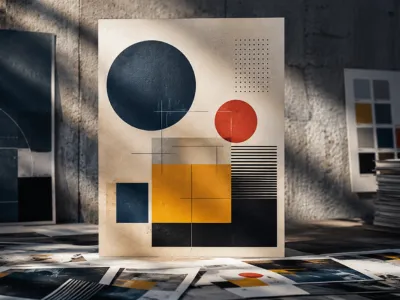
A coherent visual story relies on a foundational visual grammar, a set of principles governing the arrangement of elements within the frame. This grammar provides the syntactic structure for the narrative, determining how individual components relate to each other and to the viewer. Mastery of composition is not an artistic afterthought but the primary mechanism for establishing narrative logic, focus, and pace.
Techniques such as the rule of thirds, leading lines, and strategic framing are employed to direct attention and establish hierarchy. The use of negative space, or ma as known in Japanese aesthetics, is equally critical, allowing key subjects to breathe and imparting a sense of balance or intentional tension. Every compositional choice, from a centered subject to a deliberately unbalanced asymmetry, communicates specific narrative information and emotional subtext to the audience.
Depth of field represents another grammatical tool, separating foreground from background to guide the viewer's understanding of spatial relationships and narrative importance. A shallow depth of field can isolate a subject, suggesting introspection or singularity, while a deep focus presents a complex, layered world where multiple narrative threads coexist. This deliberate manipulation of focus allows the storyteller to emulate cognitive attention, highlighting what is crucial at any given moment in the narrative flow.
Understanding visual grammar requires examining the relationship between elements like scale, proximity, and repetition. The recurring motif acts as a visual refrain, reinforcing a theme or connecting disparate story moments. Juxtaposition, the placement of contrasting elments side-by-side, creates implicit meaning and conflict without explicit explanation. The systematic application of these principles forms a coherent and readable visual language, enabling creators to build stories that are intuitively parsed and emotionally resonant, ensuring the intended message is not lost in visual noise.
The following table outlines key compositional techniques and their primary narrative functions, illustrating how formal choices directly serve storytelling goals.
| Technique | Formal Description | Narrative Function |
|---|---|---|
| Rule of Thirds | Placing subjects along grid intersections | Creates dynamic tension, visual interest, and balanced asymmetry. |
| Leading Lines | Using lines to guide the viewer's eye path | Controls narrative pace, directs focus to key elements, implies movement. |
| Juxtaposition | Placing contrasting elements adjacently | Generates conflict, irony, or conceptual meaning through comparison. |
| Shallow Depth of Field | Limited plane of focus, blurred background | Isolates subject, signifies importance, mimics subjective attention. |
Guiding the Viewer's Eye
Effective visual narration actively choreographs the audience's attention across the canvas or screen. This deliberate guidance prevents cognitive overload and ensures that key narrative beats are apprehended in the intended sequence. Misdirection, when used strategically, can build suspense or surprise by temporarily focusing attention away from critical information.
Motion and temporal sequencing are paramount in dynamic media. The Kuleshov Effect demonstrates how the juxtaposition of a neutral face with different images creates distinct narrative meanings in the viewer's mind. This principle extends to editing rhythm, where shot duration and transition types directly manipulate emotional response and narrative tempo, crafting a compulsively viewable path through the story.
In static imagery, this guidance relies on implied motion and compositional vectors. The strategic placement of a character's gaze or the trajectory of a thrown object creates an invisible line that the viewer's eye instinctively follows. These techniques transform a single frame into a temporal experience, suggesting events that occurred just before or are about to happen immediately after the captured moment.
Color and Light as Narrative Devices
Color theory in storytelling extends far beyond aesthetic decoration to function as a nonverbal semantic system. Specific hues and palettes are employed to evoke programmed psychological responses, establish thematic motifs, and signal character development or environmental shifts. A desaturated, monochromatic scheme might convey historical distance or emotional bleakness, while a sudden splash of vivid color can mark a narrative turning point or a character's moment of enlightenment.
Lighting design, or chiaroscuro, shapes the narrative world by defining texture, mood, and moral dimension. High-key lighting minimizes shadows to suggest openness and safety, often used in comedic or heroic contexts. In contrast, the stark contrasts of low-key lighting generate visual tension, mystery, and moral ambiguity, perfectly suited for noir and thriller genres. The direction of light—whether frontal, side, or backlit—sculpts subjects, revealing or concealing emotional truth.
The symbolic use of color can create a visual shorthand that operates across a narrative. A recurring color may become intrinsically linked to a specific character, idea, or emotion, building a coherent visual vocabulary for the audience. This symbolic coding allows for sophisticated foreshadowing and thematic reinforcement without explicit dialogue, where a change in a character’s associated color palette can visually narrate their internal arc.
The strategic manipulation of light and color achieves several critical narrative functions that are foundational to visual rhetoric. It can physically and emotionally isolate characters within a frame, using spotlighting or contrasting color to separate them from their environment. It establishes and transitions between different narrative timelines or psychological states, such as using a warm palette for memories and a cool one for the present. Light and color defne the genre and tone of the story, immediately signaling to the viewer whether they are entering a romantic comedy, a gritty drama, or a surreal fantasy. Perhaps most powerfully, these elements externalize internal conflicts, using color clashes or stark lighting to make a character’s turmoil viscerally apparent, turning subjective experience into an objective visual fact that drives the narrative forward through purely sensory means.
The application of color and light can be broken down into several key narrative objectives, each serving a distinct storytelling purpose.
-
🎨 Establishing Psychological AtmosphereUsing cool blues for melancholy or warm ambers for nostalgia.
-
🌈 Signaling Character Archetype or EvolutionA villain dressed in cold hues shifting towards warmer tones indicating redemption.
-
🌓 Differentiating Narrative PlanesDistinct palettes separating reality, memory, and dream sequences.
-
❤️ Directing Emotional ResponseSaturated colors for heightened drama, desaturation for detachment or trauma.