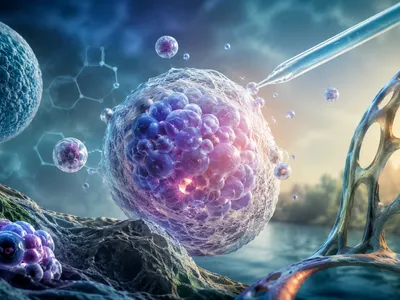
From One-Size-Fits-All to N-of-One

The foundational paradigm of modern medicine is undergoing a profound shift away from generalized treatment protocols. This transformation is propelled by the recognition that inter-individual variability in drug metabolism and disease pathogenesis significantly impacts therapeutic outcomes. Traditional approaches often lead to trial-and-error prescribing, resulting in adverse effects or lack of efficacy for substantial patient subsets.

Personalized medicine, or precision medicine, seeks to tailor medical decisions and treatments to the individual patient. It moves beyond population averages to focus on predictive, preventive, personalized, and participatory care. The core premise is that understanding a patient's unique molecular and genetic profile enables more accurate diagnoses and targeted interventions.

Advances in biotechnology provide the essential tools to realize this vision, transforming the conceptual framework into clinical reality. The integration of high-throughput data generation with sophisticated computational analytics is central to this evolution. These technologies facilitate the move towards an N-of-one model, where the individual becomes the primary unit of analysis and intervention, marking a definitive departure from the one-size-fits-all legacy.

Decoding the Genome with Next-Gen Sequencing

Next-generation sequencing (NGS) platforms constitute the technological backbone of genomic personalized medicine. The ability to sequence entire human genomes rapidly and at continually decreasing cost has removed the primary barrier to widespread genetic analysis. This capability allows for the comprehensive detection of single nucleotide polymorphisms (SNPs), copy number variations, and structural rearrangements associated with disease susceptibility.

Clinical applications of NGS are diverse and expanding. In oncology, panel sequencing of tumor DNA identifies actionable mutations that guide targeted therapy selection. In rare genetic disorders, whole-exome or whole-genome sequencing can provide definitive diagnoses after years of uncertainty. Pharmacogenomic profiling via NGS predicts patient-specific responses to common medications, such as anticoagulants or chemotherapeutic agents, preventing harmful reactions.

The following table categorizes primary NGS applications in current clinical practice, illustrating its transformative role across medical specialties.

Application Domain Sequencing Approach Clinical Utility
Oncology Tumor Panel, Whole-Exome Identifies targetable mutations (e.g., EGFR, ALK), monitors minimal residual disease.
Rare Diseases Whole-Exome, Whole-Genome Provides molecular diagnosis, ends diagnostic odyssey, informs family planning.
Pharmacogenomics Focused Gene Panels Predicts metabolism of drugs (e.g., warfarin, clopidogrel, tamoxifen) to optimize dosing.
Infectious Disease Metagenomic Sequencing Pathogen identification, antibiotic resistance profiling, outbreak surveillance.

Implementing NGS in routine care presents challenges beynd technical execution. Data interpretation requires robust bioinformatics pipelines and curated knowledge bases to distinguish pathogenic variants from benign polymorphisms. The storage, security, and management of vast genomic datasets necessitate significant infrastructure and ethical governance frameworks.

The Rise of Multi-Omics Integration

Genomics alone provides an incomplete blueprint, unable to fully predict dynamic phenotypic expression or complex disease states. The integration of multiple omics technologies—including transcriptomics, proteomics, metabolomics, and epigenomics—delivers a more dynamic and functional understanding of human biology. This systems biology approach is essential for unraveling the intricate networks that define health and disease.

Multi-omics data integration seeks to map the flow of information from the genotype to the observable phenotype. It captures the regulatory and functional consequences of genetic variation, offering insights into disease mechanisms that remain opaque to single-layer analysis. Advanced computational frameworks and machine learning algorithms are required to fuse these vast, heterogeneous datasets, identifying emergent properties and predictive biosignatures that no single omics layer can reveal.

The synergistic application of multi-omics is particularly powerful in oncology and chronic disease management. In cancer, combining genomic data with proteomic profiles of tumor tissue can identify activated signaling pathways and resistance mechanisms. For metabolic disorders, integrating genomics with metabolomics profiles provides a holistic view of biological systems in flux, enabling more precise subtyping of conditions like diabetes or cardiovascular disease.

The table below contrasts the informational layers provided by key omics disciplines, highlighting their complementary nature in constructing a complete physiological portrait.

Omics Layer Molecules Analyzed Key Insight Provided
Genomics DNA Sequence Inherited and acquired variants, disease risk alleles.
Transcriptomics RNA Expression Gene activity levels, alternative splicing, regulatory non-coding RNAs.
Proteomics Proteins & Modifications Functional effector molecules, post-translational modifications, pathway activity.
Metabolomics Small-Molecule Metabolites Downstream biochemical phenotype, real-time functional readout of cellular state.

Successful integration faces significant hurdles related to data scale, heterogeneity, and temporal dynamics. Longitudinal multi-omics sampling is becoming a research priority to model disease progression and treatment response over time. The ultimate goal is the creation of digital twins—computational models of an individual's physiology that can be simulated to predict health trajectories and therapeutic outcomes.

  • Single-Cell Multi-Omics
    Enables concurrent measurement of genomic, transcriptomic, and epigenetic information from the same cell, defining cellular heterogeneity in unprecedented detail.
  • Spatial Omics Technologies
    Preserves the architectural context of cells within tissues, mapping molecular data onto histological structures to understand microenvironmental influences.
  • Integrated Biobanks
    Large-scale cohort studies linking deep multi-omics profiles with long-term electronic health records, fueling discovery and AI model training.
CRISPR and Gene Editing Therapies

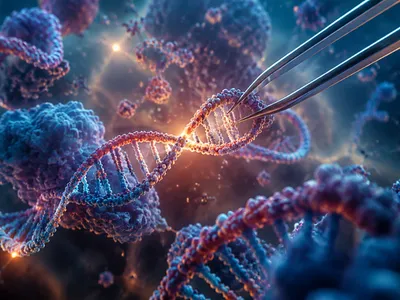
The development of CRISPR-Cas9 and related gene-editing platforms has introduced a direct, programmable method for modifying the human genome. This biotechnology transcends diagnostics to offer curative potential for genetic disorders by enabling precise correction of pathogenic DNA sequences. The system's simplicity and versatility have accelerated trnslational research from bench to bedside at an unprecedented pace.

Initial clinical successes have been achieved in hematologic diseases. Ex vivo therapies involve editing a patient's own hematopoietic stem cells to reactivate fetal hemoglobin for sickle cell disease or to correct the mutation in beta-thalassemia before reinfusion. These applications demonstrate the paradigm-shifting capacity to correct genetic mutations at their source rather than managing symptoms.

In vivo gene editing presents greater delivery challenges but offers transformative promise for treating disorders of the liver, eye, and central nervous system. Lipid nanoparticles and viral vectors are engineered to deliver CRISPR components to specific tissues. Ongoing clinical trials are investigating in vivo editing for hereditary transthyretin amyloidosis and certain forms of congenital blindness, targeting the mutant gene within the patient's body.

The therapeutic landscape is diversifying rapidly with the invention of newer, more precise editing tools. Base editors allow the direct, irreversible conversion of one DNA base pair into another without making double-strand breaks, reducing unintended editing outcomes. Prime editors offer even greater versatility, capable of making targeted insertions, deletions, and all base-to-base conversions.

A comparison of these major gene-editing platforms illustrates their distinct mechanisms and evolving therapeutic applications, highlighting the rapid technological advancement in this field.

Editing Platform Core Mechanism Key Advantage Current Clinical Focus
CRISPR-Cas9 Nuclease Creates double-strand DNA breaks, repaired by NHEJ or HDR. High efficiency for gene disruption. Ex vivo cell therapies (e.g., CAR-T, SCD).
Base Editors (BE) Direct chemical conversion of C•G to T•A or A•T to G•C base pairs. Precise single-base change without double-strand breaks. Point mutation disorders (e.g., progeria, certain liver diseases).
Prime Editors (PE) Uses reverse transcriptase and pegRNA to write new DNA sequence directly into target site. Broadest editing capability (all transitions, transversions, small inserts/deletes). Preclinical development for complex corrections.

Significant scientific and ethical challenges must be navigated for these therapies to achieve widespread use. Off-target editing effects remain a primary safety concern, driving the development of more specific Cas enzymes and improved predictive algorithms. Delivery efficiency to solid organs and immune responses to bacterial-derived Cas proteins are substantial translational barriers. The high cost of personalized cell manufacturing also poses a critical access and equity dilemma for healthcare systems worldwide.

The trajectory of gene editing is moving towards increasingly sophisticated and controlled interventions. Research focuses on developing conditional editing systems activated by specific molecular signals and epigenetic editors that modulate gene expression without altering the underlying DNA sequence. These next-generation tools aim to expand the scope of treatable conditions while enhancing safety profiles, potentially addressing polygenic and age-related diseases.

  • Enhanced Specificity Variants: Engineered Cas9 proteins (e.g., HiFi Cas9) and structure-guided redesigns dramatically reduce off-target editing while maintaining robust on-target activity.
  • Novel Delivery Vehicles: Engineered AAV capsids and non-viral lipid nanoparticles are being designed for tissue-specific tropism and efficient in vivo delivery of editing machinery.
  • Allogeneic "Off-the-Shelf" Therapies: Editing healthy donor cells to create universal cell products that evade immune rejection, aiming to reduce cost and complexity.
  • In Vivo Gene Regulation: Using catalytically "dead" Cas9 (dCas9) fused to effector domains to precisely activate or repress disease-related genes as a reversible therapeutic strategy.

What Role Do Biomarkers Play in Early Detection?

Biomarkers serve as the critical objective indicators of normal biological processes, pathogenic states, or pharmacological responses to therapeutic interventions. Their discovery and validation are central to the proactive ethos of personalized medicine, shifting focus from reactive treatment to preemptive risk assessment and early diagnosis. The utility of these molecular signatures spans from identifying individuals at elevated risk to monitoring minimal residual disease following initial therapy.

In cancer, the development of liquid biopsy technologies represents a monumental advance for early detection. These assays analyze circulating tumor DNA (ctDNA), cell-free RNA, or exosomes shed from tumors into the bloodstream. This non-invasive approach allows for the identification of molecular traces of malignancy often years before clinical symptoms or radiographic evidence manifest. The sensitivity of these assays continues to improve, enabling detection of cancers at stages where curative intervention is most likely.

The translation of biomarkers into routine screening protocols requires rigorous demonstration of clinical validity and utility. A putative biomarker must not only correlate with a disease state but also provide actionable information that improves patient outcomes beyond standard care. This necessitates large-scale longitudinal cohort studies to establish baseline ranges in healthy populations and define thresholds that trigger clinical action. The integration of multi-omics data is accelerating the discovery of composite biomarker panels that outperform single-molecule markers in both sensitivity and specificity.

Neurological and cardiovascular diseases also benefit immensely from biomarker-driven strategies. In Alzheimer's disease, fluid biomarkers like amyloid-beta and phosphorylated tau in cerebrospinal fluid, now complemented by blood-based assays, enable detection during the prolonged preclinical phase. For cardiovascular risk, beyond traditional lipid profiles, biomarkers iindicating inflammation or cardiac strain facilitate personalized prevention strategies. These applications underscore the transition from organ-level symptomatology to molecular-level diagnosis, fundamentally changing disease management paradigms.

Navigating the Future Ethical and Clinical Landscapes

The rapid integration of advanced biotechnologies into medicine generates a complex array of ethical, regulatory, and logistical challenges that must be addressed to ensure equitable and responsible progress. The collection and analysis of highly sensitive genomic and health data raise paramount concerns regarding data privacy, informed consent, and potential discrimination. Patients and research participants must understand the scope of data usage, including the possibility of incidental findings with lifelong implications.

A significant barrier to the democratization of personalized medicine is the prohibitive cost of many advanced therapies and diagnostic tools. Gene therapies and complex immunotherapies often carry price tags in the hundreds of thousands of dollars, creating disparities in access both within and between nations. Healthcare systems must develop novel value-assessment frameworks and reimbursement models that recognize the long-term curative potential of these interventions while ensuring sustainability. This economic challenge is intertwined with the need for global standardization in testing protocols and clinical interpretation to avoid a fragmented patchwork of care.

The clinical implementation of these technologies demands a transformed healthcare workforce and infrastructure. Physicians require training in genomic medicine and data interpretation, necessitating revisions to medical education curricula. Healthcare institutions must invest in bioinformatics support and data storage solutions to manage the influx of complex patient data. Furthermore, regulatory agencies face the daunting task of evaluating therapies that are increasingly personalized, moving away from the traditional large-scale clinical trial model towards N-of-one or basket trial designs. These shifts require adaptive regulatory pathways that balance innovation with rigorous safety oversight, ensuring that the promise of biotechnology translates into safe, effective, and accessible care for all patients.