Historical Foundations and Digital Rebirth

The symbiotic relationship between calligraphy and typography is rooted in a profound historical dialogue.

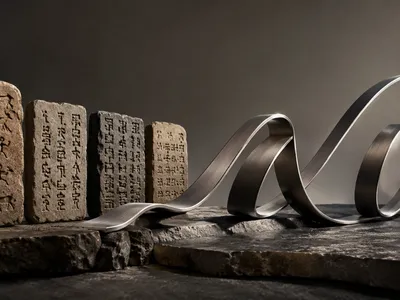
Contemporary digital type design does not emerge from a vacuum but is deeply informed by centuries of manual letterforming. The transition from scribal practice to movable type represented a first major technological rupture, yet the foundational aesthetic principles of rhythm, proportion, and contrast remained intact. These principles, codified by master scribes, continue to serve as the bedrock for evaluating typeface design, even within fully digital workflows.

The late 20th century witnessed a counter-movement against sterile digital defaults, leading to a deliberate calligraphic revival. Designers began to look back at manuscript traditions not for replication, but for algorithmic inspiration. The variable weight and organic stroke modulation found in scripts like Carolingian minuscule provided a rich visual language that starkly contrasted with the geometric precision of early digital fonts.

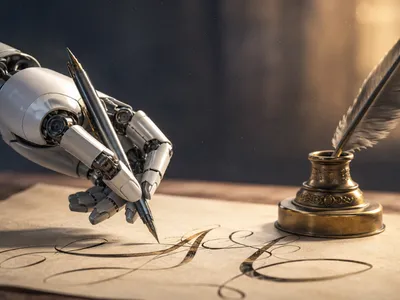
This digital rebirth is characterized by the encoding of calligraphic gesture into font software parameters, allowing for scalable authenticity. Tools now simulate the behavior of a broad-nib pen or a pointed brush, translating historical tool constraints into dynamic digital assets.

The Uncial and Blackletter Legacy

Specific historical scripts have provided concentrated wells of inspiration for modern typographic expression.

The rounded, majestic forms of Uncial script, developed between the 3rd and 8th centuries, offered an early model of distinct, separated letterforms. Its abandonment of the continuous cursive line in favor of clearer individual characters prefigured core typographic concerns of legibility and form isolation.

This architectural quality of Uncials is directly referenced in modern display typefaces that seek an aura of antiquity, substance, and ecclesiastical gravitas without descending into pastiche.

In stark contrast, the dense, angular, and vertically stressed Blackletter or Gothic script presents a more complex legacy. Its vigorous texture and imposing presence were revived during the 19th-century Gothic Revival and later appropriated in varied contexts. In contemporary design, Blackletter’s dramatic forms are often deconstructed and hybridized.

The following table illustrates the divergent typographic applications inspired by these two scripts:

Calligraphic Source Core Aesthetic Traits Modern Typographic Application
Uncial Script Rounded, monolinear, open counters, uniform weight Logo design for heritage brands, book titles, ceremonial typography
Blackletter Script Angular, condensed, high contrast, fractured curves Music genre branding (e.g., metal, hip-hop), editorial headlines, avant-garde fashion

The modern use of Blackletter often involves a conscious subversion of its historical associations. Designers extract its spiky, textured quality while frequently simplifying its notoriously complex forms to enhance digital legibility. Key design considerations drawn from these scripts include:

  • X-height and vertical stress influencing text density and page color.
  • The transformation of ductus, or the stroke sequence, into a logical vector drawing path.
  • The use of terminal shapes (like Uncial’s flat serifs) as primary identity markers for a type family.

Arabic Script and Fluid Dynamics

The calligraphic traditions of the Arabic-Islamic world offer a masterclass in fluid dynamics and rhythmic movement.

Unlike Western scripts that often prioritize individual glyph isolation, Arabic calligraphy is fundamentally connective, with its cursive imperative demanding a seamless flow from one letter to the next. This continuous stroke creates a unique visual rhythm known as *haraka*, or movement, which is as crucial as the letterforms themselves. The manipulation of the *qalam*, or reed pen, produces dramatic thick-to-thin transitions and generates a sense of breath and pulse within the text block.

Modern typographers engage with this fluidity not through literal imitation but by abstracting its core principles. The concept of variable connection inspires responsive type systems where letter joins adapt to context, mimicking the scribe's decision-making. Digital *Kufic* and *Naskh* inspired typefaces often incorporate multiple contextual alternates to preserve the organic feel of hand-penned text within standardized font files.

The following analysis contrasts the influence of two major Arabic styles on contemporary design approaches:

Calligraphic Style Inherent Dynamic Principle Modern Typographic Translation
Naskh Horizontal elongation, rhythmic curvature, and systematic proportionality Web-safe body fonts emphasizing readability and even text texture
Diwani Compressed, interlacing forms and exaggerated verticality Ornamental display faces for branding and spatial-filling logos

The abstracted flow of Arabic script provides a vital counterpoint to static geometric typography, reintroducing time-based gesture into digital lettering.

East Asian Philosophy in Letterforms

East Asian calligraphy, particularly Chinese and Japanese, embeds profound philosophical concepts directly into its execution.

Each brushstroke is a record of intentionality, pressure, and speed, making the process inseparable from the final form. The core tools—brush, ink, paper, and inkstone—facilitate a vast range of expressive marks, from wiry, dry-brush lines to lush, ink-saturated strokes. This expressive modulation challenges the uniform stroke weight prevalent in early digital typography and has spurred the development of sophisticated brush-simulation engines.

Beyond technique, the spatial organization of characters within an imaginary square reflects a deep concern for balance and negative space, known as *ma* in Japanese aesthetics. This active, breathing space between and within strokes is not merely background but an integral part of the character's visual identity and energy. Modern typfaces that draw from this tradition often feature unusually generous counters and carefully calibrated internal white space to achieve a harmonious balance.

The philosophical underpinnings of *Wabi-sabi* (acceptance of transience and imperfection) and the dynamic equilibrium of *Yin and Yang* directly inform contemporary type design. Designers intentionally introduce subtle irregularities, texture, and asymmetrical balance into otherwise precise digital fonts to evoke the warmth and humanity of the hand. This represents a deliberate move away from machined perfection toward authentic imperfection, where a seeming flaw becomes a marker of character and artistry.

Comparative modern adaptations of major East Asian script traditions can be summarized as follows:

Script Tradition Key Philosophical/Aesthetic Contribution Contemporary Typographic Manifestation
Chinese Seal Script Architectural stability, weighted gravity, and carved integrity Logo design for institutions seeking authority and timelessness
Japanese Grass Script (Sōsho) Extreme abstraction, swift gesture, and emotive flow Expressive display typography in artistic publications and fashion
Korean Hangul Modular, geometric construction based on articulatory phonetics Experimental modular type systems and UI/UI iconographic design

The legacy of East Asian calligraphy in modern typography extends beyond visual style to encompass a core set of design principles:

  • The primacy of the stroke as a unit of expression over the isolated glyph.
  • The treatment of negative space as an active, shaping force in letterform construction.
  • The intentional application of controlled randomness to mitigate digital sterility.

This philosophical integration elevates typography from mere communication to a medium of nuanced visual and conceptual expression.

Humanist Minuscule and Readability

The revival of Carolingian script by Italian humanist scribes precipitated a typographic revolution whose principles still define textual readability.

This 15th-century humanist minuscule was consciously crafted for clarity and grace, rejecting the dense Gothic textures that preceded it. Its open letterforms, moderate contrast, and distinct character spacing established an archetype for the Roman typefaces cast by early printers like Aldus Manutius. The ductus of the broad-nib pen directly informed the angled stress and organic serifs of these first typefaces, embedding the trace of the hand into printed text.

Modern research into legibility confirms the enduring validity of these humanist choices. The generous x-height and counter forms of typefaces like Garamond or Bembo optimize character recognition at small sizes. The subtle, cupped serifs and oblique axis guide the eye smoothly along a line of text, reducing visual fatigue during prolonged reading. These are not arbitrary stylistic decisions but evolved solutions to a biological constraint: the human vvisual system's processing of pattern and shape.

Contemporary digital font design frequently returns to this humanist model as a benchmark for optimal readability. While sans-serif screens may dominate user interfaces, the highest-rated fonts for long-form reading often exhibit clear humanist provenance. Designers analyze the precise proportions of historical models to calibrate new fonts for specific media, from e-ink displays to high-resolution print.

The humanist minuscule thus provided a biomechanical blueprint for readability that transcended its technological moment, becoming a permanent reference in typographic ergonomics.

Its influence extends beyond mere imitation, fostering a design philosophy where the reader's cognitive ease is paramount, ensuring that the interface of text remains unconsciously fluid and accessible across evolving platforms.

Synthesis in Contemporary Practice

Modern typographic innovation is rarely pure revival but a sophisticated synthesis of disparate calligraphic histories.

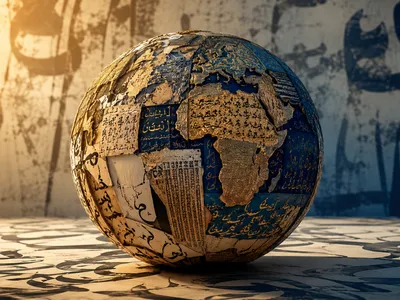
Designers now operate with an unprecedented global palette of historical forms, enabling cross-cultural hybridization. A single typeface might blend the structural clarity of Humanist minuscule with the gestural flow of Arabic Naskh or the spatial philosophy of East Asian brushwork. This fusion moves beyond pastiche to create genuinely new expressions suited to a connected, multicultural visual landscape.

The technical driver of this synthesis is parametric and variable font technology. These tools allow a single font file to behave like a responsive calligraphic hand, adjusting weight, width, or even stylistic alternates fluidly along a defined axis. The calligraphic ideal of the perfectly modulated stroke for a given context becomes a programmable reality.

This enables dynamic typography that responds to user interaction or viewport size while retaining organic authenticity.

Another critical development is the application of generative algorithms trained on calligraphic datasets. By analyzing thousands of examples of a specific hand, algorithms can learn the underlying rules of form and variation, producing novel glyphs that remain coherent within the historical style. This moves digital type design from manual drawing to directing a system of possibilities.

The result is a new genre of typefaces that are inherently flexible and context-aware.

The contemporary synthesis manifests in several key approaches seen in cutting-edge font design. One is the creation of superfamilies that contain both serif and sans-serif members derived from the same calligraphic skeleton. Another is the intentional encoding of irregularity, where controlled random variation is programmed into letterforms to mimic the natural variance of hand-lettering across a text block, thus defeating the sterile uniformity of early digital type.

Perhaps the most significant synthesis is conceptual: the merging of calligraphy's deep cultural memory with typography's forward-looking utility.

A font used in a global branding project may carry subtle visual references to specific manuscript traditions, building subconscious bridges of heritage and trust. This practice demands from the designer not only technical skill but also scholarly sensitivity to avoid appropriation and to engage with sources meaningfully. The goal is a resonant, informed modernity rather than a superficial stylistic grab.

Contemporary typography achieves its highest expression not by abandoning its calligraphic past, but by recomposing it into a dynamic, intelligent, and culturally resonant present.