The Calligraphic Origins of Digital Typography Design
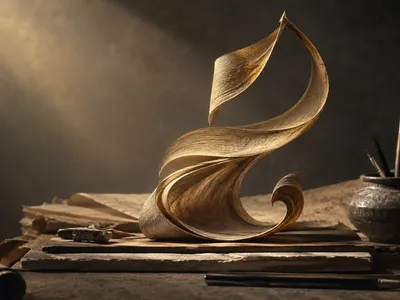
The foundational dialogue between calligraphy and digital typography begins with a shared pursuit of visual rhythm and textual texture. Manual writing instruments impart a characteristic modulation to stroke width, an effect born from pressure and angle.
This phenomenon, known as stroke contrast, is not merely a relic but a core principle digitally replicated to evoke warmth and authenticity. The translation of this physical artifact into a digital rule-set demonstrates how calligraphic logic underpins font engineering, moving beyond simple mimicry to capture the essence of the hand's motion. Type designers analyze the ductus, or the path of the writing tool, to inform the construction of vector outlines, ensuring the letterforms retain a sense of organic pprogression rather than sterile geometry. The unbroken line from calligraphic practice thus provides a critical framework for understanding how digital typefaces can communicate with historical resonance and humanist nuance.
How Did Calligraphic Traditions Influence Digital Type Design?
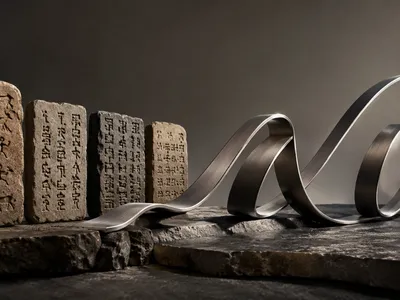
The technological evolution from manual scribing to digital font creation represents a paradigm shift in reproducibility and access, yet the underlying design decisions remain deeply indebted to scribal traditions. Early digital typefaces often directly transposed classical calligraphic models into bitmap and later outline formats.
This process required formalizing the variable, intuitive gestures of the hand into a fixed set of mathematically defined curves and points. The following table contrasts key attributes of the calligraphic source with its digital manifestation, highlighting this translation of fluid gesture into structured data.
| Calligraphic Feature | Digital Interpretation | Technical Challenge |
|---|---|---|
| Natural stroke contrast | Predefined weight axis (e.g., Thin to Black) | Maintaining optical consistency across sizes |
| Tool-specific texture & ink spread | Bitmap hinting & optical sizing adjustments | Simulating material interaction on screen |
| Fluid letterform connections | OpenType contextual alternates & ligatures | Programming intelligent character substitution |
The digitization process, therefore, is an act of interpretive preservation, where the variable is standardized and the organic is systematized without wholly sacrificing its soul.
Humanist Minuscule and Digital Readability
The Renaissance humanist minuscule, developed from Carolingian precedents, established the archetype for lowercase letterforms in the Western tradition. Its design prioritizes open counters and moderate x-height, creating a balance between character distinction and textual cohesion.
Contemporary screen-optimized typefaces like Georgia or Verdana directly inherit these principles, scaling them for pixel rendering. The humanist model proves that readability is fundamentally shaped by historical scribal choices, not merely by technical constraints.
Digital font designers leverage this centuries-old knowledge by emphasizing the clarity of individual glyphs while maintaining a even, rhythmic color across a block of text. This involves meticulous adjustment of letter spacing and word spacing, translating the consistent pace of a skilled scribe into algorithmic metrics. The following list details key humanist calligraphy features and their digital equivalents that enhance on-screen reading comprehension.
- ✒️ Varied axis: The oblique stress of the broad-nib pen is echoed in slight modulations of digital stroke contrast, reducing visual monotony.
- 🔤 Open forms: Letters like 'a', 'e', and 'c' are designed with larger apertures in digital fonts to prevent filling in at small sizes.
- 📐 Robust proportions: The generous width and clear differentiation between similar shapes (like 'i', 'l', '1') minimize confusion in UI text.
The Dynamic Gesture of the Italic Hand
Italic calligraphy, originating as a faster, condensed administrative script, introduces kinetic energy and cursive connectivity into typographic expression. Its digitization extends beyond a simple slanted roman form to capture the script's inherent forward momentum.
True digital italic fonts often feature linked letterforms and entry or exit strokes that suggest the uninterrupted flow of the hand. This dynamism is harnessed in interface design to denote motion, such as in swipeable carousels, or to visually distinguish ancillary information without disrupting the reading flow.
The challenge lies in balancing this gestural authenticity with the need for digital legibility across diverse viewports and resolutions. Designers must carefully calibrate the degree of script imitation to avoid ornamental excess that compromises functionality. The italic hand's legacy is thus one of controlled expression, teaching digital typography how to incorporate fluidity within a structured grid system.
Its application ranges from adding editorial emphasis to forming the core of brand identities that wish to convey elegance or agility. The successful digital italic is not a frozen gesture but a carefully choreographed one, where every swash and connection is intntionally placed for maximum rhetorical effect and minimal cognitive load, proving that efficiency and beauty in type can share a common lineage.
Cultural Scripts in Global Digital Interfaces
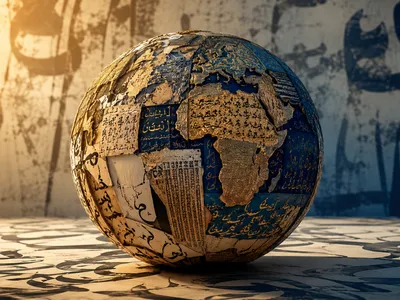
The influence of calligraphy extends profoundly beyond the Latin alphabet, shaping the digital representation of global writing systems. Scripts like Arabic, Devanagari, and Hanzi are fundamentally calligraphic in origin, with digital font design deeply engaged in translating their fluid, context-sensitive forms.
This process involves encoding complex script grammar and contextual shaping into font files, far exceeding the requirements of static Western typefaces. The challenge is to digitize without fossilizing, allowing the script to behave dynamically as intended by its calligraphic principles.
For Arabic, this means implementing extensive OpenType programming to manage the four positional forms of each letter and the elegant, connecting strokes that are central to its visual identity. The digital font must replicate the scribe’s understanding of letterform interaction. Similarly, the brush-driven strokes of East Asian scripts require careful digiital rendering to maintain proper stroke order, termination, and weight modulation essential for character recognition and aesthetic integrity. This technical labor is a direct bridge from ancient scribal practice to modern computational typography, ensuring cultural scripts thrive in new media. The following table illustrates the unique calligraphic challenges and digital solutions for several major non-Latin scripts.
| Writing System | Core Calligraphic Feature | Primary Digital Adaptation |
|---|---|---|
| Arabic | Cursive connectivity & contextual forms | OpenType programming for glyph substitution & positioning |
| Devanagari | Horizontal headline (shirorekha) linking characters | Complex ligature systems & intelligent headline drawing |
| Chinese Hanzi | Brush stroke variation & spatial balance | Hinting for legibility at small sizes & multi-weight families |
This global perspective confirms that calligraphy is not a peripheral art but the foundational engine for script design. The digital realm, by necessitating the formalization of these organic rules, actively participates in the preservation and evolution of cultural heritage. The work of synthesizing calligraphic styles into functional digital typography ensures that our global interfaces can embody both universal clarity and specific, culturally-rich expression, making the digital space truly inclusive of the world's graphical languages.