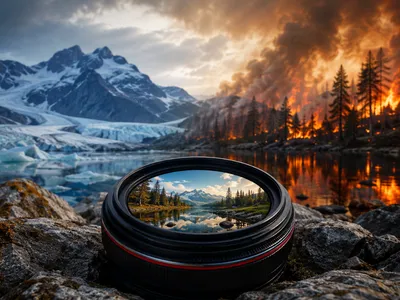
What is Experimental Photography Exploring?
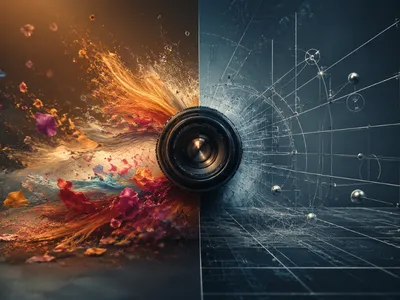
Experimental photography fundamentally challenges the ontological premise of the medium, moving beyond representational fidelity to explore process, materiality, and chance. It constitutes a critical inquiry into the very nature of photographic image-making.
This methodological shift positions the photographer not as a mere recorder of light but as an active agent in a complex chemical and physical interaction. The resulting artifacts often reside in the liminal space between photography, painting, and sculpture, questioning established categorical boundaries within the visual arts.
How Does Camera Obscura Enable Photographic Experimentation?
The camera obscura, the primordial ancestor of all photographic devices, remains a potent tool for experimentation. Its simple optical principle—light projecting an inverted scene onto a surface—is radically recontextualized.
Contemporary practitioners forego the convenience of film or sensors, instead employing direct and transformative methods on the projection surface itself. This can involve applying photosensitive emulsion, drawing, or physically altering the receiving material in real-time.
The process becomes a durational performance of light, where variables like the sun's trajectory, weather, and exposure length are uncontrollable collaborators. The final image is a unique indexical trace of a specific time and place, impossible to replicate precisely, embodying a slow, contemplative alternative to instantaneous digital capture.
How Does the Chemigram Transform Photographic Chemistry?
The chemigram is a cameraless technique that operates at the intersection of painting and photography, utilizing the resist methods of photochemistry without the need for an enlarger or a negative. Pioneered by artists like Pierre Cordier, it involves the direct application of varnishes, oils, and resists onto photographic paper, which is then sequentially subjected to developer and fixer.
This subversion of the standard darkroom sequence—often fixer before developer—creates complex, layered images governed by the artist's gestural intervention and the material's inherent reactivity. The process highlights the autographic mark-making potential of photographic chemistry, producing unique abstract compositions that refernce both microscopic biological forms and cosmic landscapes. The chemigram’s significance lies in its demystification of the photochemical process, granting the artist total control while embracing serendipitous outcomes from chemical interactions.
Intentional Camera Movement
Intentional Camera Movement (ICM) is a technique that embraces motion blur as its primary aesthetic and expressive language, rather than an artifact to be avoided. By deliberately moving the camera during a long exposure, the photographer transforms a static scene into an abstract impression.
This method requires a profound understanding of shutter speed dynamics and the kinetic relationship between the photographer's body and the camera. Techniques vary from subtle rotations and pans to vigorous, gestural sweeps, each imparting a distinct visual signature that can suggest dynamism, fluidity, or temporal passage. The resulting images often obscure literal representation to evoke emotional or sensory experiences directly.
Academic analysis of ICM positions it within the discourse of phenomenology, as it records not just the subject, but the photographer's embodied interaction with time and space. It challenges the indexicality of the photograph by prioritizing the trace of movement over the clarity of the referent, creating a hybrid form between photography and abstract expressionism.
Light Painting
Light painting is the real-time sculpting of light within the photographic frame, using handheld light sources to draw or paint during a long exposure in a darkened environment. It is a performative, time-based art form where the light source itself becomes the brush.
The technique's complexity has grown with technological advancements, incorporating programmable LEDs, fiber optics, and light stencils to achieve unprecedented precision and complexity. Beyond mere illustration, it is used for scientific visualization, such as mapping trajectories or illustrating force fields, and for interrogating the boundaries of photographic temporality.
The core theoretical implication of light painting lies in its reversal of traditional photographic roles: light is no longer a passive environmental condition to be recorded, but an active, malleable medium directly manipulated by the artist. This transforms the photographc act into a temporal performance captured in a single frame, where the final image is a cumulative record of a durational event. It fundamentally questions the static nature of the photographic moment, presenting time not as an instant but as a span that can be visually annotated and shaped, making the invisible gesture of creation permanently visible.
How Does Digital Alchemy Transform Photography?
Experimental methodologies have been profoundly reconfigured by the digital paradigm, giving rise to practices that manipulate the pixel as a plastic medium. Digital alchemy encompasses processes like data bending, glitch art, and algorithmic generation, where the image's underlying code becomes the primary site of intervention.
These techniques often involve corrupting or reinterpreting binary data to produce aesthetic artifacts of system failure, thereby critiquing the perceived perfection and immateriality of the digital image.
The theoretical framework shifts from chemical reactions to data processing errors and generative rules. Artists employ hexadecimal editors, custom software, or hardware interventions to disrupt the flow of digital information, creating visuals that reveal the inherent fragility and materiality of digital systems. This practice serves as a critical commentary on technology, visualizing the subconscious of the machine and challenging the hegemony of seamless, commercial image production.