Evidence That Established Continental Drift
The first hints of continental drift emerged from the geometrical fit of continental margins. Early cartographers noted the striking congruence between Africa’s western coast and South America’s eastern bulge.
Beyond mere shape, geological investigations revealed matching Permian glacial deposits across these separated landmasses. Such shared paleoclimatic indicators argued forcefully for an ancient supercontinent.
Paleomagnetic data later provided a quantitative foundation. By analyzing the remanent magnetization in ancient rocks, scientists discovered apparent polar wander paths that diverged for different continents but converged when the continents were rejoined. This demonstrated that the poles themselves had not moved—the continents had.
A synthesis of these observations gave rise to the theory of plate tectonics, which recast the fragmented crust as a mosaic of rigid lithospheric plates. Their relative motions are now understood to be driven by mantle convection and slab pull, processes that continuously reshape Earth’s surface over geological time scales.
The Geometry of Motion
Plate movements are not random; they follow strict rotational rules described by Euler’s theorem. Any displacement on a sphere can be represented as a rotation about an axis passing through the planet’s center.
These Euler poles define the angular velocity for each plate pair. Global navigation satellite systems now measure these velocities with millimeter-level precision, confirming the predictions of plate kinematic models.
| Plate Boundary | Relative Motion | Typical Rate (mm/yr) |
|---|---|---|
| East Pacific Rise | Divergent (spreading) | ~120–150 |
| San Andreas Fault | Transform (strike‑slip) | ~35–50 |
| Himalayan Front | Convergent (collision) | ~40–60 |
Understanding these vectors is essential for seismic hazard assessment. The relative motion between the Pacific and North American plates, for instance, dictates the slip rate along California’s major fault systems. Such precise quantification allows researchers to model strain accumulation and forecast earthquake potential with increasing confidence, supporting advances discussed in Geophysics Research Improving Earthquake Forecasting.
Integrating space‑based geodesy with traditional paleomagnetic constraints reveals how plate velocities have evolved. Hotspot tracks like the Hawaiian‑Emperor seamount chain record changes in both direction and speed, offering a long‑term archive of kinematic shifts. These combined datasets confirm that plate motion is a dynamic system influenced by evolving mantle flow and changing boundary conditions.
Temporal Records from Stone
Sedimentary strata and volcanic sequences preserve a direct archive of past plate motions. Paleomagnetic analysis of these rocks yields apparent polar wander paths that define ancient continental positions.
The integration of magnetostratigraphy with radiometric dating establishes high‑resolution temporal constraints on rifting and collision events. When combined with biostratigraphic zonation, researchers can correlate fragmented terranes across ocean basins. This multi‑proxy approach reveals that plates do not move steadily but exhibit episodic accelerations tied to mantle plume activity and major tectonic reorganizations.
Key lithological markers used to reconstruct past continental configurations include:
- ❄️ Glacial tillites indicating paleolatitudes near ancient ice sheets
- 🌊 Ophiolite suites marking sutures where oceanic crust was obducted
- 🪨 Detrital zircon age spectra tracing sediment provenance across former continental connections
Probing the Deep with Waves
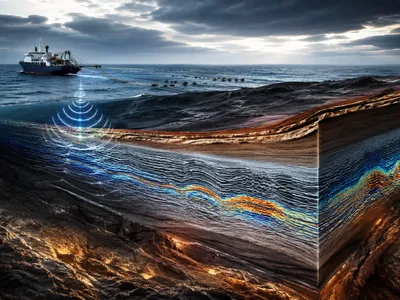
Seismic waves generated by earthquakes travel at velocities determined by the physical properties of the mantle. Tomographic inversions of these travel times produce three‑dimensional images of subducted slabs sinking into the deep Earth.
High‑resolution seismic tomography has revealed that slab remnants can be traced into the lower mantle, providing direct evidence for past subduction. These cold, fast anomalies align with the predicted trajectories of plates reconstructed from surface geology. Such imaging confirms that lithospheric plates are not merely surface features but integral components of a whole‑mantle convection system, linking surface tectonics to deep geodynamics over hundreds of millions of years.
Synthesizing the Evidence
Integrating disparate datasets transforms isolated observations into a coherent plate kinematic model. Geodetic, paleomagnetic, and tomographic constraints are now merged through advanced geodynamic inversions.
Computational frameworks that assimilate seafloor spreading rates, earthquake slip vectors, and mantle seismic structure yield internally consistent reconstructions. These syntheses reveal how plate motions are coupled to deep mantle flow over timescales ranging from decades to hundreds of millions of years.
The convergence of space‑based geodesy, high‑performance computing, and improved geological chronologies has revolutionized the field. Modern plate models now incorporate transient deformation, rheological heterogeneities, and the three‑dimensional evolution of subduction zones. Such comprehensive syntheses not only validate the foundational principles of plate tectonics but also illuminate the complex interplay between surface processes and the planet’s deep interior, providing a unified framework for understanding Earth’s dynamic evolution.