How is Calligraphy Going Digital?
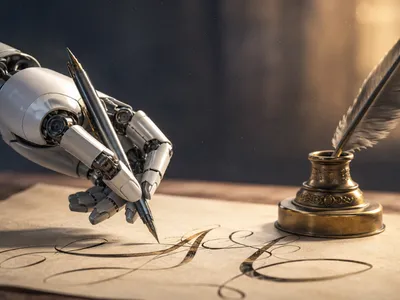
The contemporary calligrapher's studio has transcended the physical realm, evolving into a fluid digital environment where centuries-old techniques converge with modern computational power. This new workspace, or digital scriptorium, is defined not by ink and parchment but by software interfaces, pressure-sensitive hardware, and boundless virtual canvases. The fundamental tools have shifted from quills and broad-edge pens to graphic tablets, styluses, and sophisticated vector-based applications that replicate physical behavior with astonishing fidelity.
This translation of practice necessitates a deep understanding of both art and technology. Mastery within the digital scriptorium involves calibrating expressive capabilities through software settings that mimic nib flexibility, ink absorption, and paper texture. The core challenge lies in leveraging algorithmic precision without sacrificing the organic, human gesture that defines calligraphic art, a tension that shapes all digital work. Calligraphy is not writing; it is the dance of the pen.
How Does Digital Calligraphy Work?
Digital calligraphy is underpinned by several distinct technical methodologies, each offering unique creative possibilities. The most direct approach involves the use of a pressure-sensitive stylus on a tablet, where software like Adobe Fresco or Procreate uses custom brush engines to simulate traditional tools in real-time. Every stroke is recorded as a path defined by mathematical Bezier curves, allowing for infinite scaling and precise post-hoc adjustment of weight, shape, and flow without losing the original gesture's character.
A more programmatic method involves the creation of variable fonts and parametric lettering systems. Here, the calligrapher designs a master set of glyphs with adjustable attributes—such as weight, contrast, or slant—controlled by custom axes. This transforms static letterforms into dynamic, responsive entities that can adapt to different contexts automatically. Furthermore, generative and procedural techniques utilize code to define rules for mark-making, producing ccomplex, algorithmically-driven compositions that would be impossibly time-consuming to render by hand.
The following table outlines the primary methodologies, their key tools, and their fundamental applications within digital media. This comparison highlights the spectrum from direct manual replication to fully systematic generation, illustrating the expansive toolkit available to the modern practitioner.
| Methodology | Primary Tools | Core Application |
|---|---|---|
| Direct Digital Rendering | Stylus, Tablet, Brush Engine Software | Authentic stroke replication for logos, titles, and standalone artwork. |
| Parametric & Variable Type Design | Font Editing Software (Glyphs, Robofont), Code | Creating adaptive type families and responsive branding systems. |
| Generative & Procedural Systems | Processing, p5.js, Python, Houdini | Producing large-scale, data-driven, or infinitely variable compositions. |
The shift from manual to algorithmic penmanship fundamentally alters the creative process. It introduces a layer of abstraction where the artist manipulates parameters and logic chains, curating outcomes rather than directly drafting every line. This method enables a sophisticated exploration of form and pattern, pushing calligraphy into the realm of systematic design and opening doors to highly personalized user experiences where typography responds to interaction or environmental data in real time.
Expressive Potential Beyond the Static Glyph
Digital calligraphy liberates letterforms from stasis, enabling temporal dimensions through animation and interactivity. Individual strokes can be programmed to appear sequentially, mimicking the act of writing itself, which adds narrative power and directs viewer attention in motion graphics.
This kinetic potential allows calligraphers to embed emotion and meaning directly into the movement of the text. A word might unfold with hesitant fragility or bold aggression, dictated by the velocity curves and easing functions applied to each Bezier path. The technique transforms typography into a performance, where the journey of the pen’s path is as communicative as the final glyph. The letter comes alive.
Generative systems introduce a collaborative element between artist and algorithm, where code acts as a dynamic co-author. By establishing rules for form, spacing, and variation, the calligrapher sets a creative ecosystem in motion, yielding unique iterations that retain a core stylistic handwriting. This approach is particularly potent in data visualization, where flowing script can represent quantitative information with an inherently human and aesthetic quality, bridging the gap between objective data and subjective interpretation.
Digital Calligraphy for Modern Branding
Modern brands increasingly seek unique, fluid viisual identities that convey authenticity and adaptability. Digital calligraphy answers this demand by providing organic signatures and custom lettering that stand apart from standard typefaces.
The application of these techniques extends into responsive logo systems and animated brand assets. The table below categorizes key implementation areas, illustrating how digital calligraphy functions across different media touchpoints to create a cohesive yet flexible identity.
| Application Scope | Static Manifestation | Dynamic Manifestation |
|---|---|---|
| Core Brand Mark | Hand-lettered logos, custom wordmarks | Loading animations, interactive logo states |
| Marketing & Advertising | Print collateral, packaging typography | Social media motion graphics, video titles |
| Digital Experience | Website headers, UI typography | Micro-interactions, responsive lettering that changes with user input |