The Human Genome and Genetic Information
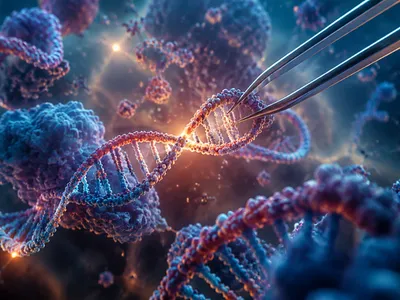
Every human cell carries a complete copy of the genome, a molecular instruction book written in deoxyribonucleic acid. This genome contains approximately three billion nucleotide pairs organised into twenty-three chromosome pairs.
Three billion base pairs constitute the fundamental unit of hereditary information. Yet only a small fraction directly codes for proteins; the rest orchestrates when, where and how much of each protein is produced.
Through transcription and translation, the nucleotide sequence is converted into functional proteins that build tissues, catalyse reactions and regulate cellular communication. This flow of information—from DNA to RNA to protein—remains one of the most conserved mechanisms across all life forms. The complete set of genetic instructions is remarkably stable, yet minute alterations can produce profound phenotypic consequences.
Non‑coding regions, once dismissed as “junk DNA”, are now recognised as critical regulatory elements. Enhancers, promoters and non‑coding RNA molecules fine‑tune transcription in response to developmental cues and environmental stimuli. Epigenetic modifications add another layer of complexity, chemically marking DNA to activate or silence genes without altering the underlying sequence. Together these layers determine an individual’s unique phenotype, illustrating that the blueprint is not a static diagram but a dynamic, context‑dependent interpreter of biological information.
Decoding Disease Susceptibility
Not all genetic variants are benign; some subtly alter protein structure or gene expression in ways that increase disease risk. These single nucleotide polymorphisms (SNPs) represent the most common type of genetic variation among individuals.
Disorders such as Huntington’s disease arise from a single pathogenic variant—these are monogenic conditions with high penetrance. Far more common are polygenic diseases like type 2 diabetes and coronary artery disease, where dozens or hundreds of risk alleles collectively contribute to susceptibility.
Genome‑wide association studies (GWAS) have catalogued thousands of SNPs associated with complex traits. By comparing variant frequencies in large cohorts of affected and unaffected individuals, researchers pinpoint genomic loci that harbour risk alleles. Each variant usually exerts a very modest effect, but their cumulative influence can be substantial. Common variants often reside in non‑coding regions and influence gene regulation rather than protein function.
The translation from statistical association to biological mechanism remains a formidable challenge. A risk allele may alter a transcription factor binding site, change RNA splicing efficiency, or affect the stability of a regulatory RNA. Moreover, genetic susceptibility rarely acts in isolation; diet, physical activity, microbiome composition and even social determinants of health modify the expression of inherited risk. This gene‑environment interplay explains why individuals with identical high‑risk genotypes can have completely different clinical outcomes. BRCA1 and BRCA2 mutations, for instance, dramatically increase breast and ovarian cancer risk, yet penetrance is incomplete and influenced by reproductive history and lifestyle factors.
The following examples illustrate well‑characterised genetic risk factors across different disease categories:
- APOE ε4 – strongest common genetic risk factor for late-onset Alzheimer’s disease
- HLA-DRB1 – alleles associated with rheumatoid arthritis and type 1 diabetes
- F5 (Factor V Leiden) – thrombophilia variant increasing venous thromboembolism risk
- TCF7L2 – high-impact SNP for type 2 diabetes susceptibility
When Genes Influence Drug Response
Pharmacogenomics examines how genetic variation shapes interindividual differences in drug efficacy and toxicity. This discipline sits at the interface of pharmacology and genomics.
Variants in genes encoding drug‑metabolising enzymes, transporters and receptors can substantially alter pharmacokinetics and pharmacodynamics. The consequences range from therapeutic failure to life‑threatening adverse reactions.
The cytochrome P450 superfamily, particularly CYP2D6, CYP2C19 and CYP2C9, exhibits extensive polymorphism. Poor metabolisers carry two loss‑of‑function alleles and accumulate drugs to toxic concentrations, whereas ultrarapid metabolisers may not achieve therapeutic levels. CYP2D6 alone metabolises approximately 25% of commonly prescribed drugs.
Clinical implementation of pharmacogenomic guidance has progressed most rapidly in oncology, cardiology and psychiatry. Trastuzumab is effective only in breast cancer patients with HER2 amplification; similarly, abacavir hypersensitivity is strongly predicted by HLA‑B*5701. The table below summarises well‑validated gene‑drug pairs with established clinical guidelines.
| Gene | Variant Phenotype | Drug | Clinical Consequence |
|---|---|---|---|
| CYP2C19 | Poor metaboliser | Clopidogrel | Reduced antiplatelet activation, increased stent thrombosis |
| VKORC1 | −1639G>A variant | Warfarin | Increased sensitivity, lower dose requirement |
| TPMT | Low activity | Azathioprine | Severe myelosuppression |
| DPYD | Deficient activity | Fluoropyrimidines | Severe gastrointestinal and haematological toxicity |
| HLA‑B*5701 | Presence of allele | Abacavir | Hypersensitivity syndrome |
Polygenic Scores and Genetic Risk Assessment
A polygenic score aggregates the effects of thousands of common variants into a single quantitative measure. Each allele is weighted by its estimated effect size from genome‑wide association studies.
These scores capture inherited liability for complex traits more comprehensively than any single variant. They are typically standardised to a normal distribution in the population.
Prospective cohort studies demonstrate that individuals in the top decile of polygenic risk have two‑to‑four‑fold increased odds for coronary artery disease, breast cancer and type 2 diabetes compared to the middle decile. Risk stratification using polygenic scores could enable earlier and more targeted preventive interventions, such as intensified sscreening or lifestyle modifications. Integration with conventional risk factors improves predictive accuracy beyond traditional models alone.
Nevertheless, polygenic scores possess inherent limitations. Their portability across ancestral groups remains poor because most GWAS have been conducted in European‑origin populations. Furthermore, scores explain only a fraction of heritability and cannot account for rare variants or non‑linear interactions. The table below illustrates the current predictive performance of polygenic scores for selected diseases.
| Disease / Trait | Number of Variants | AUC (area under curve) | Risk Ratio (top vs. bottom centile) |
|---|---|---|---|
| Coronary artery disease | 6.6 million | 0.81 | 4.2 |
| Type 2 diabetes | 1.3 million | 0.73 | 2.6 |
| Breast cancer | 313 | 0.64 | 3.4 |
| Atrial fibrillation | 6.2 million | 0.78 | 3.8 |
The clinical utility of polygenic scores is currently being evaluated in several randomised controlled trials. Key challenges that must be addressed before widespread implementation include:
- Ancestral diversity – current scores are less accurate in non-European populations priority
- Over-interpretation – scores communicate probability, not certainty caution
- Psychosocial impact – anxiety or fatalism following high-risk results ethical
- Health equity – risk of widening disparities if access is uneven systemic
What Can We Learn from Our Ancestors’ DNA?
Ancient genomes preserved in bones and teeth serve as direct molecular windows into past populations. Palaeogenomics has revolutionised understanding of human migration, admixture and adaptation.
Comparison with archaic hominins reveals that Neanderthals and Denisovans contributed DNA to contemporary humans. These introgressed segments constitute approximately 2% of Eurasian genomes.
Denisovan ancestry reaches 5% in some Oceanian populations. Such admixture events occurred after modern humans left Africa and encountered archaic groups in Eurasia.
Extracting and sequencing highly degraded DNA requires specialised clean‑room protocols and authentication criteria. Contamination from modern human DNA and environmental microbes remains a persistent technical obstacle, yet advances in hybridisation capture and single‑stranded library preparation now enable retrieval of complete ancient genomes from specimens tens of thousands of years old.
Perhaps the most medically relevant insight from archaic DNA is adaptive introgression. Alleles that were beneficial in archaic environments entered modern human gene pools through interbreeding. The EPAS1 haplotype conferring hypoxia tolerance in Tibetans was inherited from Denisovans; Neanderthal variants contributed to immune function, keratin formation and lipid metabolism. These introgressed alleles influence contemporary disease risk—some protect against viral infection while others increase susceptibility to autoimmune disorders or depression. Archaic ancestry thus continues to shape health outcomes today, illustrating that our genetic heritage extends far beyond Homo sapiens.
The estimated proportion of archaic ancestry in present‑day populations varies considerably by geographic region, as summarised below.
| Population | Neanderthal ancestry | Denisovan ancestry | Notable introgressed traits |
|---|---|---|---|
| East Asian | 2.3 – 2.6% | <0.1% | Keratin filaments, immune genes |
| European | 1.8 – 2.1% | <0.1% | Lipid catabolism, pigmentation |
| South Asian | 2.1 – 2.4% | 0.1 – 0.3% | Immune regulation |
| Oceanian | 2.0 – 2.5% | 3.0 – 5.0% | EPAS1 (altitude), TBX15 (adipose) |