Defining Concept Art
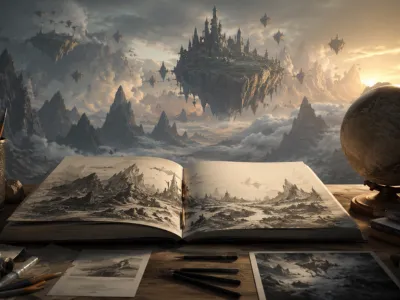
In the domain of digital interactive media, concept art constitutes the foundational visual lexicon from which entire game worlds are lexically and aesthetically constructed. It transcends mere illustration, operating as a critical pre-production dialect between artists, designers, and engineers. This artistic practice is not an end in itself but a generative and iterative process aimed at exploring, defining, and communicating the core visual pillars of a project. Its primary function is to establish a cohesive visual target and artistic constraints before costly production phases commence, thereby mitigating aesthetic dissonance and technical misalignment.
The stylistic taxonomy of concept art is vast, ranging from photorealistic digital painting to highly stylized, non-representational forms. Each style encodes specific semantic and emotional cues. For instance, a painterly style with visible brushstrokes might evoke a sense of historical authenticity or dreamlike abstraction, while clean, graphic line art could signal mechancal precision or cartoonish logic. The choice of style at this nascent stage is a profound design decision, as it begins to implicitly define the game's tone, narrative gravity, and intended player emotional response.
Key deliverables within this phase include character turnarounds, environment keyframes, prop sheets, and mood boards. These artifacts serve as the single source of visual truth for all downstream departments. The evolution from loose thumbnail sketches to fully rendered paintings mirrors the design process itself—moving from broad conceptual ideation to detailed specification. Consequently, the aesthetic language established here directly influences asset modeling, texture creation, lighting schemes, and even user interface design, creating a unified sensory experience.
The role of the concept artist is thus inherently interdisciplinary. They must possess not only masterful technical and artistic skill but also a deep understanding of game design principles, narrative pacing, and technical constraints like polygon budgets and texture memory. Their work translates abstract design documents and narrative beats into tangible visual forms that can be evaluated, iterated upon, and ultimately engineered. This translation is where pure art becomes functional game design.
- Visual Pillars: Core aesthetic principles (e.g., "organic decay," "synthetic order") that guide all artistic decisions.
- Keyframe Art: Fully rendered illustrations depicting critical narrative or gameplay moments, establishing tone and scope.
- Iterative Process: The cyclical nature of sketching, feedback, and refinement central to defining a game's look.
Ultimately, defining concept art is to acknowledge its role as the primary architectural blueprint for the game's visual identity. It is a strategic tool for problem-solving and communication, setting immutable boundaries within which the creative and technical magic of game development unfolds. Its style is the first and most influential layer of the game's diegetic fabric.
Visual Direction in Games
Visual direction emerges from the synthesis of concept art into a living, interactive paradigm. It is the continuous application and enforcement of the established visual style throughout every pixel and polygon of the game. This direction ensures that the initial artistic vision withstands the pressures of production scalability, technical optimization, and contributions from large, distributed teams. A strong visual direction is characterized by consistency, clarity, and purpose, where every environmental detail, character costume, and particle effect reinforces the core artistic thesis.
The influence of visual direction on player cognition and gameplay is profound and often under-analyzed. A meticulously directed visual field performs critical ludic functions beyond aesthetics. It guides the player's attention through contrast, color saturation, and light, effectively acting as an invisible wayfinding system. For example, a quest-critical item might be bathed in a distinct hue or possess a unique silhouette, making it discernible within a cluttered environment. This is not a post-production effect but a principle embedded in the concept phase and maintained by rigorous art direction.
Furthermore, visual direction directly shapes spatial literacy and environmental storytelling. The scale of architecture, the density of foliage, and the quality of light (e.g., sharp volumetric rays vs. diffuse gloom) inform the player about the history, rules, and emotional state of the game world. A derelict space station's corroded corridors, visualized first in concept art, dictate level design pathways, hazard placement, and even audio design. The direction ensures that these elements feel like inevitable products of the world, not arbitrary design choices. It creates a believable and internally consistent diegesis.
The challenge for art directors lies in maintaining this coherence while accommodating gameplay necessities. A visually clean area intended for tense combat may require simplified geometry and reduced visual noise to ensure gameplay clarity, even if the concept art suggested more complexity. Thus, visual direction is a constant negotiation between pure aesthetics and interactive functionality. It involves establishing style guides, shader libraries, and material palettes that allow for both variety and uniformity, enabling artists and level designers to build new content that feels intrinsically part of the whole.
- Environmental Storytelling: Using visual cues within the game world to imply narrative and history without explicit text or dialogue.
- Ludic Function: The purpose a visual element serves in facilitating or enhancing gameplay mechanics and player understanding.
- Style Guide: A comprehensive document detailing color palettes, typography, material definitions, and compositional rules for the project.
In analyzing successful titles, one finds that their most memorable qualities are often the result of an unyielding visual direction. From the cel-shaded vibrancy of Jet Set Radio to the oppressive bleakness of Dark Souls, the visual language dictates the rhythm of engagement. It frames the player's journey, making the transition from static concept art to dynamic, player-controlled experience not just a technical achievement, but a cohesive artistic and interactive statement.
Artistic Evolution
The trajectory of concept art styles is not static but evolves in a dynamic dialectic with technological innovation, cultural shifts, and the expanding lexicon of the medium itself. Historically, the transition from pixel art and limited sprite-based visuals to three-dimensional polygonal models represented a seismic shift, demanding entirely new conceptual approaches. Artists moved from designing within strict tile and palette constraints to sculpting virtual forms in 3D space, a change that initially saw concept art mimicking the low-polygon aesthetic of early real-time graphics. This evolution underscores how concept art often anticipates and adapts to technological capabilities and constraints.
In the contemporary landscape, the rise of photogrammetry, procedural generation, and real-time ray tracing has again reshaped the conceptual pipeline. Concept art for a modern AAA title may now begin with photorealistic mock-ups that serve as direct targets for asset creation, blurring the line between pre-viz and final render. However, this technological empowerment has also sparked a counter-movement towards stylized non-realism. Games like Okami, Cuphead, or Team Fortress 2 leverage distinct historical art movements—sumi-e painting, 1930s rubber hose animation, and mid-century commercial illustration, respectively—to create timeless identities that avoid the "uncanny valley" and age more gracefully than their photorealistic counterparts.
This stylistic bifurcation reflects a maturation of the medium. The industry no longer views graphical fidelity as a unilateral goal but recognizes artistic coherence as paramount. The evolution is thus not merely technical but philosophical. Concept artists are now archivists and synthesists, drawing from a vast history of global art—Art Deco, Ukiyo-e, Soviet Constructivism, Bio-mechanical art—to infuse game worlds with deeper cultural and thematic resonance. This scholarly approach elevates the visual language beyond surface-level appeal, embedding layers of meaning that enrich the player's interpretive experience.
The tools of creation have democratized and accelerated the evolutionary process. Digital painting software, 3D sculpting applications, and AI-assisted sketching allow for rapid iteration and hybridization of styles. An artist can now paint over a 3D base model to explore lighting scenarios with unprecedented speed, merging traditional illustrative skills with cutting-edge technical preview. This fluid workflow means the concept phase is more iterative and integrated than ever, allowing styles to evolve organically throughout production rather than being locked at the outset.
The artistic evolution of concept art, therefore, mirrors the game industry's journey from a technical novelty to a legitimate cultural art form. Each new stylistic trend or technical breakthrough expands the vocabulary available to designers, enabling more nuanced and expressive worlds. The choice between a painterly, hand-crafted look and a sleek, physically-based render is not just aesthetic; it is a narrative and mechanical declaration that shapes every subsequent design decision.
Ultimately, this evolution points toward a future where concept art is increasingly dynamic and interactive itself. Real-time engine tools allow for the creation of "living" concept art that can be viewed in VR or have its time of day cycled, further closing the gap between vision and implementation. This continuous refinement cycle ensures that the artistic vision remains the guiding star, capable of adapting to new possibilities without losing its core identity—a testament to the resilient and adaptive nature of game visualization.
The Impact of Artistic Styles on Gameplay Mechanics
The interplay between artistic style and gameplay mechanics constitutes one of the most profound and under-theorized synergies in game design. A chosen aesthetic is not a superficial skin but a fundamental design framework that directly informs, enables, and constrains interactive possibilities. The visual grammar established by concept art dictates what actions feel plausible and rewarding within the game world. A hyper-realistic, gritty art style naturally couples with mechanics emphasizing survival, weight, and consequence, while a whimsical, exaggerated cartoon style invites physics-defying mobility and comedic failure states.
This causality is evident in core gameplay loops. Consider stealth mechanics: a monochromatic, high-contrast style inspired by film noir (e.g., Te Noir) naturally defines light and shadow as primary gameplay verbs. The visual style is the mechanic's interface. Conversely, a vibrant, low-contrast style with clear visibility would undermine tension and make hiding mechanics feel artificial. Similarly, the clean, iconic silhouettes and bold color-coding common in cel-shaded or graphic styles serve a critical gameplay function: they ensure immediate character and object recognition in fast-paced action games, reducing cognitive load and allowing mechanics to operate at high speed.
Artistic style also directly impacts the design of user interface (UI) and heads-up display (HUD) elements. A diegetic UI—where interface elements exist within the game world—must be conceived alongside the environmental art to feel organic. A steampunk aesthetic demands brass gauges and mechanical readouts, while a cyberpunk world calls for holographic projections. The concept art for these worlds must include early explorations of such elements, as their integration affects screen real estate, player readability, and ultimately, the immersive quality of the interaction. A poorly integrated UI can shatter the aesthetic cohesion established by otherwise impeccable art direction.
Style influences physics and animation systems. A game aiming for a painterly, dreamlike feel might employ floaty jump arcs and slow, weightless motion blur, which would feel incongruous in a game with a photorealistic art direction modeled after human kinetics. The concept art's depiction of motion—through speed lines, impact frames, or ethereal trails—sets expectations that the animation and programming teams must fulfill. This creates a holistic sensory feedback loop: the player's action (mechanic) produces a visual result (style) that reinforces the fantasy the art promised.
- Diegetic Interface: UI elements that are presented as part of the game world itself, respecting its aesthetic and physical rules.
- Visual Grammar: The set of rules and conventions established by the art style that communicates functionality and narrative.
- Sensory Feedback Loop: The cycle where gameplay input generates audiovisual feedback that validates and enhances the core fantasy.
The deliberate alignment of style and mechanic is a hallmark of sophisticated design. It moves beyond treating art as a post-hoc wrapper and instead engages in parallel form-function development. When a game's artistic style and its core mechanics are conceived in tandem, each reinforces the other, creating an experience where the act of playing feels like a natural extension of inhabiting the visualized world. This symbiosis is the ultimate goal, transforming a visually compelling concept into a coherent and unforgettable interactive system.
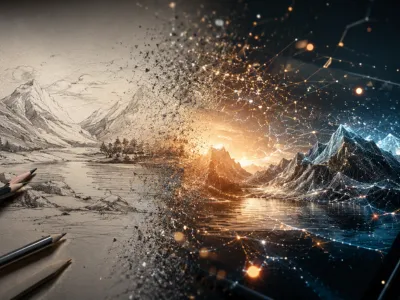
Case Studies: From Art to Interactive Design
Empirical analysis of specific titles reveals the concrete processes through which definitive art styles transmute into foundational game design. A paramount example is Dishonored (Arkane Studios). Its conceptual foundation, led by visual director Sebastien Mitton, was built upon a "painterly" style inspired by Old Masters like Rembrandt and Vermeer, combined with a grotesque, whale-oil powered industrial aesthetic. This was not merely an artistic whim; the high-contrast chiaroscuro lighting directly enabled the core stealth mechanics, creating deep pools of shadow for players to hide in. The exaggerated, caricatured character designs communicated faction allegiances and threat levels at a glance, fulfilling a critical ludic communication function. Every rusted pipe and decaying brickwork, first captured in concept art, dictated level geometry that facilitated verticality and hidden pathways, proving that the art style was the blueprint for the game's systemic "playground."
Contrast this with the development of Journey (thatgamecompany). Its concept art evolved towards vast, minimalist deserts and elegantly robed figures, a style evoking profound archetypal symbolism. This stark, wind-swept aesthetic necessitated specific mechanical adaptations. The absence of traditional UI, the focus on gliding and chirping communication, and the seamless multiplyer encounters all stemmed from the artistic goal of creating a wordless, emotionally resonant pilgrimage. The art style demanded mechanics that were intuitive, graceful, and cooperative, removing any element of violence or complex resource management that would have shattered the intended tone. Here, the concept art's emotional target dictated the subtraction of conventional mechanics, demonstrating that style can define by omission as powerfully as by inclusion.
A third illustrative case is Borderlands (Gearbox Software). The game's initial development featured a standard sci-fi realistic style, which failed to distinguish it in a crowded market. The late-stage pivot to a cell-shaded "concept art come to life" style, with heavy ink outlines and textured halftones, was a transformative design decision. This style did more than provide visual flair; it fundamentally altered the game's feel and readability. The clear outlines made characters and loot stand out against chaotic battlefields, directly supporting the loot-driven, fast-paced shooter mechanics. The comic-book aesthetic also justified the game's exaggerated tone, hyperbolic characters, and over-the-top violence, creating a perfect harmony between how the game looked, how it played, and how it made the player feel. This case underscores that a bold artistic choice can rede fine a game's core identity and market position.
| Game Title | Primary Art Style | Core Gameplay Mechanic Influenced | Design Impact |
|---|---|---|---|
| Dishonored | Painterly Chiaroscuro / Industrial Grotesque | Stealth & Vertical Navigation | Light/shadow defines usable space; environmental storytelling guides paths. |
| Journey | Minimalist Archetypal Symbolism | Non-verbal Communication & Gliding Movement | Art-driven subtraction of UI/violence to foster emotional connection and wonder. |
| Borderlands | Cel-Shaded Comic Book | Loot-Driven Combat & Fast-Paced Action | Enhanced visual clarity for gameplay chaos; justified tonal exaggeration and humor. |
| Limbo | Monochrome Silhouette | Puzzle-Platforming & Hazard Perception | Reduced visual noise to foreground puzzle elements; created deep atmospheric tension. |
These case studies collectively demonstrate that the most impactful game designs are those where the artistic vision and interactive design are inextricably linked from inception. The concept art acts as a hypothesis—a vision of a world and its feel—and the gameplay mechanics are the experiment that tests and realizes that hypothesis within an interactive framework. The success of these titles lies not in one discipline leading the other, but in a deep, iterative collaboration where aesthetic decisions solve design problems, and design needs inspire aesthetic innovation. This synthesis is the hallmark of games that resonate as coherent artistic statements, leaving a lasting legacy precisely because their visual soul and interactive body are one.
- Chiaroscuro: The treatment of light and dark in painting, adapted in games to directly shape stealth and exploration mechanics.
- Mechanical Subtraction: The design process of removing standard mechanics (e.g., life bars, detailed maps) to serve a broader artistic and emotional goal.
- Market Differentiation: The use of a distinctive art style as a primary factor in establishing a game's unique identity in a competitive landscape.
In conclusion, the transition from static concept art to dynamic game design is a complex alchemy. It requires a development culture that respects the conceptual phase as a strategic design tool, not just a gallery of pretty pictures. The styles explored in these cases—painterly, minimalist, comic-book, silhouette—were not arbitrary selections but the seeds from which entire game systems grew. They provided the rules for the world's logic, the language for its communication, and the emotional palette for the player's journey. Analyzing this process reveals that at the highest level of the craft, the art is the design, and the design is the art.