The Atlantic Conveyor Belt
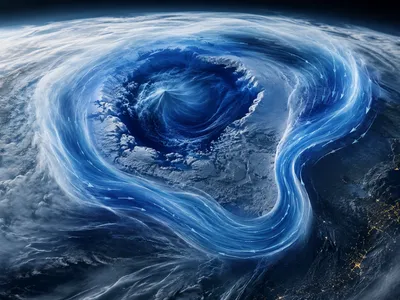
Operating like a massive oceanic pump, the Atlantic Meridional Overturning Circulation (AMOC) transports warm, saline water northward near the surface. This flow releases heat to the atmosphere, significantly moderating winter temperatures across western Europe and the eastern seaboard of North America.
After cooling and increasing in density in the Nordic Seas, surface water sinks to form deep, southward-flowing currents. This overturning process effectively redistributes thermal energy, making it a cornerstone of the global climate system. The conveyor’s strength is directly tied to salinity gradients and surface heat fluxes.
Climate models indicate that freshwater input from Greenland’s melting ice sheet could weaken this circulation. A slowdown would reduce ocean heat transport toward high latitudes, potentially altering storm tracks and precipitation regimes across the Northern Hemisphere.
Paleoclimate records reveal abrupt shifts in the conveyor’s intensity during past deglaciations, underscoring its non‑linear response to forcing. Modern observational arrays, such as the RAPID project, now continuously monitor these critical flows to detect early warning signals of change.
The Pacific Engine
The Pacific Ocean hosts the largest basin‑scale circulation, dominated by the trade winds that drive westward surface currents. These waters accumulate heat in the western Pacific, creating a deep warm pool that fuels atmospheric convection and shapes global weather patterns.
El Niño‑Southern Oscillation (ENSO) represents the most potent interannual climate signal originating from the tropical Pacific. During El Niño, the eastward shift of warm water releases stored heat into the atmosphere, triggering worldwide disruptions in rainfall and temperature. This oscillation is intrinsically linked to the Walker circulation and ocean‑atmosphere coupling.
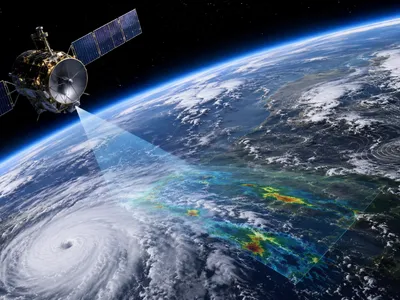
Beyond ENSO, the Pacific Decadal Oscillation (PDO) modulates ocean conditions on multi‑decadal timescales, influencing marine ecosystems and coastal climates from Alaska to Chile. Persistent anomalies in sea surface temperature patterns reorganize storm paths and affect drought frequency in western North America. Research now integrates high‑resolution satellite data with subsurface Argo floats to refine predictions of these extended variability modes, highlighting the role of satellites in modern meteorology.
Because the Pacific Engine connects equatorial dynamics to extra‑tropical circulation, its behavior directly impacts monsoon systems in Asia and the Americas. Understanding the feedbacks between basin‑scale currents and atmospheric circulation remains a central challenge for future climate projections.
The Southern Ocean's Role
Encircling Antarctica, the Southern Ocean forms the planet’s primary conduit for exchanging water masses among the Atlantic, Pacific, and Indian basins. Its unimpeded zonal flow, driven by relentless westerly winds, governs the global overturning circulation through processes of deep water upwelling and bottom water formation.
Intense air‑sea interactions here allow carbon dioxide and heat to be drawn into the interior, making this region a dominant sink for anthropogenic warming. Eddies, not the large‑scale mean flow, carry the majority of this heat poleward, a mechanism that climate models must resolve with increasing precision to avoid systematic biases in future projections.
The ocean’s ability to sequester carbon hinges critically on the biological pump and the ventilation of Antarctic Bottom Water, which spreads cold, dense waters far into the northern basins. Recent observational campaigns reveal freshening trends near the continent, linked to ice‑shelf melt, that could stabilize the water column and reduce deep convection. Such changes would alter the efficiency of heat and carbon storage, with repercussions for global sea level and marine ecosystems.
Key drivers of Southern Ocean climate influence:
| Process | Climate Impact | Observed Trend |
|---|---|---|
| Antarctic Bottom Water formation | Drives abyssal overturning | Freshening, volume decline |
| Ekman transport | Upwelling of deep carbon | Enhanced by westerly shift |
| Eddy heat flux | Transports heat poleward | Increasing with wind stress |
Satellite altimetry and autonomous profiling floats now resolve the region’s eddy field with unprecedented detail. These data confirm that eddy compensation partially offsets the direct effect of stronger winds, a feedback that must be accurately represented to constrain estimates of the Southern Ocean’s future contribution to global climate trajectories.
The Indian Ocean's Monsoon Driver
The Indian Ocean’s unique geography, bounded by the Asian continent and open to the south, gives rise to the most energetic monsoon system on Earth. Seasonal reversals of the monsoon winds drive dramatic changes in surface currents, most notably the Somalia Current and the Indian Monsoon Current, which switch direction twice a year.
These wind‑forced currents redistribute heat across the basin, creating a strong zonal temperature gradient that feeds back onto atmospheric convection. The resulting monsoon trough and associated rainfall directly affect the livelihoods of over a billion people. Variability in the basin is further modulated by the Indian Ocean Dipole (IOD), a coupled ocean‑atmosphere phenomenon that, when positive, brings cooling to the eastern equatorial region and enhances rainfall over East Africa.
Key mechanisms linking Indian Ocean circulation to monsoon strength:
- 🌊 Wyrtki Jets – Equatorial surface jets that redistribute warm water during monsoon transitions, preconditioning the basin for IOD events.
- 🌊 Coastal upwelling – Along Somalia and Arabia, summer monsoon winds drive upwelling of cold, nutrient‑rich water that modifies local sea surface temperatures and atmospheric pressure gradients.
- 🌊 Stratification changes – Warming of the upper layer intensifies stratification, altering the mixed layer depth and suppressing vertical exchange of heat and nutrients.
Decadal variability in the Indian Ocean, linked to the Interdecadal Pacific Oscillation, introduces non‑stationarity in monsoon predictability. Ocean heat content in the tropical Indian Ocean has risen substantially over recent decades, contributing to an increased frequency of extreme rainfall events across the subcontinent. Addressing these trends requires sustained observing systems that integrate satellite altimetry with the Indian Ocean Observing System (IndOOS) to capture the basin’s fast‑evolving dynamics.
The Arctic's Cooling System
Though the smallest major basin, the Arctic Ocean strongly influences global climate by acting as a planetary refrigerator. Its surface heat loss and sea ice formation drive deep convection in the Nordic Seas, forming a crucial part of the Atlantic overturning circulation. Ice‑albedo feedback accelerates warming as thinning ice reduces reflectivity, evidenced by the rapid decline in September sea‑ice extent over recent decades.
Dense brine rejection during ice formation produces cold, saline waters that contribute to North Atlantic Deep Water, sustaining the meridional overturning. Increased freshwater input from the Greenland Ice Sheet and Arctic rivers has created a fresher surface layer, potentially stabilizing the upper water column and limiting convective renewal, linking cryospheric changes to large-scale ocean circulation shifts.
Beyond ocean dynamics, the Arctic modulates atmospheric patterns through its influence on the polar vortex and jet stream. Warming weakens the meridional temperature gradient, producing a wavier jet stream that can lock weather patterns, heightening extreme event frequency in mid-latitudes, which closely links to polar vortex dynamics and extreme cold outbreaks. This interaction between sea-ice decline and atmospheric circulation represents a key frontier in climate research.
Observed and projected changes in Arctic climate components:
| Component | Observed Trend (1979–2025) | Projected Change (2050) |
|---|---|---|
| September sea‑ice extent | ~13% per decade decline | Nearly ice‑free summers |
| Arctic surface air temperature | Warming >3× global average | Additional 2–4 °C |
| Ocean freshwater content | Increasing (0.5 Gt/year from runoff) | Continued freshening of surface layer |
| Atlantic Water inflow temperature | +0.3 °C per decade (Fram Strait) | Warming and shoaling of core |
Complex feedback loops involving sea ice, ocean stratification, and atmospheric circulation make the Arctic a region where non‑linear thresholds may be crossed with relatively modest additional forcing. High‑resolution models that explicitly resolve eddies and small‑scale ice‑ocean interactions are now essential for constraining the timing and magnitude of these transitions. Sustained observational networks, including moorings in the Barents Sea and autonomous platforms under the ice, provide the critical data needed to evaluate model fidelity.
The consequences of a diminished Arctic cooling system extend far beyond the polar region. Enhanced Greenland meltwater discharge and altered oceanic heat transport influence global sea level and the stability of marine ice sheets. Understanding the full suite of interactions between the Arctic and the global climate system remains one of the most urgent priorities in contemporary climate science.