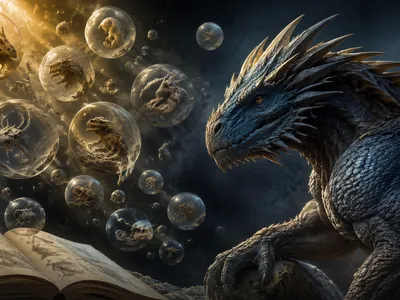
Visualizing Imagined Worlds Through Pre-Visualization Designs
Concept art operates as the primary visual hypothesis for any imagined world, establishing its core aesthetic and architectural logic before production begins. It transforms abstract narrative ideas into tangible visual forms.
This phase is not merely about generating beautiful images but involves rigorous pre-visualization to solve potential design problems. Artists engage in extensive research, synthesizing historical, biological, and architectural references to create believable yet novel environments and characters that feel internally consistent and physically plausible.
The Language of Visual Cohesion
Visual cohesion in worldbuilding is achieved through the systematic application of a unified design language across all assets and environments.
This language consists of recurring formal elements—specific shapes, lines, textures, and color palettes—that are deliberately repeated and varied to create a recognizable visual identity. For instance, a world might be defined by biomorphic curves or austere geometric forms, with this principle manifesting in everything from grand architecture to handheld props.
The establishment of this language prevents visual dissonance and ensures that every element, regardless of its creator, feels intrinsically part of the same universe. This systematic approach is critical for large-scale productions involving dozens of artists, as it provides a concrete framework within which individual creativity can operate without breaking the world's inherent believability. A coherent visual language functions as a non-linguistic communication system that the audience subconsciously learns, enhancing narrative comprehension and emotional engagement.
Iteration and Evolutionary Design
Concept art is an inherently iterative process, where initial ideas undergo successive refinements through critique and technical problem-solving.
This evolution is not linear but often cyclical, with artists generating numerous exploratory variants for a single element. Each iteration tests different aesthetic, narrative, and functional hypotheses, gradually converging on an optimal solution that satisfies creative, technical, and sometimes budgetary constraints. The process mirrors Darwinian selection, where the most narratively fitting and visually compelling designs survive and are developed further.
Modern pipelines leverage digital tools to accelerate this evolution, allowing for rapid manipulation of forms, colors, and lighting. However, the core principle remains rooted in artistic decision-making: each iteration must be evaluated against the world's established rules and emotional goals. This rigorous refinement phase is where generic fantasy or sci-fi tropes are transfrmed into distinctive, memorable iconography that defines a franchise. The most iconic worlds are often the result of hundreds of discarded concepts, a testament to the critical role of iteration in achieving originality and depth.
The iterative design cycle typically progresses through several key phases, as illustrated in the following framework.
| Phase | Primary Activity | Outcome |
|---|---|---|
| Divergent Exploration | Broad ideation through thumbnails, mood boards, and sketches | A wide range of stylistic and conceptual possibilities |
| Convergent Refinement | Selecting and synthesizing the strongest ideas into more resolved concepts | A narrowed direction with improved technical and narrative clarity |
| Technical Resolution | Addressing production feasibility, model topology, and material definition | A final, production-ready asset sheet or keyframe |
| Contextual Integration | Placing the refined design into environment composites to test cohesion | Verification of the design's function within the broader world |
This structured yet flexible process ensures that the final visual world is not a first draft but a highly evolved ecosystem of interconnected designs. Iteration is the engine of innovation in concept art, transforming rudimentary ideas into fully realized visual ecosystems.
Applied Visual Worldbuilding Across Modern Industries
The methodologies of concept art and visual worldbuilding have transcended their entertainment origins, proving valuable in serious games, architectural visualization, and complex system design.
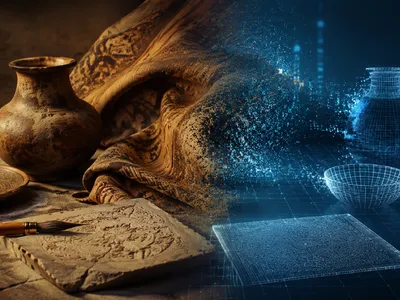
In scientific communication and education, these techniques are used to visualize abstract concepts or historical environments, making them tangible and comprehensible. Archaeologists and historians collaborate with digital artists to reconstruct lost cities or ancient landscapes, employing the same evidence-based speculation used in fictional worldbuilding to fill gaps in the historical record responsibly. Similarly, in corporate and urban planning, immersive visualizations of future products or smart cities allow stakeholders to experience and critique proposals long before physical implementation.
The field of transition design utilizes worldbuilding to envision sustainable futures and pathways to achieve them, crafting compelling visual narratives of low-carbon societies or circular economies. These applications leverage the core strength of concept art: the ability to make the unfamiliar feel concrete and intuitively understandable. Byy creating visceral, human-centered visions of possible futures, concept art moves beyond illustration to become a tool for facilitating discussion, guiding policy, and inspiring innovation across diverse sectors. This cross-disciplinary adoption underscores the fundamental power of visual storytelling as a universal language for shaping human understanding and aspiration.
The expansion of concept art into these domains demonstrates its role as a critical tool for envisioning and communicating complex, system-level ideas, making the improbable seem attainable. Its value lies not just in depicting things, but in making future possibilities feel emotionally resonant and real, thereby motivating action and investment.