Microbial Life on the Surfaces Around Us
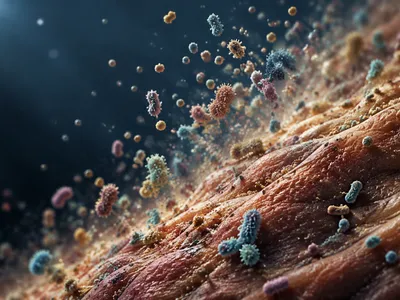
Every surface we touch, from smartphone screens to kitchen countertops, hosts a hidden microbial world shaped by human interaction and environmental exposure. Our skin constantly sheds bacteria and fungi onto frequently handled objects, leaving behind a personalized microbial signature that serves as a primary pathway for surface colonization. At the same time, airborne microbes and dust particles settle onto these areas, increasing diversity and turning indoor spaces into active reservoirs of microscopic life.
Molecular studies have revealed that common surfaces harbor a vast array of bacteria, including Staphylococcus, Micrococcus, and even potential opportunistic pathogens. Fungal genera like Aspergillus and Penicillium are frequently detected, highlighting the complexity of these assemblages. Some surfaces can harbor up to millions of microbial cells per square centimeter, depending on usage and cleaning regimens. These organisms do not exist in isolation; they interact synergistically, forming biofilms that enhance survival on surfaces.
How Do Different Materials Influence Microbial Survival?
The material composition of a surface fundamentally dictates how long microbes can persist. Factors such as porosity, texture, and chemical makeup govern microbial adhesion and survival.
Porosity and hydrophobicity are key physical traits that influence moisture retention and microbial attachment. Smooth, non‑porous surfaces differ markedly from rough, absorbent materials.
Research consistently shows that material properties directly impact the viability of bacteria and viruses. For instance, pathogens like influenza virus and MRSA exhibit vastly different survival times on stainless steel compared to cotton fabrics. The table below summarizes these material‑dependent behaviors.
| Material | Surface Characteristics | Microbial Survival Potential |
|---|---|---|
| Stainless Steel | Non‑porous, hydrophilic, retains moisture films | Bacteria like E. coli and Salmonella can survive for hours to days |
| Plastic (Polypropylene) | Non‑porous, hydrophobic, low moisture absorption | Viruses such as norovirus may persist for weeks; bacteria survive but can be removed easily |
| Wood | Porous, absorbent, contains natural antimicrobials | Microbes often die faster due to desiccation and antimicrobial compounds, but deep pores can harbor them |
| Copper | Non‑porous, metallic, oligodynamic effect | Exhibits rapid antimicrobial activity, killing many bacteria within minutes |
On non‑porous materials like stainless steel and plastic, microbes often remain viable for extended periods if moisture is present. However, these surfaces are also easier to disinfect with standard cleaning agents compared to porous substrates.
The development of biofilms on surfaces represents a critical challenge, particularly on materials that retain moisture. These structured communities, encased in a self‑produced matrix, resist cleaning and disinfection. Biofilm formation can occur within hours on suitable surfaces, especially in damp environments. Antimicrobial copper and other innovative materials disrupt microbes through contact killing, offering passive infection control.
Moisture: The Decisive Factor
Water availability is the most critical factor determining microbial survival on surfaces, as even resilient bacteria quickly desiccate without adequate moisture. In kitchens, bathrooms, and areas near humidifiers, thin films of retained water often sustain microbial communities and allow them to remain metabolically active. Indoor relative humidity further affects surface moisture through adsorption, with hygroscopic materials such as wood and fabric absorbing atmospheric water and forming concealed microhabitats.
The concept of water activity (aw) quantitatively describes the available moisture for microbial growth. Most bacteria require aw values above 0.91 to proliferate, while fungi and some osmophilic yeasts tolerate much drier conditions. Drying a surface does not instantly kill all microbes; many form dormant spores or enter viable but non‑culturable states that revive upon rewetting. Frrequent cleaning combined with thorough drying therefore proves more effective than either alone.
Common household sources of surface moisture extend beyond spills and leaks, as outlined below.
- Condensation on cold pipes, windows, and exterior walls during temperature shifts
- Steam from cooking, showering, and humidifiers depositing moisture on adjacent surfaces
- Residual dampnes from cleaning cloths, sponges, and mops left wet between uses
- Capillary action drawing water from flooded areas into porous materials like drywall or carpet
High-Touch Points vs. Neglected Corners
Microbial distribution on indoor surfaces is highly uneven, shaped largely by how frequently people interact with them, creating distinct ecological niches. Door handles, light switches, and mobile phones are classic high-touch fomites that are constantly re-seeded with skin-associated bacteria, resulting in microbial profiles that closely mirror human skin microbiota. Pathogens such as Staphylococcus aureus and fecal indicator bacteria are often detected in these areas—particularly in public and healthcare environments—and continual reintroduction keeps them biologically active even with routine cleaning.
In contrast, neglected corners such as baseboards, ceiling fixtures, and behind appliances accumulate settled dust over time. This dust contains diverse environmental bacteria and fungal spores originating outdoors, plus skin cells shed from occupants. The microbial composition here more closely mimics outdoor soil and air than human skin.
The ecological dynamics differ markedly between these zones. High‑touch points experience rapid microbial turnover and competition, while neglected areas allow slow accumulation and biofilm formation on settled dust particles. Dust itself acts as a microbial habitat, protecting organisms from desiccation and UV light. Cross‑contamination from hands to surfaces and back perpetuates the cycle in high‑traffic zones, making them critical intervention points for infection control.
Bacterial Exchange Between Surfaces and Skin
The interaction between human skin and indoor surfaces creates a dynamic two‑way transfer of microorganisms. This continuous exchange shapes both the skin microbiome and the surface microbial ecology.
Hands act as primary vectors, picking up transient microorganisms from touched surfaces and redistributing them elsewhere. Each contact leaves behind a portion of the skin's resident flora while acquiring new contaminants.
Surfaces in close personal contact, such as bedding and towels, harbor microbial signatures resembling those found on their users. This reciprocity means that individuals constantly seed their environment with personal microbes.
Metagenomic analyses reveal that common Staphylococcus aureus and Escherichia coli are frequently exchanged between hands and high‑touch fomites. Mobile genetic elements carrying antibiotic‑resistance genes also transfer readily across this interface. Fecal indicator bacteria on surfaces often originate from inadequate hand hygiene, while pathogenic strains can persist long enough to reach new hosts. The persistence of antibiotic‑resistant genes on surfaces further complicates infection control in both healthcare and community settings.
Biofilms and the Challenge of Cleaning
Microbes rarely exist as isolated cells on surfaces; instead they form structured communities called biofilms. These assemblages exhibit collective behaviors fundamentally different from planktonic cells.
Biofilm development begins with initial attachment to a surface, followed by multiplication and secretion of a protective matrix. This extracellular polymeric substance (EPS) anchors cells and shields them from external threats.
The EPS matrix imparts remarkable antimicrobial tolerance by acting as a diffusion barrier and housing metabolically inactive persister cells. Biofilm bacteria can survive disinfectant concentrations hundreds of times higher than lethal doses for free‑floating cells. This tolerance explains why standard cleaning protocols often fail to eradicate surface contamination entirely.
Various indoor environments support biofilm formation on different materials, each presenting unique cleaning hurdles. The following table summarizes common scenarios.
| Surface Location | Typical Material | Biofilm Composition | Cleaning Challenge |
|---|---|---|---|
| Kitchen sink drains | Stainless steel / plastic | Mixed bacterial-fungal consortia including Pseudomonas and Candida | Physical inaccessibility; constant moisture replenishment |
| Shower hoses and heads | Rubber / metal | Mycobacterium avium complex, Pseudomonas aeruginosa | Aerosolization during use; scale buildup protecting biofilm |
| Cutting boards | Plastic / wood | Salmonella, Campylobacter, mixed enteric bacteria | Knife scratches harboring cells; cross‑contamination to food |
| Drinking water pipes | Copper / PVC | Diverse multispecies biofilms with nontuberculous mycobacteria | Continuous flow; disinfection residual depletion |
Biofilm formation poses particular risks in healthcare, where indwelling medical devices like catheters and ventilators become conduits for infection. These surface‑associated communities seed recurrent infections that resist antibiotic therapy. In food processing environments, biofilms contaminate products despite routine sanitation. Quorum sensing, the bacterial communication system regulating biofilm development, represents a promising target for novel control strategies. Mechanical disruption through vigorous scrubbing remains essential, supplemnted by enzymatic cleaners that degrade the EPS matrix. Chronic wounds also harbor polymicrobial biofilms that delay healing and require specialized debridement. Understanding biofilm biology is therefore fundamental to designing effective cleaning protocols across all sectors.