The Human Microbiome A Symbiotic Foundation
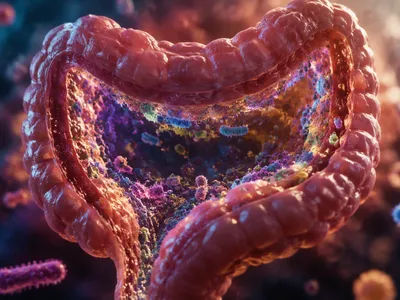
The human body is a complex ecosystem harboring trillions of microorganisms, collectively known as the microbiome. This community, primarily residing in the gastrointestinal tract, engages in a continuous and dynamic dialogue with host cells. The relationship is fundamentally symbiotic, with microbial activities being indispensable for host physiology and homeostasis.
These microbial consortia are involved in a vast array of metabolic processes that the human genome cannot perform independently. They ferment non-digestible dietary fibers to produce short-chain fatty acids (SCFAs) like butyrate, propionate, and acetate. Butyrate, in particular, serves as the primary energy source for colonocytes and exerts potent anti-inflammatory effects. The integrity of the gut epithelial barrier is also modulated by constant microbial interaction, preventing the translocation of pathogens.
Dysbiosis, a term describing a deleterious shift in this microbial equilibrium, is increasingly correlated with a spectrum of diseases. This imbalance is not merely a consequence but often a contributing factor to pathological states, highlighting the microbiome's role as a pivotal interface between environment, diet, and human health. Understanding this foundation is critical for appreciating the targeted interventions probiotics aim to provide.
Defining Probiotics Beyond Common Misconceptions
The term "probiotic" is formally defined by international health bodies as live microorganisms that, when administered in adequate amounts, confer a health benefit on the host. This definition is deceptively simple and is often misunderstood in commercial contexts. Not every product containing live bacteria qualifies as a genuine probiotic under this rigorous criterion.
A critical distinction lies between probiotics and other microbial products like prebiotics or synbiotics. Prebiotics are non-digestible food ingredients that selectively stimulate the growth of beneficial bacteria already resident in the colon. Synbiotics are combinations of probiotics and prebiotics designed to synergistically enhance microbial survival and activity. Furthermore, fermented foods like yogurt or kimchi may contain live cultures but are not automatically equivalent to defined probiotic supplements unless their health benefit is scientifically validated.
Common misconceptions also arise from the assumption that any bacterial strain can provide universal benefits. The efficacy of a probiotic is inherently strain-specific and condition-dependent. The mechanisms by which one strain alleviates antibiotic-associated diarrhea may be entirely different from those required to modulate immune function, necessitating precise selection.
To qualify as a true probiotic, a microorganism must satisfy several key requirements beyond mere viability. The following list outlines the essential criteria that define a legitimate probiotic agent based on current scientific consensus.
- ⭐ Must be safely applicable for human use, with a documented history of safety or Generally Recognized As Safe (GRAS) status.
- ⭐ Must be resistant to gastric acid and bile salts to survive transit to the intestines.
- ⭐ Must be able to adhere to intestinal mucosa or temporarily colonize the gastrointestinal tract.
- ⭐ Must produce antimicrobial substances or competitively exclude pathogens.
- ⭐ Must demonstrate a clinically proven health benefit in controlled human studies.
Mechanisms of Action How Do Probiotics Exert Their Effects?
Probiotics mediate their benefits through a multifaceted array of mechanisms that extend far beyond simple colonization. These actions are often synergistic and can be broadly categorized into direct pathogen inhibition, enhancement of epithelial barrier function, and complex immunomodulation. The specific pathways employed are highly dependent on the bacterial strain and the host's physiological context.
A primary mode of action is competitive exclusion, where probiotics compete with pathogens for nutrients and adhesion sites on the intestinal mucosa. This process, often called colonization resistance, prevents pathogenic bacteria from establishing a foothold. Many probiotic strains also produce direct antimicrobial substances like bacteriocins, organic acids, and hydrogen peroxide, creating a hostile microenvironment for harmful microbes.
Strengthening the gut barrier is another crucial mechanism. Certain probiotics enhance the production of tight junction proteins, which are essential for maintaining the selective permeability of the intestinal lining. This fortification reduces gut hyperpermeability, or "leaky gut," a condition implicated in systemic inflammation. They also stimulate the secretion of protective mucus from goblet cells, forming a physical barrier against invasion.
The most complex interactions occur with the host immune system. Probiotics communicate with gut-associated lymphoid tissue (GALT) through their microbial-associated molecular patterns (MAMPs). This dialogue can modulate the immune response, promoting tolerance to harmless antigens while priming defenses against pathogens. They influence the activity of dendritic cells, T-cell differentiation, and the balance between pro-inflammatory and anti-inflammatory cytokine profiles.
The following list summarizes the primary mechanistic categories through which probiotic strains exert their documented health effects.
- 🦠 Microbial Antagonism: Nutrient competition, adhesion site blocking, and production of antibacterial compounds.
- 🛡️ Barrier Enhancement: Upregulation of mucus and tight junction proteins to improve intestinal epithelial integrity.
- 🧬 Immunological Modulation: Interaction with immune cells to regulate systemic and mucosal immune responses.
- ⚗️ Metabolic Activity: Fermentation of fibers to produce beneficial metabolites like SCFAs and synthesis of vitamins.
- 🧠 Neurological Signaling: Participation in the gut-brain axis via the production of neurotransmitters and neural modulators.
Gastrointestinal Health The Core Proven Benefits
The most robust clinical evidence for probiotics resides in the management and prevention of various gastrointestinal disorders. The efficacy for these conditions is well-substantiated by numerous randomized controlled trials and meta-analyses, moving probiotic applications from alternative to adjunctive therapeutic options in many clinical guidelines.
The prevention and treatment of antibiotic-associated diarrhea (AAD) is the most universally accepted indication. Antibiotics disrupt the commensal gut flora, often allowing opportunistic pathogens like *Clostridioides difficile* to proliferate. Specific probiotic strains, notably *Lactobacillus rhamnosus* GG and the yeast Saccharomyces boulardii, have ddemonstrated significant efficacy in reducing the incidence and duration of AAD by restoring microbial balance and inhibiting the pathogenic bacteria.
In the realm of functional gut disorders, certain probiotics show promise for irritable bowel syndrome (IBS). While effects are modest and strain-specific, some multi-strain formulations and specific strains like *Bifidobacterium infantis* 35624 have been shown to alleviate global IBS symptoms, bloating, and abdominal pain. The proposed mechanisms include visceral hypersensitivity modulation and reduction of gas production by gut flora.
For inflammatory bowel diseases (IBD), such as ulcerative colitis, probiotics can play a role in maintaining remission. The strain Escherichia coli Nissle 1917 has demonstrated equivalence to the drug mesalazine for maintaining remission in mild-to-moderate ulcerative colitis. Their action here is linked to potent anti-inflammatory effects and reinforcement of the mucosal barrier, though their role in Crohn's disease remains less clear.
The table below synthesizes key gastrointestinal conditions where probiotic intervention is supported by a substantial body of clinical evidence, noting specific strains and the nature of the benefit.
| Gastrointestinal Condition | Primary Benefit | Examples of Effective Strains/Genera |
|---|---|---|
| Antibiotic-Associated Diarrhea | Prevention & Reduction of Incidence | Saccharomyces boulardii, Lactobacillus rhamnosus GG, Lactobacillus casei DN-114 001 |
| Clostridioides difficile Infection | Adjunct to Prevention of Recurrence | Saccharomyces boulardii |
| Irritable Bowel Syndrome | Symptom Relief (Bloating, Pain) | Bifidobacterium infantis 35624, Certain multi-strain blends |
| Ulcerative Colitis | Maintenance of Remission | Escherichia coli Nissle 1917, VSL#3 (multi-strain) |
| Acute Infectious Diarrhea | Reduction of Duration in Children | Lactobacillus rhamnosus GG, Lactobacillus reuteri |
The Strain-Specificity Paradigm Why All Probiotics Are Not Equal
A fundamental and often overlooked principle in probiotic science is that health effects are strain-specific. The beneficial properties of one strain of a given species cannot be extrapolated to another strain within the same species. This paradigm is central to understanding the discordant results in clinical trials and the importance of precise product characterization.
Genetic and phenotypic diversity between strains leads to vastly different functional attributes. One *Lactobacillus acidophilus* strain may excel at pathogen inhibition, while another may have superior immunomodulatory capabilities. These differences are dictated by unique genetic elements, such as plasmids and phage sequences, which influence adhesion proteins, bacteriocin production, and metabolic output.
This specificity necessitates that clinical trials validate each strain or defined consortium for a particular health endpoint. The regulatory and commercial landscape, however, often labels products by genus and species alone, creating consumer confusion. A product containing "Lactobacillus plantarum" is not meaningful without the specific strain designation, as the clinical evidence is tied to entities like *Lactobacillus plantarum* 299V or DSM 9843.
Consequently, the most reliable evidence supports the use of specific, well-documented strains for defined conditions. General claims about "supporting digestive health" based on genus-level taxonomy lack the scientific precision required for therapeutic recommendations. The future of the field lies in moving beyond broad categories to a mechanistic understanding of individual strains, enabling truly personalized microbial interventions. The table below illustrates this principle with examples of condition-specific strain efficacy.
| Target Condition | Specific Strain with Evidence | Species Alone is Insufficient Because... |
|---|---|---|
| Antibiotic-Associated Diarrhea | Lactobacillus rhamnosus GG (ATCC 53103) | Other L. rhamnosus strains lack the same depth of clinical trials for this indication. |
| Irritable Bowel Syndrome | Bifidobacterium infantis 35624 | This specific strain's effect on visceral hypersensitivity is not shared by all B. infantis. |
| Immune Support | Lactobacillus casei DN-114 001 (in fermented milk) | Its documented effect on reducing common infection duration is unique to this proprietary strain. |
| Hepatic Encephalopathy | Escherichia coli Nissle 1917 | This safe, probiotic strain's genetics and benefits are entirely distinct from pathogenic E. coli. |