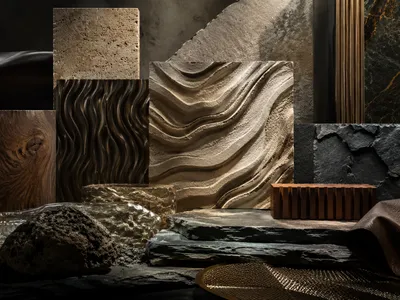
How Does Aesthetic Awareness Transform Everyday Perception?
Aesthetic awareness represents a sophisticated mode of engagement with the world that extends far beyond the passive observation of art. It constitutes an active perceptual stance, a deliberate tuning of attention to the qualitative dimensions of experience. This capacity transforms mundane encounters into opportunities for sensory and cognitive reflection.
Historically confined to discussions of beauty in art and nature, contemporary scholarship frames it as a fundamental human faculty. It is the conscious sensitivity to form, pattern, harmony, and dissonance in any domain, from the design of a user interface to the arrangement of objects on a desk. Aesthetic awareness is not an innate gift but a cultivatable skill that enables individuals to perceive richer layers of meaning in their environment.
The shift from a passive to an active model is crucial. One moves from simply seeing to seeing *into*, recognizing the intentional or emergent structures that constitute an experience. This awareness is therefore an interpretive act, deeply entangled with personal and cultural knowledge. Aesthetic awareness is the bridge between raw sensation and meaningful perception.
To understand its scope, consider the primary domains where this awareness operates. The following table categorizes these spheres, illustrating that aesthetic engagement is an everyday phenomenon.
| Domain | Focus of Awareness | Example |
|---|---|---|
| The Natural Environment | Patterns, textures, ecological interplay, light | Noticing the fractal branching of a tree against a sky |
| The Built Environment | Architectural form, urban rhythm, materiality | Sensing the solemnity of space within a library |
| Human Activity & Craft | Gesture, skill, the shaping of materials | Appreciating the fluid motion of a barista crafting coffee |
| Information & Systems | Elegance, clarity, efficiency of design | Evaluating the intuitive layout of a well-designed chart |
Mindfulness and Aesthetic Perception in Daily Life
The cultivation of aesthetic awareness shares a profound synergy with practices of mindfulness and focused attention. Both disciplines train the mind to dwell in the present moment, suspending habitual judgment to encounter phenomena with freshness.
Mindfulness practice, by strengthening metacognitive monitoring, allows individuals to observe their own perceptual processes. This creates a space between stimulus and reaction where aesthetic qualities can be noticed and savored. The non-striving attitude central to mindfulness is particularly conducive to aesthetic engagement, as it replaces goal-oriented seeing with open, receptive presence.
Research indicates that sustained mindfulness training can alter perceptual acuity. Practitioners often report heightened sensitivity to color gradation, subtle sounds, and textural details previously overlooked. This is not merely about sharper senses but about a different quality of attention—one that is sustained, curious, and emotionally balanced. The practice dismantles the cognitive filters that reduce objects to their utility, allowing their phenomenal presence to emerge. Mindfulness clears the cognitive clutter, letting aesthetic qualities shine forth.
A Toolkit for Cultivated Perception
Developing a consistent aesthetic awareness requires deliberate strategies that move beyond theoretical understanding. These practices are exercises in perceptual literacy, designed to train attention and refine discriminatory ability across sensory modalities.
A foundational method is descriptive journaling, where one meticulously records the sensory details of an experience without resorting to interpretive or emotional language. This practice builds a vocabulary of perception and anchors awareness in the concrete. Another powerful technique involves constrained focus, such as attending only to sounds or shadows for a set period, which intensifies processing within a single channel.
Engaging in comprative analysis is also highly effective. Placing two similar objects side-by-side and cataloging their differences forces a move from global impression to discrete observation. This analytical phase is later integrated into a more holistic grasp, following the cycle of analysis and synthesis that characterizes expert perception. Over time, these exercises rewire attentional patterns, making the detection of aesthetic properties more automatic and nuanced.
The efficacy of these tools depends on their systematic application. Different practices target specific facets of the broader aesthetic capacity, from simple noticing to complex integration.
| Practice | Primary Target Skill | Expected Outcome |
|---|---|---|
| Sensory Isolation Walks | Attentional Control & Modal Acuity | Heightened sensitivity in one sense (e.g., hearing) |
| Form & Function Analysis | Analytical Deconstruction | Ability to separate an object's visual structure from its purpose |
| Slow Looking Protocols | Depth of Engagement | Discovery of previously unseen details and relationships |
| Cross-Modal Translation | Integrative Synthesis | Expressing a visual experience in words or sounds |
Implementing these tools consistently leads to what is termed perceptual expertise. Like a trained wine taster or musician, the individual develops finer-grained schemata for categorizing and appreciating sensory information. This expertise is fluid, not rigid; it allows for both the quick, intuitive grasp of a scene and the leisurely, detailed exploration of its components. *The cultivated perceiver moves effortlessly between the forest and the trees.*
The goal of this toolkit is not to produce art critics but to foster a more enlivened and responsive mode of being in the world. It equips individuals with methods to break free from perceptual automation, to interrupt the gloss of familiarity, and to find richness in the ordinary. The practice is its own reward, as each moment holds the potential for aesthetic revelation and engaged wonder.
The journey of cultivation integrates various discrete skills into a cohesive faculty. This progression can be visualized as a path from basic awareness to a transformative way of engaging with one's environment.