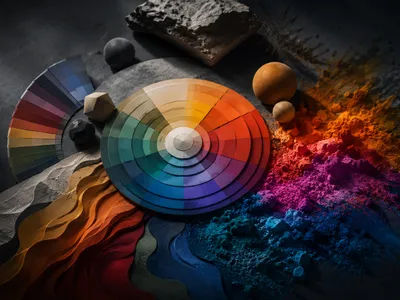
The Emotional Power of Modern Pixel Art
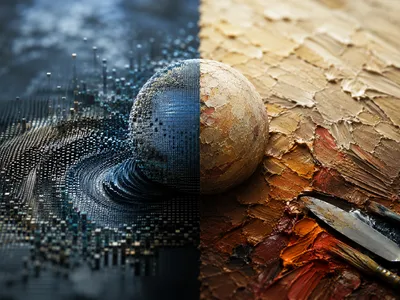
Once relegated to the technical limitations of early computing, pixel art has re-emerged as a sophisticated and intentional aesthetic choice. Contemporary artists leverage its constrained grids to explore themes of memory, nostalgia, and digital materiality.
This revival, often termed the 'new pixel aesthetic', moves beyond simple imitation. It incorporates advanced lighting techniques and color theory typically reserved for high-fidelity rendering, creating a deliberate tension between the primitive and the polished.
The practice now occupies a unique space in visual culture, distinct from the pursuit of photorealism. Artists and storytellers utilize the medium's inherent abstraction to engage audiences in a participatory act of completion, where the mind fills in the gaps between pixels. This cognitive engagement fosters a distinct form of narrative intimacy, as the viewer is not just a spectator but an active co-creator of the imagined scene. The modern pixel, therefore, is not a remnant of the past but a dynamic language for present-day expression, challenging preconceived notions of what constitutes artistic progression in the digital age.
| Era | Primary Constraint | Artistic Response |
|---|---|---|
| 1980s | Hardware memory limits | Iconography through minimal sprites |
| 2020s | Deliberate stylistic choice | Complex narratives through abstracted forms |
Several core principles define the contemporary approach to this medium. Practitioners manipulate resolution and palette not out of necessity, but to evoke specific emotional responses or to comment on the very nature of digital perception.
- Selective Fidelity Concept
- Temporal Authenticity Technique
- Hyper-Textural Rendering Goal
Blending Realities: The Rise of Mixed Media
The rigid boundaries between photography, 3D modeling, and traditional painting have dissolved in contemporary digital practice. Mixed media approaches now dominate, allowing storytellers to construct hybrid visuals that feel both familiar and otherworldly.
Artists frequently composite scanned textures with procedurally generated elements, grounding fantastical scenes in tangible reality. This technique, known as 'textural juxtaposition', creates a rich sensory experience that purely synthetic imagery often lacks, anchoring the viewer's perception through recognizable physical traces.
This methodological fusion is not merely aesthetic but deeply narrative. By weaving together disparate visual languages, creators can symbolize the fragmented nature of memory or the collision of different cultural experiences within a single frame. The resulting artworks function as palimpsests, where layers of digital and analog sources are overlaid, allowing multiple interpretations to coexist. For the modern storyteller, mastering this blend is essential for crafting worlds that resonate with an audience increasingly fluent in navigating the blurred lines between the physical and the virtual, the captured and the constructed.
The Changing Role of the Artist in AI-Generated Art
Generative adversarial networks and diffusion models have fundamentally altered the creative landscape, positioning algorithmic processes as autonomous collaborators. These systems analyze vast datasets to produce original imagery that challenges conventional definitions of authorship and creativity.
Artists now function as curators of possibility, guiding algorithmic output through carefully engineered prompts and iterative selection. This human-machine dialogue shifts the creative bottleneck from technical execution to conceptual framing and aesthetic discernment.
The latent space of a generative model represents an infinite archive of potential visual forms, each waiting to be activated by human intention. Navigating this abstract dimension requires a new critical vocabulary, as creators learn to recognize bias embedded in training data and to interrogate the cultural assmptions encoded within their digital tools. The resulting artworks often possess a dreamlike quality, synthesizing influences in ways no single human artist might conceive.
This collaborative potential does not diminish human creativity but rather augments it, offering storytellers a means to visualize previously inexpressible concepts and to explore narrative possibilities at a scale and speed unattainable through manual methods alone. The ethical dimension of this practice remains an urgent area of inquiry, particularly concerning copyright and dataset transparency.
| Tool Type | Narrative Function | Creative Challenge |
|---|---|---|
| Text-to-Image (e.g., Midjourney) | Rapid world-building and concept art | Maintaining stylistic coherence |
| Style Transfer (e.g., Stable Diffusion) | Applying consistent aesthetic themes | Avoiding visual clichés |
| Inpainting/Outpainting | Expanding narrative environments | Ensuring narrative logic |
Can Animated Design Make Complex Information Easier to Understand?
Kinetic typography and animated infographics have become essential tools for distilling complex information into accessible visual sequences. Their prevalence stems from an innate human attraction to movement, which captures attention more effectively than static imagery.
The cognitive principle of visual salience explains how motion guides viewer focus across a narrative arc. By choreographing elements in time, designers can emphasize key data points, illustrate cause-and-effect relationships, and convey emotional tone through pacing and rhythm, a technique often referred to as 'temporal design'.
Contemporary motion graphics extend far beyond simple explanatory videos, permeating user interfaces, environmental signage, and immersive installations. In these contexts, motion functions as a narrative agent, signaling transitions, providing feedback, and establishing a coherent visual language across disparate media. The discipline draws from cinematic editing principles while also developing its own grammar, such as the use of luma mattes and parallax scrolling to create depth within two-dimensional planes. For the modern storyteller, proficiency in motion graphics means understanding how time-based elements can structure a user's journey, building suspense, delivering resolution, or even subverting expectations through carefully timed reveals. This temporal control transforms the audience from passive observers into active participants navigating a dynamically unfolding story.