Polar Vortex Anatomy
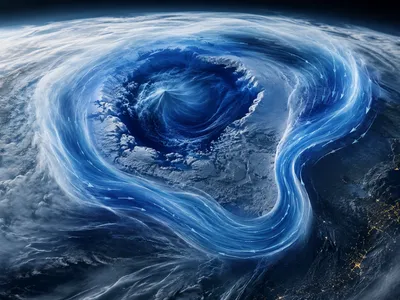
The winter polar stratosphere is dominated by a vast cyclonic system known as the polar vortex, a swift river of air circulating west-to-east around the pole. Understanding polar vortex dynamics and extreme cold outbreaks reveals how this robust barrier isolates extremely cold air from lower latitudes throughout the dark polar night.
- 🌡️ A strong temperature gradient between the pole and mid-latitudes sustains the vortex edge.
- ❄️ The vortex core can reach temperatures below -80°C, forming polar stratospheric clouds.
- 🌀 Its shape is rarely symmetric, often elongating or displacing off the pole during winter.
The vortex strength is measured by the zonal-mean zonal wind at 60°N and 10 hPa. When this wind reverses from westerly to easterly, the vortex is considered disrupted or split.
Planetary Waves and Their Upward Propagation
Large-scale atmospheric disturbances, termed planetary waves or Rossby waves, are generated in the troposphere by major mountain ranges and continental-ocean thermal contrasts. These waves possess the unique ability to propagate upward into the stratosphere under specific background wind conditions.
For vertical propagation to occur, the stratospheric flow must be westerly but below a critical speed threshold. The waves transport Eliassen-Palm flux upward, carrying negative angular momentum from the troposphere into the middle atmosphere. This vertical wave activity flux is the fundamental diagnostic for predicting wave-driven disturbances to the polar night jet.
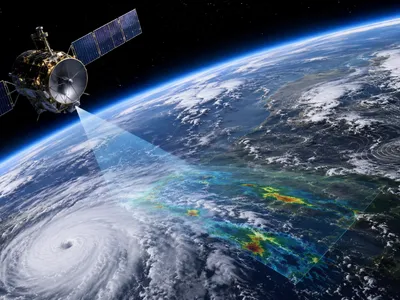
Recent advances in satellite observations have confirmed that wave pulses originating over the Eurasian continent are particularly effective at penetrating the stratosphere during early winter. The horizontal scale of these waves is typically zonal wavenumber 1 or 2, producing large-amplitude displacements of the vortex edge.
Upon reaching the stratosphere, the waves encounter a region where their restoring force, the meridional potential vorticity gradient, remains positive. The waves decelerate the zonal-mean flow through a process that involves the convergence of eddy momentum flux. A sustained wave event can deposit sufficient easterly momentum to dramatically weaken the vortex, setting the stage for a full-blown warming episode. The wave amplitude at the tropopause level serves as a critical precursor, with enhanced activity often preceding sudden warming by one to two weeks.
Wave-Mean Flow Interaction
When planetary waves break in the stratosphere, they deposit easterly momentum through Eliassen-Palm flux divergence. This process decelerates the polar night jet directly, altering the background flow.
The wave dissipation is most efficient near the critical level, where the zonal wind speed matches the wave's phase speed. Absorption of wave activity irreversibly mixes potential vorticity.
The net effect is a persistent easterly torque acting on the vortex that can gradually reverse the pole-to-mid-latitude temperature gradient. As the mean flow weakens, the index of refraction for subsequent waves changes, often allowing deeper vertical penetration. This positive feedback loop, where a weakened vortex permits more wave driving, is a hallmark of the preconditioning phase observed days before a sudden stratospheric warming event. The interaction underscores how transient eddies shape the slowly evolving background state.
When Resonance Amplifies the Disturbance
A mid-winter vortex can enter a barotropic resonant state when the stratospheric waveguide geometry aligns with the stationary wavenumber of a tropospheric forcing. This alignment creates a standing-wave amplification.
The resonance requires a waveguide bounded between a reflecting surface and a turning latitude. A meridionally confined vortex provides the necessary structural trapping for wave energy to pool rather than escape equatorward.
Observational studies reveal that resonant amplification events precede many major warmings by up to ten days, during which the wave energy density inside the vortex climbs exponentially. The trapped wave grows until it breaks, rapidly destroying the vortex's coherence and triggering a split or displacement of the polar circulation.
External Forcing from the Tropics
Stratospheric variability is not solely governed by mid-latitude dynamics. Anomalous tropical convection can excite planetary-scale wave trains that propagate poleward, modulating vortex strength.
The Madden-Julian Oscillation is a key source of such forcing, altering the Rossby wave source region in the subtropics. Enhanced convection over the Indo-Pacific warm pool generates a poleward-propagating Rossby wave response that can constructively interfere with the climatological stationary waves near the Aleutian Low.
The following table outlines the primary tropical drivers and their observed impacts on the polar stratosphere.
| Tropical Driver | Mechanism of Influence | Typical Vortex Response |
|---|---|---|
| Madden-Julian Oscillation (Phases 3-6) | Modulates extratropical wave train via anomalous divergence | Enhanced upward wave flux, vortex weakening |
| El Niño Southern Oscillation (Warm Phase) | Deepens Aleutian Low, strengthens stratospheric wave-1 | Increased frequency of sudden warmings |
| Quasi-Biennial Oscillation (Easterly Phase) | Confines planetary wave propagation to extratropical waveguide | Weaker, more disturbed polar vortex |
The Quasi-Biennial Oscillation in the equatorial lower stratosphere plays a crucial role by modulating the subtropical zero-wind line. During its easterly phase, the waveguide for extratropical planetary waves narrows, channeling more wave activity toward the pole. Research combining reanalysis data and climate models demonstrates that roughly half of all major sudden warming events occur during easterly QBO winters, highlighting the importance of this tropical-extratropical teleconnection. The coupling underscores the stratosphere's sensitivity to remote forcing sources far removed from the polar night.
The Onset of Warming
The culmination of these dynamical processes is a dramatic reversal of the stratospheric circulation. Polar temperatures can surge by over 50 Kelvin within days as the vortex is displaced off the pole or split into smaller daughter vortices.
The defining criterion for a major event is the reversal of the zonal-mean zonal wind at 60°N and 10 hPa from westerly to easterly. This breakdown marks the transition from a strongly disturbed state to a collapsed or reversed circumpolar flow.
The descent of easterly anomalies through the depth of the stratosphere typically unfolds over several weeks. Eliassen-Palm flux diagnostics reveal that the initial wave driving peaks in the upper stratosphere before the easterly regime propagates downward into the lower stratosphere, where it can couple with tropospheric weather patterns. This downward migration is a defining feature of the event's life cycle, linking the initial mesospheric warming to persistent anomalies that alter storm tracks and surface temperature distributions for up to two months.
The cascading impacts of this reversal include the following well-documented atmospheric responses.
- ❄️ Negative phase of the Arctic Oscillation at the surface, bringing cold air outbreaks to mid-latitudes.
- 🌪️ Equatorward shift of the eddy-driven jet stream, intensifying storm activity over southern Europe and North America.
- 🌍 Prolonged weakening of the Brewer-Dobson circulation, altering the distribution of trace gases including ozone.