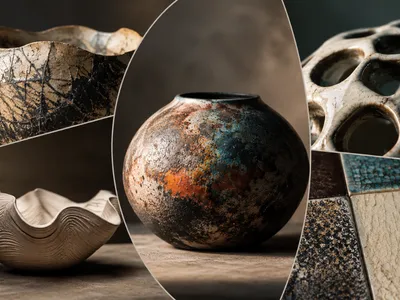
What is Pinch Pottery and How Does It Work?
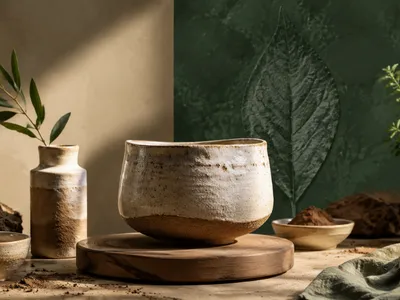
One of the oldest ceramic techniques, pinch pottery shapes vessels by pressing the thumb into a clay ball and thinning walls with coordinated finger movements. This tool‑minimal approach provides direct tactile engagement, and archaeological evidence shows it emerged independently across Neolithic cultures in Mesopotamia, East Asia, and the Andes. Its widespread use highlights the method’s central role in human ceramic history.
Modern artisans continue to refine pinch pots, producing delicate, asymmetrical forms that showcase the maker’s gesture. Structural integrity depends on uniform compression, and studio potters still employ this technique for both functional and sculptural works, valuing its capacity for expressive individuality and its pedagogical benefits in teaching clay sensitivity and wall control.
Distinct advantages of pinch construction include:
- 👐 Immediate material connection – direct hand manipulation builds intuitive understanding of clay’s plasticity.
- 🛠️ Minimal equipment requirements – no wheel or complex tools are necessary for creation.
- 🏗️ Structural versatility – allows for organic, non‑uniform wall configurations rarely achieved by other methods.
Modern ceramic research highlights how pinch forming preserves particle alignment that can enhance drying resilience. This ancient practice continues to inform contemporary approaches to handbuilding pedagogy and material experimentation.
Coil Building
Coil building represents a sophisticated ceramic construction technique where ropes of clay are stacked and subsequently blended to form continuous walls. This method enabled the production of larger, more complex vessels than earlier forming processes allowed.
Excavations from the Jōmon period in Japan reveal remarkably intricate coil‑built vessels dating to approximately 14,000 BCE. The longevity of this technique demonstrates its reliability for achieving both structural soundness and aesthetic refinement.
Contemporary ceramic artists employ coil construction to create monumental sculptural works that push the boundaries of scale and form. The method facilitates controlled incremental building, allowing for precise adjustments during the making process.
| Coil Type | Typical Use | Surface Treatment |
|---|---|---|
| Solid coils | Structural foundations and thick walls | Often left visible for textural effect |
| Hollow coils | Lightweight vessels and delicate rims | Typically smoothed for uniform surface |
| Variable‑section coils | Organic, undulating forms | Emphasized in contemporary sculpture |
Technological analyses of coil‑built ceramics reveal that inter‑coil bonding strength depends on hydration levels and scoring techniques. Mastery of these variables allows potters to construct forms exceeding one meter in height without mechanical support.
Structural advantages of coil construction include the ability to create tapered profiles, integrated appendages, and multi‑chambered vessels. Archaeological evidence confirms that many pre‑Columbian cultures in the Americas refined coil building into a highly specialized production system. Modern engineering studies have even applied coil principles to ceramic matrix composites, demonstrating the technique’s enduring relevance beyond traditional craft.
Slab Construction
Slab construction uses flat, rolled sheets of clay joined to form geometric or organic shapes, offering high precision for architectural ceramics and angular vessels. Historical evidence from Mesopotamia and the Indus Valley shows that this method enabled standardized production of storage containers, proving essential for early urban societies that required uniform ceramic goods.
Modern ceramists differentiate between soft‑slab and hard‑slab techniques, each providing unique structural possibilities. Soft slabs support fluid, draped forms, while hard slabs allow crisp edges and complex intersections. This duality broadens design potential far beyond what wheel throwing alone can achieve, opening new pathways for ceramics as a medium for contemporary expression.
Engineering studies indicate that slab‑built vessels experience anisotropic shrinkage, demanding careful moisture control during assembly. Mastering slab joining through scoring, slipping, and compression remains a standard of professional skill, as even minor mistakes can cause serious cracking during drying or firing.
The Art of Burnishing Surfaces
Burnishing is a non‑glaze surface treatment where leather‑hard or dry clay is polished with a smooth tool to create a lustrous sheen. This technique predates glaze technology by millennia and was independently perfected across Neolithic cultures.
In pre‑Columbian South America, burnished ceramics reached extraordinary refinement, with mirror‑like finishes that signaled social status and ritual significance. The process compresses clay particles, reducing surface porosity and enhancing durability without additional materials.
Material science studies show that burnishing aligns platelet particles, creating a water‑resistant surface that can achieve hardness comparable to low‑fire glazes. Contemporary potters often combine burnishing with post‑firing techniques like smoke blackening to produce unique aesthetic effects that cannot be replicated with standard glazes.
The technique demands patience and physical control, as the vessel must be polished multiple times during drying to achieve maximum luster. This labor‑intensive process creates an intimate bond between maker and object, a quality directly tied to what makes a ceramic piece truly valuable. Studio practitioners report that burnished surfaces develop richer patinas through use, creating a living surface that evolves over time.
The Revival of Pit Firing in Contemporary Ceramics
Pit firing, one of humanity’s earliest controlled firing methods, transforms clay into durable ceramic using simple pits filled with combustible materials. Archaeological evidence from the Upper Paleolithic shows it was the dominant firing technique for millennia. Its low carbon footprint closely aligns with sustainable practices in studio ceramics, appealing to contemporary studio potters who refine the method with selected fuels like sawdust, seaweed, and copper carbonate to produce unique, unpredictable surface effects prized over uniform kiln results.
Contemporary pit firing communities emphasize collective knowledge sharing, turning a utilitarian process into social and ritualistic practice. These gatherings often include performance elements, reflecting trends in relational aesthetics. The technique’s resurgence reflects a rejection of industrial standardization, valuing variability and direct engagement with elemental forces, where the final ceramic outcome emerges from a negotiated collaboration between artist and environment rather than precise control.
Key considerations for contemporary pit firing include:
- Fuel composition – varied organic and inorganic materials produce distinct carbon trapping and color effects.
- Atmospheric control – reduction and oxidation phases are manipulated through pit coverage and air intake management.
- Thermal gradation – achieving even temperatures below 1000°C requires strategic fuel layering and firing duration.