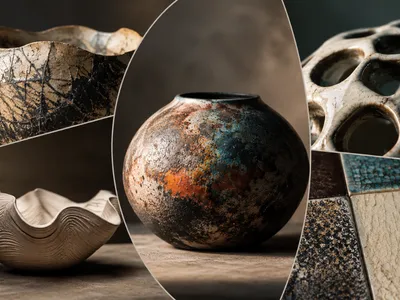
Conceptual Depth in Contemporary Ceramics
The true value of ceramics lies in the artist’s ability to embed conceptual depth within functional or sculptural forms, moving beyond mere utility. This depth emerges through intentional choices in form, surface, and narrative, especially when exploring ceramics as a medium for contemporary expression that challenges material norms or engages with cultural and historical contexts.
High-value ceramics serve as meaningful vessels, where every detail—from the curve of a spout to glaze texture—supports a cohesive conceptual framework. Artistic intentionality and conceptual rigor ensure the work resonates intellectually, sustaining scholarly interest and elevating it beyond decorative appeal.
Material Integrity
A ceramic’s value is deeply tied to the geological authenticity of its clay and the chemical precision of its glaze. Mastery of the full material process—from raw sourcing to firing—ensures both structural integrity and visual longevity, reflecting the maker’s technical expertise and intellectual understanding of the medium.
High-value ceramics reveal a transparent link between material and maker. Whether through local, unrefined clays or proprietary glaze recipes, this integrity conveys authenticity and knowledge, making such works prized by collectors and institutions for their enduring beauty, resilience, and the expertise they embody.
Historical Resonance
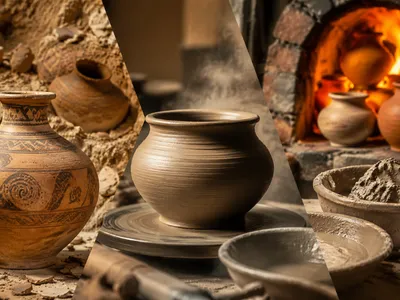
Ceramic objects accrue value when they become primary sources for reconstructing past lifeways, technologies, and aesthetic hierarchies.
Provenance research and archaeological context transform a vessel from a decorative artifact into a document of human history. Pieces linked to known workshops, dynasties, or excavation sites carry evidentiary weight that speculative attributions cannot replicate.
The historical narrative embedded in a ceramic piece often determines its placement within museum collections and private holdings. When an object can be traced through distinguished collections, featured in landmark exhibitions, or connected to pivotal artistic movements, its value multiplies exponentially. Such layered histories create an institutional pedigree that functions as both authentication and cultural capital, ensuring the piece remains a subject of ongoing scholarly discourse.
The matrix below illustrates the principal mechanisms through which historical context elevates a ceramic’s standing.
| Dimension | Key Indicators | Value Impact |
|---|---|---|
| Archaeological Provenience | Stratigraphic data, site-specific markers, scientific dating | Confirms authenticity; provides chronological anchor |
| Documented Lineage | Provenance chain, auction records, historic inventories | Enhances market confidence and narrative depth |
| Exhibition & Publication History | Major museum shows, scholarly monographs, critical reviews | Validates art‑historical significance; drives institutional demand |
The Artist’s Hand and the Creative Spark
Beyond technical skill, a ceramic’s value is defined by the maker’s distinctive signature, expressed through deliberate gestures, intentional asymmetry, and controlled glaze effects. Artistic innovation arises when artists subvert traditional techniques, embracing calculated risks like atmospheric flashing or crystalline growths. This combination of material mastery and creative experimentation, highlighted by balanced risk-taking, transforms functional objects into collectible works that establish the artist’s individuality, a quality also evident in famous ceramic artists you should know who lead the field.
The specific attributes that distinguish a maker’s hand are often codified by critics and connoisseurs. Recognizing these markers helps build a coherent understanding of an artist’s oeuvre and the evolving dialogue between tradition and experimentation.
-
🎨 Gestural VocabularyThrowing marks, surface manipulation, and tooling that remain visible as deliberate artistic choices
-
🧪 Material ExperimentationDevelopment of proprietary clay bodies, glaze chemistries, or firing processes that yield unrepeatable effects
-
💡 Conceptual CohesionIntegration of form, surface, and narrative that reflects sustained intellectual inquiry
The pursuit of a distinctive creative voice demands years of disciplined practice, yet the result is a body of work where each piece carries the unmistakable energy of its maker. Authenticity of expression in ceramics is increasingly prized in a market saturated with mechanically reproducible objects, making the artist’s hand a paramount criterion for enduring worth.
Market Forces and the Collector’s Eye
Market valuation of ceramics reflects a complex interplay between institutional validation, auction performance, and shifting connoisseurial tastes.
| Market Driver | Mechanism | Effect on Value |
|---|---|---|
| Auction Benchmarks | Record prices at major houses (Sotheby’s, Christie’s) establish new valuation ceilings | Creates liquidity signals that elevate comparable works |
| Museum Acquisitions | Inclusion in permanent collections or major surveys | Confers institutional legitimacy and long-term preservation |
| Critical Discourse | Scholarly publications, catalogue raisonnés, and exhibition reviews | Builds intellectual framework that sustains demand across market cycles |
| Scarcity & Provenance | Limited edition works, early career examples, or distinguished ownership histories | Drives competition among top collectors seeking exclusivity |
In today’s ceramics market, collectors emphasize verifiable evidence alongside visual appeal. Provenance research, scientific material analysis, and digital cataloguing have become critical for high-end transactions, while subtle indicators like firing records and artist techniques help distinguish authentic, significant works. This combination of empirical verification and discerning aesthetic judgment ensures that value is grounded in substantiated excellence rather than fleeting trends.