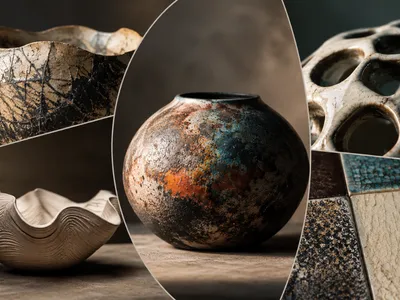
How Did Pottery Become Separated From Fine Art?
The utilitarian ceramic has long been relegated to the realm of craft, a category historically positioned beneath the fine arts in the hierarchy of cultural production. This division, solidified during the Renaissance, privileged intellectual conception over manual execution, placing painting and sculpture above pottery. Such a separation was not merely aesthetic but deeply social, associating the craftsman with labour and the artist with genius.
Pottery’s primary identity as a functional necessity further anchored it in the domain of the anonymous artisan. Everyday objects like jugs, bowls, and storage vessels were produced for use, their forms dictated by practical requirements rather than individual expression. This utilitarian focus meant their makers remained largely invisible in historical records, their contributions classified as material culture rather than art history.
However, the Arts and Crafts Movement of the late nineteenth century began to challenge this rigid boundary. Figures like William Morris advocated for the elevation of the decorative arts, arguing for the integrity of the maker and the beauty inherent in well-designed objects. This philosophical shift re-established a link between moral virtue and skilled craftsmanship, questioning the industrial divide between designer and producer.
| Historical Period | View of Pottery | Primary Association |
|---|---|---|
| Renaissance | Mechanical craft | Anonymous labour |
| Industrial Revolution | Mass-produced commodity | Commercial utility |
| Arts and Crafts Movement | Moral and aesthetic object | Artisan integrity |
The legacy of this historical divide persists in institutional structures, with museums often segregating ceramics into decorative arts departments. This physical and curatorial separation reinforces the notion that pottery, even when exquisitely crafted, occupies a different cultural category than painting or sculpture. The potter's wheel and the painter's easel continue to symbolize two distinct worlds, a dichotomy that contemporary makers actively seek to dismantle.
The Designer-Craftsman in the 21st Century
The figure of the designer-craftsman has emerged as a defining protagonist in contemporary ceramics, embodying a synthesis of conceptual planning and material mastery. This hybrid practitioner navigates bbetween digital modelling software and the potter's wheel, leveraging technology not to replace skill but to expand creative possibilities. Such integration challenges traditional boundaries between the drawing board and the workshop.
This new generation of makers often possesses formal training in both design theory and studio practice, allowing them to approach functional objects with a heightened awareness of user experience. They consider ergonomics, production efficiency, and market contexts alongside aesthetic expression. Their work therefore operates at the intersection of multiple disciplines, demanding fluency in several distinct visual and technical languages.
| Role | Primary Focus | Key Tool | Output Orientation |
|---|---|---|---|
| Traditional Craftsman | Skill mastery | Hand tools | Object integrity |
| Industrial Designer | Mass production | CAD software | Market scalability |
| Designer-Craftsman | Synthesis of both | Hybrid toolkit | Meaningful utility |
Contemporary ceramicists operating in this hybrid mode often describe their practice as a form of material research, where each functional object becomes a prototype for investigating formal and social questions. The serial production of identical cups, for instance, allows them to refine proportions through repetition while exploring subtle variations in surface treatment. This iterative process transforms the workshop into a laboratory where design hypotheses are tested against the realities of clay and glaze chemistry.
The designer-craftsman ultimately reclaims authorship over the entire creative process, from initial concept to finished object. Unlike the industrial model that fragments production into specialized roles, this integrated approach restores the potter's connection to both conception and execution. This holistic ownership imbues functional ware with a coherence and intentionality that resonates with discerning collectors and everyday users alike.
How Does Touch Transform the Experience of Ceramic Art?
Contemporary discourse increasingly foregrounds the haptic dimension of ceramic objects, arguing that touch constitutes a primary mode of aesthetic engagement with functional pottery. The cool smoothness of porcelain against the lips or the slight grit of a textured stoneware body communicates meaning that visual analysis alone cannot access. This sensory dialogue between hand and object forms the foundation of the user's relationship with the work.
Several material properties contribute to the richness of this tactile encounter.
- Thermal conductivity: How quickly the clay warms to body temperature affects comfort and intimacy.
- Surface texture: Ranges from glassy smoothness achieved through vitrification to deliberate roughness from unpolished clays or impressed patterns.
- Weight and balance: The distribution of mass in a vessel informs how naturally it sits in the palm and guides pouring gestures.
- Lip and rim profile: The thickness and contour of the drinking edge fundamentally shapes the sensory experience.
- Glaze response: How the surface feels under fingertip pressure—slippery, matte, or slightly tacky—completes the tactile signature.
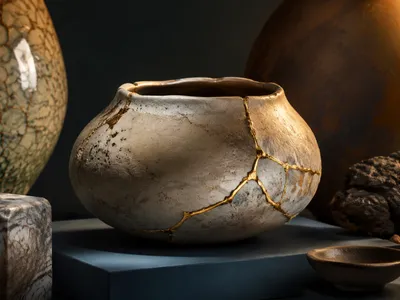
Surface treatment in contemporary functional pottery extends far beyond mere decoration, functioning instead as a critical interface between maker, object, and user. The application of glaze involves complex material science, as ceramicists manipulate silica, fluxes, and metal oxides to achieve desired colours and textures while ensuring food safety and durability. This technical sophistication transforms the vessel's skin into a site of both aesthetic expression and practical performance, where crawling, crazing, or crystalline formations become deliberate artistic statements rather than accidental flaws.
The extended engagement required to produce a well-considered surface reveals the potter's deep understanding of material behaviour throughout the firing process. Reduction atmospheres in gas kilns, for instance, can pull oxygen from clay and glazes to create unpredictable flashes of colour and texture that no digital rendering can accurately predict. Wood firing introduces ash that naturally glazes surfaces in fluid, organic patterns, while soda firing vapourises sodium compounds that deposit glossy coatings on exposed clay. These atmospheric firing techniques produce surfaces that record the specific conditions of their creation—the flame's path, the duration of heat, the placement within the kiln—embedding the object with a topographic memory of its own making. Users may not consciously recognise these traces, but the resulting complexity and depth contribute to an ineffable sense of richness that distinguishes studio pottery from industrially produced equivalents. The surface thus becomes a palimpsest of process, inviting repeated handling and prolonged contemplation as small details reveal themselves over years of daily use. This temporal unfolding of sensory information positions the functional object as an enduring companion rather than a disposable commodity, deepening attachment through accumulated tactile memory.
This emphasis on materiality and touch ultimately repositions the user as an active participant in completing the aesthetic experience. Each handling, washing, and drinking from a ceramic vessel renews the dialogue initiated in the studio, activating qualities that remain dormant in gallery display. Such embodied knowledge challenges purely visual paradigms of artistic value, asserting that objects designed for the hand offer unique and legitimate forms of cultural meaning.
Can a Mug Be a Masterpiece?
This question, once provocative, now anchors serious scholarly inquiry into the nature of aesthetic value and everyday life. To consider a functional object a masterpiece requires expanded aesthetic criteria that accommodate utility without diminishing artistic significance. The mug's very ordinariness becomes its philosophical challenge, demanding that we reconsider what constitutes meaningful cultural production.
Several frameworks help position the functional vessel within broader artistic discourse.
| Theoretical Lens | Core Argument | Application to Pottery |
|---|---|---|
| Kantian aesthetics | Disinterested contemplation defines artistic judgment | Function complicates pure contemplation |
| Deweyan pragmatism | Art resides in experience, not objects alone | Daily use generates continuous aesthetic encounters |
| Material culture studies | Objects embody social meanings and values | Mugs mediate rituals of hospitality and solitude |
A masterpiece need not be monumental; it may instead achieve profundity through quiet excellence refined over decades of practice. The Japanese tradition of designating living national treasures for pottery acknowledges that a simple tea bowl can embody philosophical depth, technical mastery, and spiritual resonance. Such recognition validates the mug's potential to function as a vessel for meaning rather than merely liquid, asking not what art is but what art can become when integrated into daily ritual.