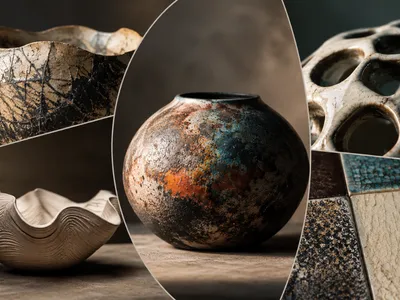
Clay to Couture: A Historical Revival
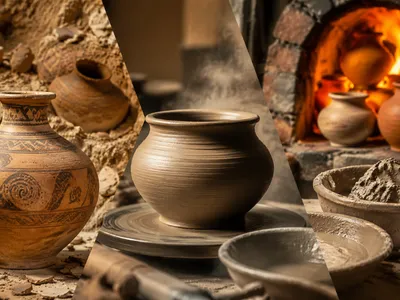
The trajectory of ceramic jewelry is far from a recent phenomenon; its roots are deeply embedded in ancient adornment practices. Archaeological evidence reveals that civilizations from Mesopotamia to the Indus Valley utilized fired clays to create beads and pendants, often imbued with protective or spiritual significance.
This early prominence waned with the rise of metallurgy, yet the twentieth-century studio craft movement catalyzed a profound resurgence. Artists sought to elevate humble materials, positioning clay as a legitimate medium for personal expression rather than mere decorative trinketry.
Today, this revival has fully permeated the sphere of haute couture, with designers collaborating with ceramicists to produce limited-edition wearable art. This convergence challenges traditional hierarchies in fashion, positioning ceramic pieces as statement objects that embody both artisanal heritage and contemporary design sensibility.
The Journey of Earth into Adornment
Understanding the material transformation from raw clay to a durable wearable object requires an examination of the geological origins of the medium. Primary clays, such as kaolin, are valued for their purity and plasticity, while secondary clays, like earthenware, contain iron and other minerals that influence their fired color and vitrification range.
| Clay Type | Firing Range | Typical Characteristics | Jewelry Application |
|---|---|---|---|
| Earthenware | Low (950-1150°C) | Porous, rich terra-cotta hues | Decorative, non-functional beads |
| Stoneware | Mid to High (1200-1300°C) | Dense, waterproof, robust | Durable brooches and buckles |
| Porcelain | High (1250-1450°C) | Vitreous, translucent when thin | Delicate, luminous pendants |
Selecting an appropriate clay body is the first critical decision, as it dictates the object's response to forming techniques and thermal stress. Porcelain, for instance, dmands meticulous control due to its fine particle size and high shrinkage rate, yet it rewards the artisan with a luminous, glass-like quality that is highly sought after in contemporary design.
Beyond the raw material, the transformation is governed by specific forming methods, each leaving an indelible mark on the object's character. Hand-building techniques like pinching and coiling preserve a tactile, organic quality, while slip casting with liquid clay allows for the precise reproduction of complex, thin-walled forms impossible to achieve by hand.
- 🤏 Pinching: The most direct method, using fingers to manipulate a ball of clay, ideal for organic, one-of-a-kind beads.
- 🌀 Coiling: Rolling clay into ropes and layering them to build forms, perfect for creating hollow, lightweight components.
- 📐 Slab Building: Rolling flat sheets of clay to cut and assemble into geometric pendants or structural elements.
- 🏺 Slip Casting: Pouring liquid clay (slip) into plaster molds, enabling high-fidelity reproduction and fine detail.
Subsequent firing cycles irrevocably alter the clay's molecular structure, sintering the particles into a dense, rock-like matrix. The initial bisque firing hardens the piece for handling, while a second glaze firing, often reaching temperatures above 1200°C, vitrifies the surface, imparting color, texture, and impermeability essential for daily wear.
This scientific understanding of material properties elevates the craft from simple pottery to a sophisticated design practice. The maker must balance aesthetic intent with the physical limitations and possibilities inherent in each specific clay body and firing regime.
Why Clay? The Material Appeal of Ceramics
The resurgence of ceramic jewelry is inextricably linked to the material's unique confluence of aesthetic versatility and physical properties. Unlike precious metals or gemstones, clay offers a lightweight strength that allows for substantial, sculptural forms without burdening the wearer, a critical ergonomic consideration for larger pieces.
From a chromatic perspective, ceramics provide an unparalleled palette through the chemistry of glazes and oxides. Artists can achieve vibrant, saturated hues, subtle matte finishes, or crystalline surfaces that interact with light in ways that mimic organic gemstones or even liquid metal, offering a chromatic depth and textural variety unattainable in other mediums.
This capacity for textural expression extends beyond the visual to the tactile, inviting the wearer to engage with the piece on a sensory level. The cool, smooth surface of polished porcelain contrasts sharply with the matte, porous feel of unglazed stoneware, creating an intimate connection between the object and the skin that metal or plastic often fails to foster. This haptic quality positions ceramic jewelry as an extension of the self, not merely an accessory.
Nevertheless, the material's appeal is balanced by its inherent fragility and technical demands. Contemporary ceramicists have responded by developing reinforced clay bodies and innovative construction techniques that mitigate breakage, demonstrating that the material's perceived delicacy can be a compelling counterpoint to its conceptual weight and permanence.
Can Pottery Be Fashionable? Redefining Wearability
The question of wearability extends beyond mere physical durability to encompass ergonomic feasibility and integration with the body's movement. A piece may be technically robust but fail as fashion if its weight distribution is awkward or its edges dig into the skin, necessitating a design approach that prioritizes the human form as the final context.
Contemporary designers are addressing these challenges through meticulous attention to ergonomic feasibility, often incorporating hybrid construction methods. By combining precisely engineered ceramic components with flexible leather cords, woven textiles, or hypoallergenic metal findings, they create pieces that move with the wearer while retaining the ceramic element as the visual and conceptual focal point. This synthesis resolves the hhistorical tension between the rigidity of fired clay and the fluidity required by the body in motion. Furthermore, the application of advanced glazes and polishing techniques ensures the surface remains comfortable against the skin, while the object's surface tension and compressive strength are optimized through precise firing schedules to withstand the minor impacts of daily life.
Ultimately, the redefinition of wearability positions ceramic objects not as static ornaments but as dynamic participants in the wearer's daily narrative. This shift confirms that ceramic jewelry has moved beyond the craft fair niche to secure its place within the evolving lexicon of contemporary fashion, where material experimentation is increasingly valued. The success of these pieces in editorial spreads and on runways underscores a broader cultural acceptance of clay as a legitimate and desirable material for personal adornment.
Innovative Techniques in Contemporary Studio Practice
The contemporary ceramic jewelry landscape is being reshaped by technological integration, most notably through additive manufacturing and digital fabrication. Artists now employ 3D printing with specialized clay bodies to generate intricate, lattice-like structures that would be impossible to construct by hand, pushing the boundaries of form and complexity.
Parallel to these digital advancements, a renewed interest in alternative firing processes has emerged, driven by a desire for unique surface effects. Techniques such as sawdust firing, saggar firing, and raku introduce unpredictable variables like smoke and reduction atmospheres, yielding one-of-a-kind markings that resist mechanical reproducibility and resonate with the principles of the Japanese wabi-sabi aesthetic.
These experimental firings are often combined with precise glaze chemistry to achieve specific visual outcomes. For instance, the use of copper oxides in a reduction atmosphere can produce stunning metallic lusters or deep, blood-red hues on porcelain, while crystalline glazes require meticulously controlled cooling cycles to foster the growth of large, mineral-like formations on the surface.
Understanding the relationship between firing atmosphere and material response is essential for artists seeking to expand their technical repertoire. Below is a comparison of contemporary firing techniques frequently employed in the creation of wearable ceramic art.
| Technique | Primary Characteristic | Typical Clay Body | Aesthetic Outcome |
|---|---|---|---|
| Saggar Firing | Combustible materials in a protective container | Stoneware, Porcelain | Subtle, smoky blush patterns |
| Naked Raku | Removal of glaze after reduction | Raku clay | Matte black surfaces with crackled patterns |
| Obvara Firing | Ancient Baltic technique using fermented dough | Earthenware | Unique, mottled earthy tones |
| Digital Ceramic Printing | 3D extrusion of clay filaments | Custom blended porcelain | Precise, geometrically complex forms |
The adoption of these varied techniques speaks to a broader trend of hybridized studio practices where traditional craftsmanship coexists with cutting-edge technology. Artists no longer feel constrained to a single methodology, instead drawing from a diverse toolkit that allows for greater expressive range and conceptual depth in their wearable creations.
The integration of digital tools has facilitated a new level of precision in creating custom findings and connectors. Laser-cut leather components or 3D-printed nylon closures can now be designed in tandem with ceramic elements, ensuring seamless integration and enhanced wearability while maintaining the artistic integrity of the whole piece.
-
Enhanced Structural IntegrityEngineered clay bodies reduce porosity and increase strength for daily wear.
-
Expanded Chromatic RangeControlled atmospheres and digital glaze application yield vibrant, stable colors.
-
Reproducible Complexity3D printing enables consistent production of intricate, symmetrical forms.
-
Sustainable Material UseDigital workflows minimize waste through precise material deposition.
These innovations are not merely technical exercises; they fundamentally expand the conceptual possibilities for ceramic jewelry, allowing artists to engage with themes of impermanence, digital mediation, and material agency. The tension between the handcrafted and the machine-made has become a fertile ground for critical inquiry within the field, challenging long-held assumptions about authenticity and artistic labor in the realm of adornment. This evolution signals a mature discipline confidently navigating the complexities of the twenty-first century, where the ancient medium of clay is continually reinvented through contemporary material experimentation and cross-disciplinary dialogue.