The Ephemeral Nature of Graffiti Art
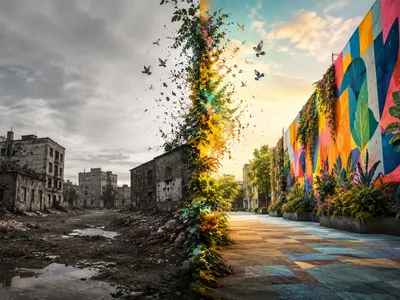
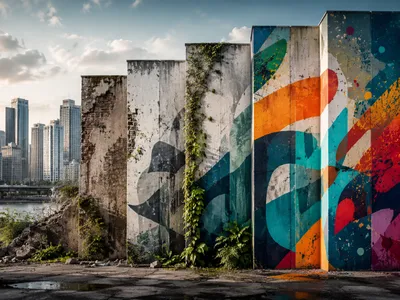
Graffiti emerges as a dialogue with the urban landscape, yet its very existence is defined by precarity. The temporary nature of works created on walls and trains subjects them to the elements, city cleaning crews, and rival writers, creating an inherent tension with the concept of artistic permanence.
This vulnerability is not merely an obstacle but a foundational characteristic of the medium. It roots graffiti in the subcultural rebellion against ownership and control, where the risk of erasure is part of the creative act's adrenaline and its anti-institutional stance.
Consequently, the transient existence of this art form challenges traditional valuation. The impossibility of permanent preservation forces a re-evaluation of what constitutes artistic worth, shifting focus from the durable object to the ephemeral aesthetic experience itself.
Scholars analyzing urban art forms argue that this ephemerality creates a unique authenticity. The work exists for a moment, interacting with a specific community and context, before it is inevitably altered or lost. This cycle of creation and destruction positions graffiti as a living process rather than a static product, fundamentally altering its relationship with audiences who encounter it unexpectedly in public thoroughfares. The city itself becomes the gallery, an uncontrolled and dynmic exhibition space that operates outside the traditional white cube's logic of preservation and commerce.
Underground Train Cars Transformed into Auction House Highlights
The journey of graffiti from the New York City subway system of the 1970s to the hushed floors of international auction houses is a complex narrative of cultural osmosis. Pioneering artists like TAKI 183 and Tracy 168 laid the groundwork for a movement rooted in tagging and territorial expression.
This subcultural activity soon caught the attention of the art world, leading to a pivotal transition in the 1980s. Figures like Jean-Michel Basquiat and Keith Haring bridged the gap, translating the energy of the streets into gallery commodities, a process that accelerated the commodification of the movement.
This migration from illicit surfaces to legal canvases ignited a fierce debate about authenticity. Artists and critics questioned whether the soul of the movement could survive the transition from its rebellious origins into a system driven by market speculation and private collection.
Today, the market for street art is a global phenomenon, with works by Banksy and Invader fetching millions. This institutional validation represents a final, paradoxical step where the progeny of vandalism is embraced by the elite structures it once opposed. The following table outlines some key milestones in this ongoing journey, highlighting the market mechanisms that now define a significant part of graffiti's trajectory.
| Decade | Key Development | Primary Context |
|---|---|---|
| 1970s | Emergence of tagging and street bombing in Philadelphia and New York. | Public Infrastructure |
| 1980s | First gallery shows; rise of artists like Basquiat and Haring. | Alternative Galleries |
| 2000s | Banksy achieves global fame; street art becomes a lucrative market. | Auction Houses & Museums |
| 2010s | Major museum retrospectives and record-breaking auction sales. | Mainstream Institutions |
This trajectory underscores a fundamental paradox. The very act of placing graffiti in a gallery alters its meaning, stripping it of its original context and functional rebellion. The debate persists whether this evolution is a natural progression or a form of cultural appropriation by the elite.
Deconstructing the Fine Art Criteria
The classification of graffiti as fine art necessitates a rigorous examination of the very criteria that define artistic value. Traditional hierarchies often privilege technical mastery, institutional validation, and aesthetic durability, qualities that graffiti's subversive nature directly contests. The discourse around aesthetic judgment has historically been shaped by institutions that prioritize permanence and authorial intent, categories that become slippery when applied to anonymous, ephemeral works ccreated in public space.
One fundamental criterion involves the demonstration of formal dexterity and compositional sophistication. Contemporary analysis reveals that complex wildstyle pieces and large-scale murals demand significant artistic skill, challenging the perception of graffiti as mere vandalism through their intricate lettering and spatial awareness.
The question of artistic intention further complicates classification. While some writers prioritize the thrill of transgression, others engage in critical social commentary or aesthetic exploration, aligning their practice with broader artistic traditions. This diversity of motivation defies simple categorization and demands a more nuanced understanding of the medium's possibilities.
To better understand how graffiti measures against established art world standards, it is useful to compare its characteristics with traditional fine art conventions. The following list outlines some of these comparative dimensions, highlighting the fundamental tensions that arise when evaluating graffiti within conventional frameworks.
- Authorship and Identity vs. Anonymous collective production Tension
- Permanence and Preservation vs. Ephemeral urban intervention Tension
- Institutional Endorsement vs. Subcultural autonomy Tension
- Commodity Value vs. Situational specificity Tension
Banksy and the Paradox of Illegality
The anonymous artist Banksy represents the most visible manifestation of graffiti's complicated relationship with the art establishment. Achieving global phenomenon status while maintaining illegality as a core operational principle, Banksy's career embodies the contradictions inherent in seeking artistic recognition outside sanctioned channels.
The artist's continued reliance on illicit practice despite market acceptance creates a productive friction. Works appear surreptitiously on private property, yet are immediately protected, removed, and sold, demonstrating how the art world absorbs and neutralizes transgression through commodification. The paradox of institutionalized dissent becomes fully visible in this process.
Banksy's practice extends beyond simple provocation toward sophisticated institutional critique. The shredded painting event at auction in 2018 exemplified this approach, using the mechanisms of the market to comment on value creation while simultaneously enhancing the work's monetary worth. This self-aware manipulation of art world dynamics positions Banksy as both participant and critic, navigating the contradiction between subcultural authenticity and mainstream validation with deliberate ambiguity.
Graffiti Between Street and Gallery Spaces
The transition of graffiti into gallery spaces represents a complex negotiation between subcultural authenticity and institutional validation. These environments offer legal sanctuary for artists whose work would otherwise face immediate erasure, providing material support and protection from prosecution while simultaneously altering the fundamental conditions under which the work is experienced.
This spatial relocation initiates a transformative process that affects both the artwork and its audience. Within the gallery context, graffiti becomes legible to new viewers who might never encounter it in its native urban environment, yet this accessibility comes at the cost of divorcing the work ffrom its original dialogical relationship with the street. The creative evolution of artists working in both contexts reveals how institutional frameworks can nurture technical development while potentially diluting subcultural credibility.
Before examining how different institutional models accommodate graffiti practice, it is useful to consider the varying approaches galleries and museums have adopted. The following table compares distinct institutional strategies for incorporating graffiti and street art, highlighting the diverse relationships between these spaces and the artists they exhibit.
| Institutional Model | Curatorial Approach | Artist Relationship |
|---|---|---|
| Commercial Galleries | Commodity focus; market-driven selection | Representation and sales facilitation |
| Museum Retrospectives | Historical canonization; contextual framing | Legacy construction; institutional critique |
| Artist-Run Initiatives | Community engagement; subcultural preservation | Collaborative; anti-commercial orientation |
The gallery space fundamentally transforms the spectator's encounter with graffiti by substituting urban discovery with curated presentation. This shift replaces the transactional space of the street, where meaning emerges from context and transgression, with a controlled environment that frames the work primarily as aesthetic object. Critics argue that this institutional framing domesticates the medium, stripping it of the critical edge derived from illegality and replacing it with decorative consumption. Yet artists navigating both realms demonstrate that the relationship need not be mutually exclusive, developing practices that interrogate iinstitutional boundaries while benefiting from the resources and visibility galleries provide. The paradox of preservation becomes evident as institutions attempt to archive works whose meaning was partially constituted by their impermanence, raising fundamental questions about what exactly is being collected and displayed.