How Did Graffiti Become Mural Art?
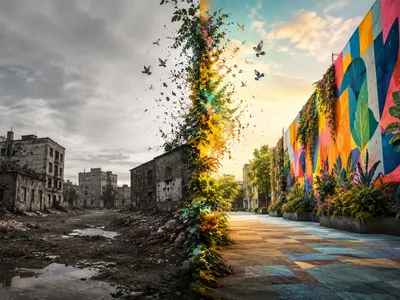
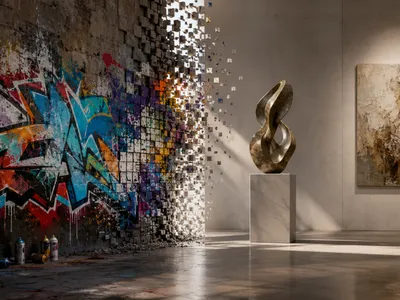
The contemporary mural art movement finds its direct genesis in the illegal subculture of graffiti writing that proliferated in major urban centers during the late 20th century.
This transition from illicit vandalism to a legitimized form of public art was neither swift nor linear, but rather a complex process mediated by shifting cultural perceptions. Key figures began to bridge the gap between street credibility and gallery acceptance, forcing a critical reevaluation of what constituted art in the public sphere. The very definition of public space was contested through these artistic interventions, challenging notions of ownership and aesthetic authority.
The movement's globalization has been accelerated by digital media, allowing styles and techniques to cross continents instantaneously and fostering a shared visual language among artists worldwide. International festivals now commission large-scale works, transforming neighborhoods and creating pilgrimage sites for art tourism, which signifies a profound shift in cultural capital. This institutional embrace, however, often creates a tension between commercial co-option and grassroots authenticity, a central dialectic within the modern muralism discourse. The art form’s evolution is marked by this constant negotiation between its rebellious roots and its new status as a desirable urban asset.
Institutionalization and Public Policy
The embrace of muralism by municipal authorities represents a fundamental shift in cultural policy and urban management strategies. Cities now actively curate their visual landscapes through percent-for-art programs, formal mural districts, and curated festival models. This institutionalization aims to harness the perceived benefits of street art—tourist attraction, crime deterrence, and property value increase—while attempting to mitigate its unruly, unsanctioned past. Policy frameworks establish permitting processes, selection committees, and maintenance protocols, creating a sanctioned channel for public art that often prioritizes aesthetic harmony and non-confrontational themes. This bureaucratic management can inadvertently sanitize the art form's critical edge, favoring decorative pieces over challenging social commentary to avoid controversy.
The resulting tension creates a complex ecosystem where commissioned works coexist with, and sometimes antagonize, grassroots guerrilla art. Municipal programs frequently face criticism for promoting a festivalization of urban space that caters to external audiences while displacing local artistic practices. Furthermore, the focus on mural production as a tool for economic development risks reducing community cultural expression to an instrumentalized amenity within city branding portfolios. This professionalized system demands artists navigate new roles as contractors and compliance officers, fundamentally altering the relationship between the creator, the artwork, and the public it purportedly serves.
Economic Impacts of the Street Art Boom
The professionalization of mural art has generated a significant cultural economy with multifaceted financial implications for cities and practitioners. Once considered a financial liability due to graffiti removal costs, curated street art is now a strategic investment in place-making. This economic logic drives the festival model, where cities fund large-scale projects to attract tourism, stimulate local businesses, and enhance real estate appeal, effectively leveraging creativity for urban devlopment. The transformation of neglected neighborhoods into open-air galleries can lead to a well-documented but contentious phenomenon: art-washing in gentrification processes. While property values and foot traffic often increase, these benefits can precipitate the displacement of existing communities, raising ethical questions about the equitable distribution of cultural capital's economic rewards.
For artists, the boom has created new revenue streams through commissions, commercial brand collaborations, and licensing, yet it has also entrenched market hierarchies. The following table delineates the primary economic channels and their associated tensions within the mural art ecosystem.
| Economic Channel | Positive Impact | Critical Tension |
|---|---|---|
| Tourism & Cultural Attraction | Increased visitor spending, hotel occupancy, and city branding. | Prioritization of tourist aesthetics over local community narratives. |
| Real Estate & Urban Regeneration | Increased property values, improved public space perception. | Acceleration of gentrification and displacement of original residents. |
| Artist Commercialization | Professional sustainability, higher fees, global opportunities. | Co-option of subcultural capital, potential dilution of critical content. |
| Local Business Engagement | Increased foot traffic, revitalized commercial corridors. | Risk of homogenized urban aesthetics shaped by commercial interests. |
Digital Integration and Virtual Frontiers
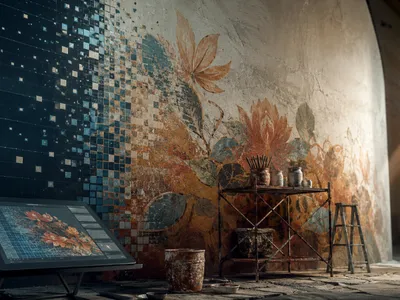
The digital realm has become an inseparable dimension of contemporary muralism, expanding its creation, dissemination, and very ontology. Artists now utilize sophisticated software for digital sketching and augmented reality overlays, while social media platforms serve as global galleries that decouple the art's visibility from its physical location.
This integration enables new hybrid forms, such as phygital murals that require a smartphone to reveal animated layers, fundamentally challenging static notions of public art. The emergence of virtual reality spaces and NFTs for mural art introduces concepts of digital ownership and ephemeral permanence, pushing the art form beyond the constraints of the physical wall and into entirely new conceptual and commercial territories.