The Artists Redefining Contemporary Street Art
A distinct cohort has redefined street art's parameters, moving it from subculture into critical discourse. These practitioners operate within a complex framework of globalized communication and institutional critique.
Banksy remains a pivotal figure, whose anonymous interventions consistently interrogate power structures through witty visual paradoxes. His work generates immense media attention, effectively utilizing public space as a platform for anti-war and anti-consumerist messaging.
Shepard Fairey's OBEY Giant campaign exemplifies the transition from street-based sticker campaigns to a globally recognized brand. His work dissects the mechanisms of propaganda and indoctrination, demonstrating how guerrilla art can infiltrate and critique mainstream visual culture on a massive scale.
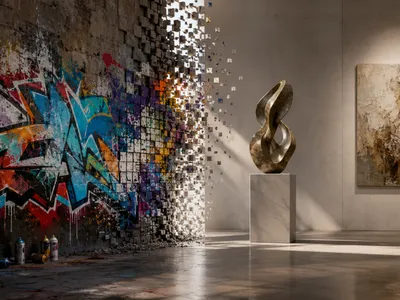
Artists like JR and Invader further diversify this vanguard with their distinct methodologies. JR's participatory large-scale photographic installations in conflict zones give visibility to ordinary citizens, challenging stereotypical narratives. Invader's mosaic pixelations of video game characters, meanwhile, colonize urban architecture worldwide, prompting a playful yet profound reassessment of public space and digital nostalgia. Their collective impact lies in forcing a reconsidertion of where meaningful art resides and whose voices are amplified. This generation leverages the street's immediacy to engage directly with socio-political realities, ensuring their work remains both urgent and influential in shaping contemporary visual dialogue.
How Are New Materials Reshaping Street Art?
The contemporary street artist's toolkit has expanded dramatically, moving well beyond the traditional spray can. This evolution reflects a sophisticated engagement with materiality and durability.
Wheatpasting and street art installations incorporating found objects are now commonplace. Artists utilize materials ranging from biodegradable pastes to industrial adhesives, ensuring their ephemeral works withstand environmental factors or, conversely, decay in intentionally designed ways.
The integration of digital technologies has opened new frontiers. Projection mapping allows for temporary, non-invasive interventions on architectural facades, while augmented reality layers digital imagery onto physical locations, viewable through smartphones. This fusion creates interactive experiences that transcend the static image.
A significant trend involves the exploration of sustainable and eco-conscious materials. Some practitioners now formulate their own non-toxic, bio-based paints or use reclaimed wood and recycled plastics for their three-dimensional urban interventions. This shift not only reduces environmental impact but also adds a conceptual layer concerning ecology and urban waste to the artwork itself. The following table outlines some prevalent contemporary methods and their material characteristics.
| Primary Technique | Common Materials | Conceptual Focus |
|---|---|---|
| Large-Format Paste-Ups | Wheatpaste, printed paper, vinyl | Ephemerality, mass dissemination, graphic impact |
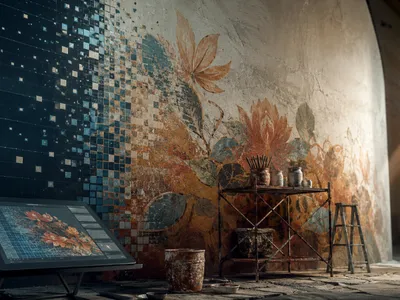
| Mosaic/Tile Installation | Ceramic tiles, grout, adhesive | Permanence, pixelation, intervention in heritage sites |
| Yarn Bombing | Acrylic yarn, knitted/crocheted panels | Softening urban space, craftivism, community engagement |
| Projection Mapping | High-lumen projectors, 3D mapping software | Non-invasive temporality, illusion, architectural dialogue |
This material and methodological diversity signifies a maturation of the art form. By borrowing from disciplines like graphic design, sculpture, and performance, these artists create works that are not merely images on a wall but complex interventions that engage with their environment on multiple sensory and intellectual levels.
The Digital-Physical Nexus
Contemporary street art exists within an intricate ecosystem where physical walls and digital screens constantly interact. This symbiosis fundamentally alters how work is created, disseminated, and consumed in the twenty-first century.
Social media platforms serve as primary dissemination channels, transforming ephemeral street pieces into permanent, globally accessible digital artifacts. An artwork in a remote alley can garner international attention within hours, with its online presence often overshadowing the physical original. This dynamic creates a feedback loop where digital engagement increasingly informs the location and aesthetics of physical interventions.
Artists now strategically employ augmented reality to overlay digital content onto physical locations, viewable only through dedicated applications. This technique allows for layers of meaning that can change over time or reveal hidden elements, deepening viewer engagement without permanently altering the built environment. The physical surface becomes a trigger for a dynamic, virtual experience.
The following practices illustrate how digital technologies are reshaping the production and reception of street art. These methods highlight a shift towards interactive and networked artistic experiences that challenge traditional notions of a static artwork.
- Geolocated AR Activations Interactive
- NFT-Backed Physical Works Ownership
- QR-Driven Narratives Deep Linking
- Algorithmic Curation Discovery
This nexus also raises critical questions about authenticity and ephemerality. When an artwork's primary audience is online, does its physical destruction matter? Conversely, the digital realm offers unprecedented archival possibilities, ensuring that even lost works maintain a form of existence and continue to influence. Artists navigate this complex terrain, using digital tools not merely as documentation but as an integral component of their conceptual and material practice. This integration ensures their relevance in an increasingly mediated world, where the boundary between the street and the screen is perpetually blurred. The result is a more resilient and far-reaching form of cultural production that capitalizes on the strengths of both domains.
Street Art’s Influence on Culture and the Art World
The influence of leading street artists now extends far beyond aesthetic innovation, permeating social movements, institutional hierarchies, and global market dynamics. Their work functions as a powerful, decentralized form of visual communication.
A primary driver of this influence is the seamless integration of art with political activism and social commentary. Artists create potent visual symbols that are rapidly adopted by protest movements worldwide, from climate justice to anti-authoritarian struggles. The streets become a canvas for collective expression, where artistic gestures translate into mobilizing emblems with remarkable speed and resonance.
The art market and mainstream institutions have also been fundamentally reshaped. Major auction houses now feature street art prominently, while museums mount retrospective exhibitions, conferring institutional legitimacy. Simultaneously, high-profile brand collaborations bring this aesthetic into global consumer culture, creating a complex interplay between uunderground credibility and commercial success that defines the contemporary creative economy. These artists navigate a path between subcultural authenticity and mainstream acceptance.
Several interconnected factors underpin this widespread influence. They explain how a practice born in marginal urban spaces achieved such profound global reach.
-
Visual AccessibilityImagery bypasses language barriers, communicating complex ideas through immediate, powerful symbols.
-
Institutional ValidationMuseum acquisitions and gallery representation integrate street art into the official art historical canon.
-
Digital ViralitySocial media enables instant global dissemination, building audiences independent of physical location.
-
Economic DemandA robust secondary market and lucrative commissions sustain artists professionally, fueling further production.
The global influence of these artists stems from their unique position at the intersection of underground culture and mainstream visibility. They have effectively democratized access to art while maintaining a critical edge, proving that powerful visual statements can emerge from the periphery and reshape the center. Their ability to adapt, innovate, and engage ensures their continued relevance in defining the visual language of our time.