Materiality and Conceptual Depth

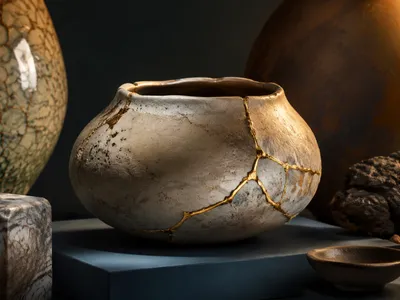
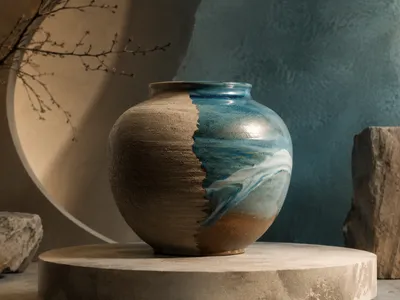
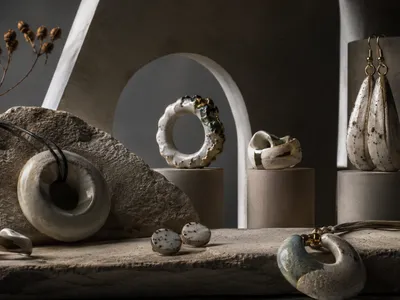
Contemporary ceramic art transcends mere craft by leveraging its inherent materiality for profound conceptual inquiry. The very substance of clay—its plasticity, weight, and mineral composition—becomes a primary language for artists.

This focus on phenomenological experience challenges the dominance of visuality in modern art. A ceramic object communicates through its physical presence, its surface texture, and even its temperature to the touch.

Artists consciously exploit the tension between clay's humble, earthly origins and its transformation through fire. The indexical quality of hand marks and the alchemy of glaze chemistry embed the work with a unique history of its own making.

This process-oriented practice allows for an exploration of time, labor, and transformation that is central to its conceptual framework. The material carries memory, both geologically and through the artist's gesture, creating a layered narrative beyond the purely visual.

The physicality of ceramics is thus not a limitation but the core of its conceptual power, offering a direct, tactile dialogue with ideas of being and substance.

Subverting Historical Traditions

A dominant strand in contemporary ceramics involves a critical re-engagement with and subversion of established historical traditions. Artists deconstruct the legacy of functional ware, decorative porcelain, and monumental sculpture to question cultural values and artistic hierarchies.

This is not mere revivalism but a form of critical dialogue with the past. Techniques once perfected for imperial courts or domestic use are repurposed to address contemporary issues of identity, consumption, and power.

The pristine whiteness of historical porcelain, for instance, is often deliberately violated with crude textures, political text, or asymmetrical forms to challenge associations with purity, elitism, and perfection. This strategic aesthetic disobedience creates a potent commentary on both historical and modern social structures.

The following list outlines key methodological approaches artists employ to subvert ceramic heritage:

  • Replicating historical forms with deliberate flaws or incongruous contemporary imagery.
  • Employing traditional, labor-intensive techniques on absurd or non-functional objects.
  • Incorporating digital or industrial processes to hybridize handcraft traditions.
  • Using clay to mimic other materials, thereby confusing categorical boundaries and value judgments.

Through these methods, the vessel is liberated from its utilitarian destiny to become a carrier of complex critique, where the beauty of the glaze or the refinement of the form is juxtaposed with challenging content, forcing a re-evaluation of both the object's history and its present context.

The Tactile Haptic Interface

Ceramics asserts a unique position in contemporary art through its direct appeal to the haptic sense, offering a multisensory engagement that flat media cannot replicate. This tangible interaction forms a profound communication channel.

The material invites physical scrutiny—its weight in the hand, the coolness or warmth of its surface, and the texture that guides touch. This embodied cognition fosters a deeper, more personal connection and memory formation around the artwork.

Artists strategically manipulate surface quality, from glassy smoothness to rugged, fractured terrains, to orchestrate a tactile narrative. This deliberate haptic design commpels viewers to become active participants rather than passive observers.

The power of this interface is demonstrated through several key haptic modalities employed by artists, as categorized below.

Modality Artistic Intention Conceptual Impact
Invitational Texture Encourages physical contact through smooth, rhythmic patterns. Creates intimacy and a sense of welcome, breaking the "do not touch" gallery taboo.
Repellent Texture Discourages touch with sharp, fragile, or viscous-appearing surfaces. Evokes aversion, danger, or anxiety, reflecting on societal boundaries and personal space.
Indexical Trace Preserves fingerprints, tool marks, or impressions of other objects. Documents the act of making, emphasizing process, labor, and the artist's physical presence.

The haptic interface transforms ceramic art into a phenomenological encounter, where meaning is synthesized through the integration of touch, sight, and physical presence.

Digital Clay and Expanded Frontiers

The integration of digital technology has radically expanded the conceptual and formal possibilities of ceramic practice. Tools like 3D modeling and digital fabrication act as a new kind of extended hand, challenging traditional notions of craftsmanship.

Artists now design in virtual space, creating forms of impossible complexity or scale that are then realized through CNC milling or 3D printing in clay. This process decouples the initial creative act from direct physical manipulation.

This shift is not a rejection of the analog but creates a critical hybrid practice. The hand of the artist is reconfigured through code and algorithmic thinking, raising questions about authorship, authenticity, and the ontology of the handmade object in a digital age.

The following table contrasts traditional and digital-augmented ceramic processes, highlighting their distinct contributions to contemporary expression. This comparison reveals a spectrum of practice rather than a binary opposition.

Process Paradigm Key Technologies/Methods Expressive Outcomes
Analog-Digital Hybrid 3D printed prototypes for mold-making; digital scans of hand-built forms. Enables intricate reproduction, scale shifts, and the preservation of spontaneous gestures in serial works.
Full Digital Fabrication Direct 3D printing with clay; CNC clay extrusion. Allows for topological optimization, unbuildable geometries, and the embedding of data patterns into physical form.
Virtual Materiality Simulated ceramic objects in VR/AR; glitch aesthetics applied to digital models. Questions material permanence and explores dematerialized ceramic presence in digital environments.

The digital frontier ultimately pushes ceramics beyond the physical vessel into the realm of data sculpture and virtual installation, where the material's cultural associations are leveraged to critique our increasingly digitized existence. This expansion forces a redefinition of ceramic practice itself, positioning it as a dynamic medium fluent in both ancient materiality and contemporary technological discourse.

Digital tools do not replace the clay but complicate its narrative, creating a dialectic between the primal earthiness of the material and the abstract, code-driven processes of the 21st century.
Social and Political Narratives

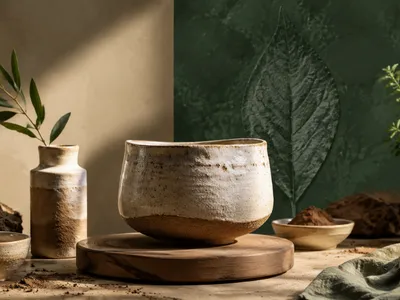
Ceramics has emerged as a potent medium for articulating complex social and political critiques, leveraging its domestic and cultural associations to deliver powerful messages. The medium’s historical ties to utility and ornamentation provide a subtle yet effective Trojan horse for activist content.

Artists employ ceramic objects to address issues of migration, identity, and memory, often using fragmented forms or embedded cultural symbols to represent dislocation and hybridity. The inherent fragility of fired clay becomes a metaphor for vulnerable communities and precarious social conditions.

This practice frequently involves a material rhetoric where specific clays, glazes, or forms are chosen for their historical connotations. For example, using terracotta might reference ancient votive figures or colonial trade, while industrial porcelain can evoke mass production and consumerism. This layered material symbolism enriches the narrative depth without explicit textual explanation.

Key thematic strategies in socially engaged ceramic art include the following approaches, which move beyond mere representation into the realm of embodied critique.

  • Memorialization and Absence: Creating vessels or figures that commemorate marginalized histories or act as stand-ins for lost communities.
  • Domestic Sphere as Political Site: Subverting tableware and domestic objects to critique gender roles, labor inequities, or consumption patterns.
  • Monumentalizing the Mundane: Elevating discarded materials or everyday struggles through ceramic reproduction, challenging hierarchies of value.
  • Participatory and Relational Practices: Using communal making processes to foster dialogue, collective healing, or direct social action.

Through these methodologies, the ceramic object transcends aesthetic contemplation to become an active agent in discourse, its solidity and permanence standing in stark contrast to the often ephemeral nature of the social issues it addresses. The act of firing—a permanent transformation—parallels the desire for lasting social change, while the possibility of breakage acknowledges the fragility of such progress.

In this context, clay becomes a witness material, recording and reflecting the tensions of its time through a unique fusion of form, surface, and culturally charged material intelligence.

The Future of Ceramic Expression

The trajectory of contemporary ceramics points towards an increasingly interdisciplinary and post-disciplinary condition, where its boundaries with bio-art, sculpture, installation, and digital media continue to dissolve. This evolution is driven by a younger generation of artists who are fluid in both material craft and conceptual theory.

Future developments will likely see a deeper engagement with sustainability and material ethics, including the development of low-fire geopolymer ceramics, the use of locally sourced and recycled clays, and critical examinations of the envirnmental impact of traditional firing processes. The medium’s ancient connection to the earth positions it uniquely for dialogues about the Anthropocene and ecological responsibility.

The core strength of ceramics will remain its unparalleled material dialectic—the conversation between artist, substance, process, and concept. As technological tools become more integrated, the essential questions of touch, transformation, and presence will only become more urgent, ensuring ceramics' vital role in the landscape of contemporary artistic expression for years to come.