Murals of the People
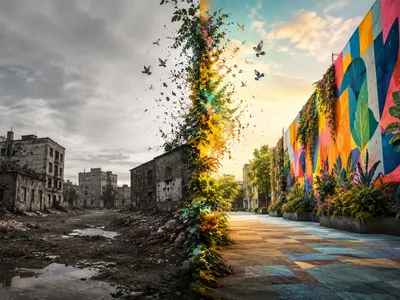
Street art, particularly large-scale murals, functions as a powerful democratizing force within urban landscapes. It reclaims public space from commercial and institutional control, transforming sterile walls into canvases for communal expression and social commentary. This process directly challenges traditional notions of art ownership and gallery curation.
By depicting local histories, marginalized identities, or shared struggles, these public artworks foster a strong sense of place-identity. They move beyond mere decoration to become visual archives of a neighborhood's character, making the cultural and political sentiments of the populace permanently visible.
A Dialogue with the City's Surface
The urban environment is not a passive backdrop for street art but an active participant in a dynamic dialectic. Artists engage with the city's architectural morphology, its decay, and its constant state of flux. A cracked wall becomes a central motif; a boarded-up window is integrated into a narrative.
This interaction creates a palimpsestic quality, where layers of posters, paint, and weathering tell a non-linear story of the site's history. The art's meaning is thus contingent on its specific location, creating a site-specific discourse that cannot be replicated in a white cube gallery.
The ephemeral nature of street art—subject to weathering, vandalism, or municipal erasure—mirrors the transient rhythms of city life itself. This impermanence is a core aesthetic and conceptual component, challenging the art market's demand for permanence and commodification.
The practice necessitates a sophisticated understanding of the urban fabric, where artists must navigate social codes, material constraints, and legal boundaries to execute their work. This complex negotiation between artist, surface, and socio-legal context forms a continuous, unspoken dialogue that re-semantifies neglected urban zones, turning infrastructural liabilities into assets of cultural capital and sparking critical engagement with our built environment on a daily basis.
The Economics of Ephemeral Beauty
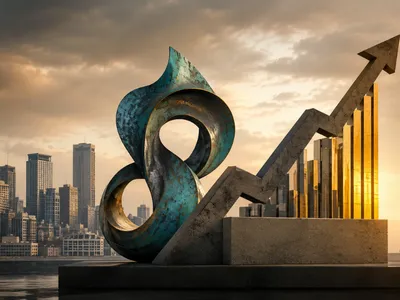
The intersection of street art and urban economies presents a complex paradox. On one hand, it is often born from anti-establishment and anti-commercial sentiments, deliberately operating outside the formal art market. On the other, its undeniable cultural appeal has been systematically co-opted by municipal authorities and real estate developers as a tool for urban regeneration and brand enhancement.
This process, frequently termed "artwashing," utilizes street art's aesthetic capital to increase property values and attract tourism, often leading to the indirect displacement of the very communities that gave the area its original character. The art form's perceived authenticity is commodified, creating a tension between its subversive roots and its new role in the neoliberal city's economic toolkit.
The following table delineates the dual economic impacts of street art within the urban fabric, highlighting its contradictory roles as both a disruptive force and a catalyst for capital growth:
| Economic Dimension | Positive Catalytic Effects | Negative/Contradictory Outcomes |
|---|---|---|
| Tourism & Place Branding | Creation of cultural destinations; increased visitor spending; enhanced global city image. | Gentrification; cultural homogenization; transformation of art into a consumable spectacle. |
| Property Market | Increased aesthetic appeal of neighborhoods; higher foot traffic benefitting local commerce. | Rising rents and commercial rates; displacement of long-term residents and artists. |
| Artist Livelihood | Commissioned mural work; festival invitations; transition to gallery recognition. | Precarity of income; appropriation of style without credit; pressure to conform to marketable themes. |
Charting an Uncharted Cultural Territory
Street art’s evolution positions it as a primary agent in defining the aesthetic and ethical frontiers of contemporary urban culture. It operates in a liminal space between sanctioned public art and illicit graffiti, constantly challenging and redrawing the boundaries of artistic legitimacy, copyright, and civic space.
This constant renegotiation fosters innovative cultural hybridity, where techniques from fine art merge with folk traditions and digital practices, creating a uniquely resilient and adaptive form of expression that resists easy categorization.
The future trajectory of urban culture is being significantly shaped by these practices, as they introduce new models for community engagement, cultural diplomacy, and the very understanding of art’s role in the public sphere beyond traditional institutional frameworks.
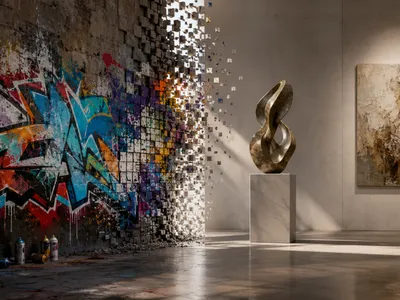
The ongoing scholarly and curatorial challenge lies in developing critical frameworks that can adequately analyze street art’s multifaceted impact without neutralizing its subversive energy. As it gains institutional recognition through museum exhibitions and academic study, the field must grapple with the paradox of canonization. This process risks diluting the art form's raw, context-dependent power while simultaneously offering deeper, more sustained analysis. The future of urban culture, influenced by these practices, will likely hinge on navigating several key tensions and potentialities, which can be outlined as follows:
- 📱 The Digital-Physical Nexus: The integration of QR codes, augmented reality (AR), and social media geotagging with physical murals, creating layered, interactive experiences that bridge online and offline engagement.
- ⏳ Formalized Ephemerality: The development of legal frameworks and designated zones that protect the right to create temporary, evolving work, acknowledging impermanence as a cultural value rather than a deficit.
- 🌍 Hyper-Local Globalization: The co-existence of globally recognized artist "brands" with intensely localized, community-participatory projects, challenging homogenizing forces of global art markets.
- 🌱 Ecological Materiality: A growing emphasis on biodegradable paints, moss graffiti, and other sustainable mediums, directly linking street art practice to urban environmental activism and climate discourse.
- 📊 Datafication of Space: The use of street art hotspots as data points for understanding urban flow, social sentiment, and neighborhood change, raising critical questions about surveillance, cultural analytics, and the quantification of creative expression.
Street art does not merely reflect urban culture but actively constructs it, proposing alternative systems of value, beauty, and social interaction. It charts a territory where the city is continuously re-imagined as a collaborative, contested, and profoundly creatve entity. By insisting on the aesthetic potential of every surface and the right of every citizen to contribute to the visual dialogue, it remains a vital, unpredictable force in shaping the sensibilities and possibilities of urban life for the future, ensuring the metropolis remains a canvas for the human spirit in all its diverse and defiant forms.