Materiality and Tangible Presence
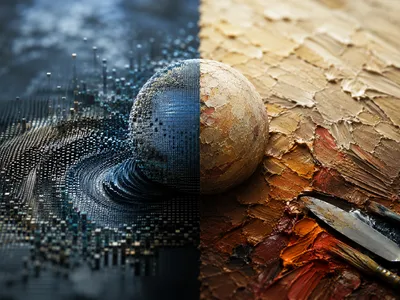
The contemporary resurgence of traditional techniques is fundamentally a quest for materiality in an increasingly virtual world. Artists are engaging with physical substances—oil paint, charcoal, clay, stone—to create artifacts that possess an irreducible physical presence. This engagement counters the pervasive experience of digital media, which exists as transient light on screens and lacks inherent physical properties.
The act of making is a dialogical process between the artist and the material, where the medium itself exerts agency through its resistance, texture, and behavioral properties. This haptic relationship generates knowledge that is corporeal rather than purely cognitive. The final artwork stands as a testament to this process, an object whose history of creation is embedded within its visible and tangible layers.
The material object exists in a specific space and endures through time, offering a form of temporal endurance opposed to digital file formats threatened by obsolescence. Its physicality demands a specific mode of encounter from the viewer, one that is embodied and often collective within a gallery space. This stands in stark contrast to the private, scrolling engagement typical of screen-based art, recentering the experience on a shared, sensuous encounter with a unique artifact whose scale, texture, and material weight are central to its meaning.
The following table contrasts key characteristics of materially-oriented and digitally-oriented artistic production, highlighting the philosophical and practical distinctions driving the return to traditional methods.
| Aspect | Material/Traditional Focus | Digital/Virtual Focus |
|---|---|---|
| Primary Medium | Physical matter (pigment, wood, metal) | Binary code, pixels, vectors |
| Artist-Material Relation | Dialogical, resistant, haptic | Programmatic, compliant, algorithmic |
| Temporal Mode | Endurance, decay, patina | Instantaneity, updates, disposability |
| Viewing Context | Embodied, site-specific, often collective | Mediated, disembodied, often private |
Countering Digital Disposability and Algorithmic Culture
Traditional artmaking emerges as a potent form of resistance against the ephemerality and homogenizing tendencies of digital culture. The logic of social media platforms prioritizes novelty and constant renewal, rendering content instantly obsolete in a relentless feed. A meticulously crafted painting or sculpture asserts its own temporality, one of slow creation and contemplative viewing, deliberately refusing this cycle of disposability.
This practice also challenges the pervasive influence of algorithmic culture, which shapes visibility, taste, and even creative output through opaque data-driven processes. When artists commit to manual techniques, they consciously step outside the digital feedback loops that can subtly steer aesthetics toward optimized engagement. The choice becmes a declaration of artistic autonomy, privileging human intuition and fallibility over algorithmic predictability and procedural generation.
The phenomenon of digital fatigue has created a renewed cultural appetite for authentic, tactile experiences that feel unmediated by interfaces. Audiences increasingly value the evidence of the hand—the brushstroke, the tool mark, the slight imperfection—as a signifier of authentic human presence and effort. In this context, traditional art is perceived not as archaic but as a critically relevant slow art movement, offering a necessary counterbalance to the velocity and abstraction of the digital sphere.
Artists employ specific strategies through traditional practice to counter digital paradigms, as outlined below.
- ⭐ Emphasizing Unique Materiality: Creating one-of-a-kind objects that cannot be perfectly replicated or disseminated infinitely without loss.
- ⭐ Embracing Analog Errors: Valuing the accidental drip or irregular glaze as meaningful occurrences, contrary to digital perfection.
- ⭐ Investing in Temporal Density: Embedding significant time and labor into the work, making its creation period a core part of its value.
- ⭐ Cultivating Direct Skill Transmission: Seeking knowledge through apprenticeships or master workshops, bypassing digital tutorial culture.
The Agency of Process and the Artist's Hand
In traditional practice, the creative process is not merely a means to an end but the locus of meaning itself. The artist's physical engagement with materials—the grinding of pigment, the carving of wood, the throwing of clay—constitutes a form of thinking through making. This embodied cognition generates ideas and solutions that cannot be fully preconceived in a digital sketch.
The visible trace of the hand becomes a primary signifier of artistic identity and intention. Each brushstroke or chisel mark records a decision and a moment in time, building a physical chronology into the work's surface. This indexical quality fosters a palpable connection between viewer and maker, bridging temporal distance through the immediacy of the crafted gesture.
This focus on process grants agency to the medium itself, allowing material properties and chance occurrences to actively shape the final outcome. A painter responds to the viscosity of oil, a printmaker to the absorption of paper, in a dialogue where control and surrender are balanced. The artwork thus emerges from this collaboration, bearing witness to its own becoming. This stands opposed to the top-down, total control often afforded by digital tools, where undo functions and layers can erase the history of decision-making. The traditional process embraces a generative constraint, where material limitations become sources of innovation rather than obstacles to be digitally circumvented.
The distinct phases and decision-making in a process-oriented practice differ significantly from streamlined digital workflows. The table below delineates these key differences in artistic approach and philosophy.
| Process Phase | Traditional/Process-Oriented Approach | Digital/Outcome-Oriented Approach |
|---|---|---|
| Conceptualization | Often emerges from material experimentation; sketch as a loose guide. | Frequently precise and pre-visualized; digital mock-up as exact blueprint. |
| Execution | Linear and additive but susceptible to material feedback and happy accidents. | Non-linear, modular, and easily reversible with minimal consequence. |
| Error Integration | Errors are often physically irreversible, requiring adaptation and creative incorporation. | Errors are deleted or corrected instantly, leaving no trace in the final file. |
| Historical Trace | The process is materially archived in the finished work through layers and marks. | Process history is typically contained in separate, disposable file versions. |
What Role Does Authenticity Play in Contemporary Artistic Practice?
The concept of authenticity is central to understanding the appeal of traditional techniques today. In a cultural landscape saturated with reproductions and simulations, the handmade object is often perceived as a vessel of authentic experience. This authenticity is not merely about originality but is linked to the verifiable trace of human labor and the unmediated encounter between maker and material.
This pursuit intersects with a broader societal critique of the immateriality of digital capitalism. The traditional artwork, as a singular commodity requiring skilled labor, resists the logic of infinite, cost-free digital replication. Its value is anchored in its unique auratic presence, a quality that defies seamless integration into the circulatory systems of mass digital consumption.
Audience perception is crucial; viewers often report a different psychological and emotional engagement with handmade works. The knowledge that an object results from sustained manual effort fosters a sense of connection and value attribution that is ddistinct from admiring digital precision. This authenticity is performative, constructed through the artist's commitment to a demanding craft and the viewer's willingness to read the signs of that commitment within the work. It functions as a form of cultural credibility, situating the artist within a lineage of material knowledge while making a conscious statement about contemporary values.
Artists leverage traditional techniques to construct and signal authenticity through several interconnected frameworks, as identified in contemporary discourse.
- 🎨 Material Authenticity: The use of specific, often historic materials (e.g., natural pigments, gesso grounds) perceived as genuine or "true."
- 🛠️ Procedural Authenticity: Adherence to historical craft processes, valuing the "right way" of making as a form of dedication.
- ✋ Expressive Authenticity: The belief that the direct, unmediated hand of the artist allows for a more truthful transmission of emotion or concept.
- 🏛️ Contextual Authenticity: The work's alignment with or conscious reference to artistic traditions, creating a dialogic link to art history.
A Sustained Dialogue with Historical Precedents
Engaging with traditional techniques is rarely an act of pure replication but rather a method of entering into a critical conversation with art history. Artists utilize historical methods as a conceptual framework to investigate, critique, or re-contextualize past ideologies and aesthetic conventions. This deliberate anachronism allows contemporary issues to be refracted through the lens of historical craft, creating a rich intertextuality.
This dialogue manifests as a form of temporal collage, where techniques from one era are used to address themes of another. A contemporary painter employing Renaissance glazing methods to depict digital interfaces, for example, creates a friction that prompts critical reflection on both past and present. The technique itself becomes a carrier of meaning, embedding the artwork within a longer continuum of making and thinking.
This practice moves beyond nostalgia by actively interrogating the conditions of historical production. Artists often research and revive obscure or labor-intensive techniques not for mere revivalism, but to understand the material constraints and philosophical worldviews that shaped earlier art. By physically re-enacting these processes, they gain a phenomenological understanding inaccessible through textbooks alone, fostering a deeper, more nuanced engagement with their chosen field's lineage and its unspoken assumptions.